How Mercer’s theology school plans to use an almost $1M grant to help pastors, churches
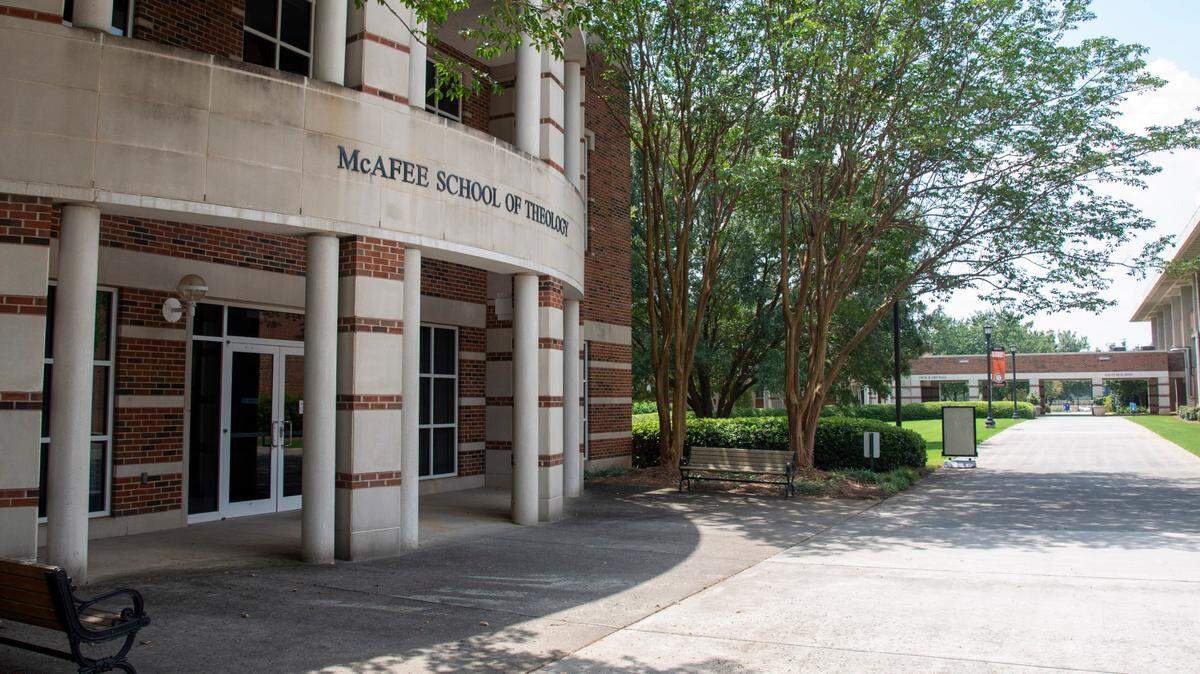
Mercer University’s McAfee School of Theology recently announced an almost $1 million grant, money the school’s leaders will use to ask local churches what they need, and provide solutions to those needs.
And there are a lot of questions to answer. American society is rapidly changing, in no small part because of the COVID-19 pandemic. The school received $907,179 through the Lilly Endowment’s Pathways for Tomorrow Initiative.
Dr. Greg DeLoach is the dean of Mercer’s theology school. Raised on a dairy farm in Eatonton, DeLoach spent decades behind the pulpit and still preaches in addition to his academic responsibilities, soon as the interim pastor of Highland Hills Baptist Church in Macon.
DeLoach pointed out that the way universities educate students and the way churches connect with their congregations evolved almost overnight.
“We’re trying to have a conversation with changing faith communities,” he said. “The very look of church is changing. How do you do pastoral care virtually? Can I have church and it still be virtual? Those questions are worth engaging.
“Communities are going through seismic changes and churches are reflecting those changes. We can’t address them by saying ‘The theology school has the answers.’ We have to walk alongside these very big questions. What Tifton or Albany or Marietta or Macon needs is not going to be the same thing. There will be some patterns.”
Some of those shifts include how people connect with and serve each other. Will there be more bi-vocational pastors, folks who work full-time jobs but also minister to their community? How can the theology school provide education to people who aren’t necessarily interested in a degree, but want to understand their own faith more deeply and, in turn, have that greater understanding inform how they live?
Answering these questions is key, DeLoach said.
“Churches are increasingly being challenged for relevancy,” he said. “We’re not hurting for data for the fact that fewer and fewer people are going to church and participating. There does seem to be a heightened interest in religion and faith, and the conventional structure of church is going through a lot of changes.”
To that end, the McAfee School of Theology will use its almost $1 million grant to evolve the Center for Teaching Churches into the Center for Calling and Vocation, with a full-time director DeLoach said would be funded partly by the grant and partially by Mercer as a commitment to sustaining it. The director will “reimagine” the schools curriculum and strategy to address what churches and pastors need today.
Mercer’s theology school will also offer lay minister training, pastor mentoring and continuing education beyond its Atlanta campus, partnering with the Baugh Center for Baptist Leadership to expand its footprint “geographically, racially and socio-economically.”
And DeLoach said the theology school will bring together clergy from a wide range of denominations and backgrounds as well.
“Our goal is to bring together a diverse body of clergy and ask, ‘What is it that you need?’” he said. “How can we create programs and leadership structures that respond to that? We just don’t have the capacity to do that outside of a grant. We’ll probably have some events on campus, some on the road, to have a conversation with clergy from across the state. What is your greatest need in terms of regenerating relevancy in your community? What do you need the most?”
DeLoach said the McAfee School of Theology is also looking at partnerships with other Mercer schools, such as Mercer Medicine, to walk alongside them as they provide resources to underserved communities.
“We’ve got to find how people are discovering their sense of belonging that transcends artificial lines we’ve drawn,” he said. “People don’t really look at denominational titles anymore. They’re asking ‘Do I feel connected here?’ It’s critical for the church to meet people where they’re living.”