‘A year ago, we marched.’ An oral history of Macon’s Black Lives Matter protest
Chanting “I can’t breathe,” “no justice, no peace,” and “hands up, don’t shoot,” hundreds of Middle Georgians marched through downtown Macon last June, stopping outside of City Hall and the county courthouse as leaders encouraged participants to vote and advocate for change.
The Telegraph interviewed four participants to get their perspective on what happened a year ago and the lasting legacy of the march:
Caleb Brown: An artist, activist, public speaker and former Mercer running back, Brown attended the march and later organized the fundraiser Breaking Beariers, which raised $5,000 for members of Middle Georgia’s Black communities impacted by systemic racism and police brutality.
Bibb County Sheriff David Davis: Davis, a 42-year veteran of the sheriff’s office, had his deputies clear streets for marchers and spoke in front of City Hall.
Charlea Foster: Foster, who lives in Macon, attended the march with her 5-year-old son, Caleb, carrying a sign that read “I Will Breathe.” Foster also raises her four nephews after her sister passed away.
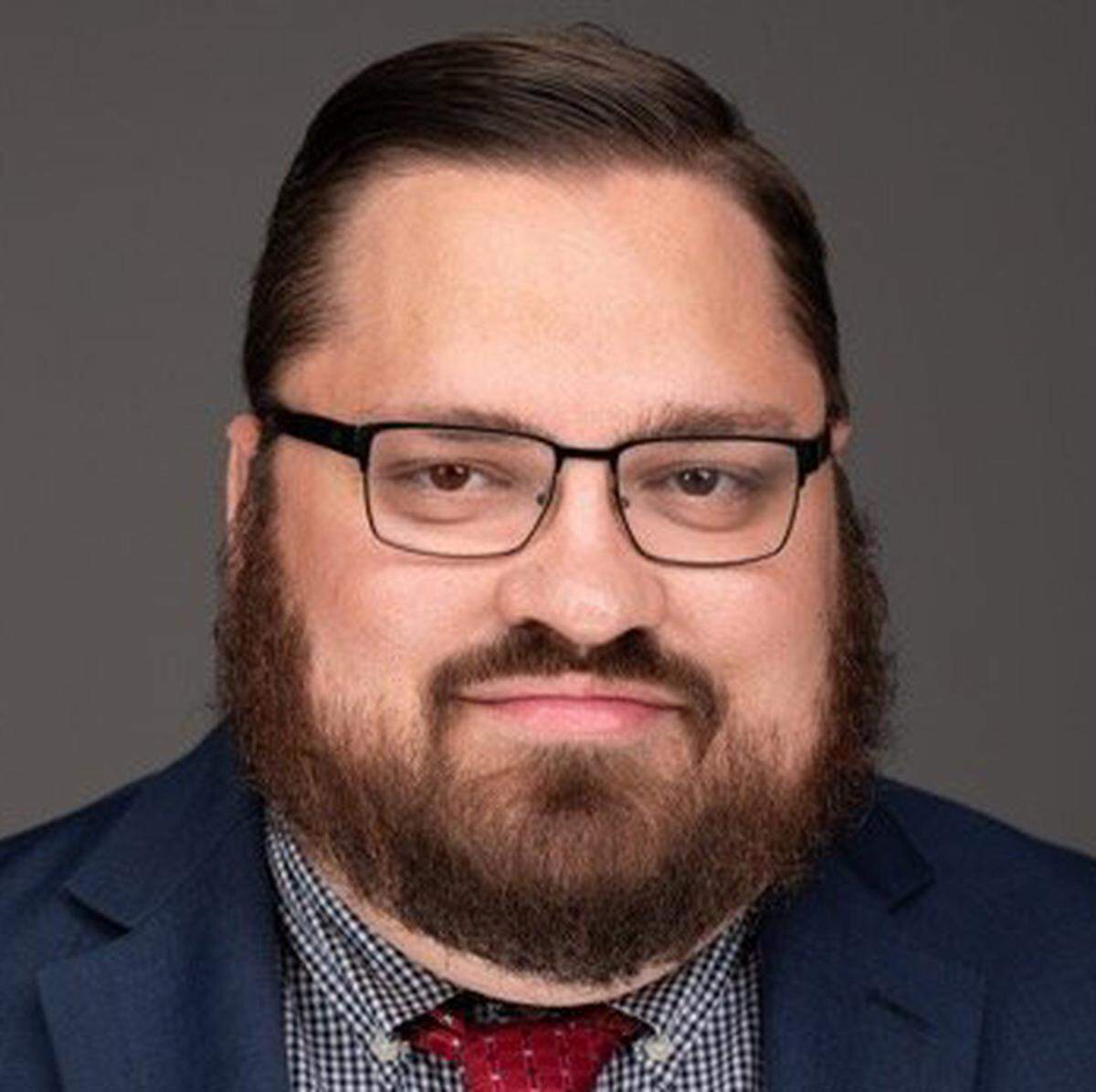
Keith Fitzgerald Holmes, Jr.: A Mercer University student, Holmes was an intern for the Telegraph last summer. One of his first assignments was covering the march, along with Telegraph senior editor Caleb Slinkard. Holmes is now a senior double major in journalism and creative writing interning with the Center for Collaborative Journalism.
Getting started
The march was planned for the afternoon of June 2, eight days after George Floyd was killed and after the killings of Breonna Taylor and Ahmaud Arbery.
Foster: I felt like George Floyd’s murder was a huge, defining moment. I needed to speak up, to support the movement, to show my son — because he had questions and concerns — that this movement was different. It had all ethnicities and cultures represented. I was reluctant to go in the midst of the pandemic — we hadn’t gone anywhere — but I felt like we could safely gather, and I felt like it was too important a moment to miss.
Holmes: I thought the march was something that was really important, and working with the Telegraph, I got the chance to cover it. It was a way for people to say “We really do care about Black lives, we care about how people are treated in our community and other communities.”
Brown: I have been a Civil Rights activist of sorts my entire life... it’s something I’ve always been interested in. I went to the Atlanta protests, and if Macon was going to have something, I was definitely going to participate. It was good to see. We haven’t had a lot of events like that in Macon, so it was cool to see the community come together for something positive.
Hundreds of people gathered on the concrete and grass in front of the Tubman Museum in downtown Macon before marching to City Hall.
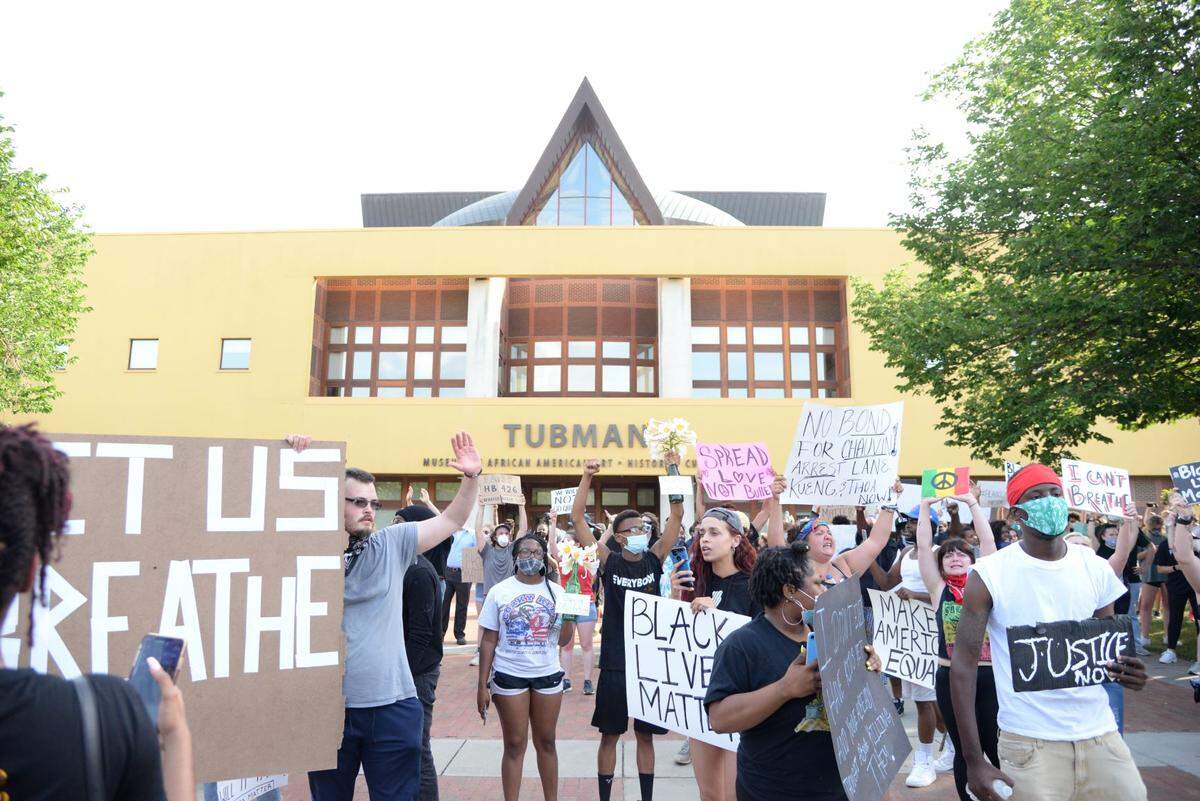
Holmes: I was shocked by how many people were there. I expected to see people; I’d been to other marches on campus and in high school, but there were so many people there. Everyone had a sign, entire families were there... I saw some [Mercer] professors there. It was incredible to see the entire community come together.
Foster: I didn’t know what to expect. I didn’t know who was going to be there, I didn’t know if the cops were going to be there, were they going to be aggressive? I saw a sea of humanity, officers being kind and just a very smooth day… people gathering peacefully, and respectfully.
Davis: Our deputies were right there, in uniform, directing traffic. They were in regular uniforms, not tactical gear; that was intentional, because I didn’t want us to look like an occupying force, an “us vs. them.” We were prepared for different scenarios, but you saw so many pictures [from across the U.S.] with a line of law enforcement officers decked out in riot and protective gear against demonstrators in shorts and tank tops… it was an odd juxtaposition. By virtue of you being there in just regular uniform, you’ve already helped deescalate situation.
Calling for change
At City Hall, several people spoke, including candidates for public office, march organizers and Davis.
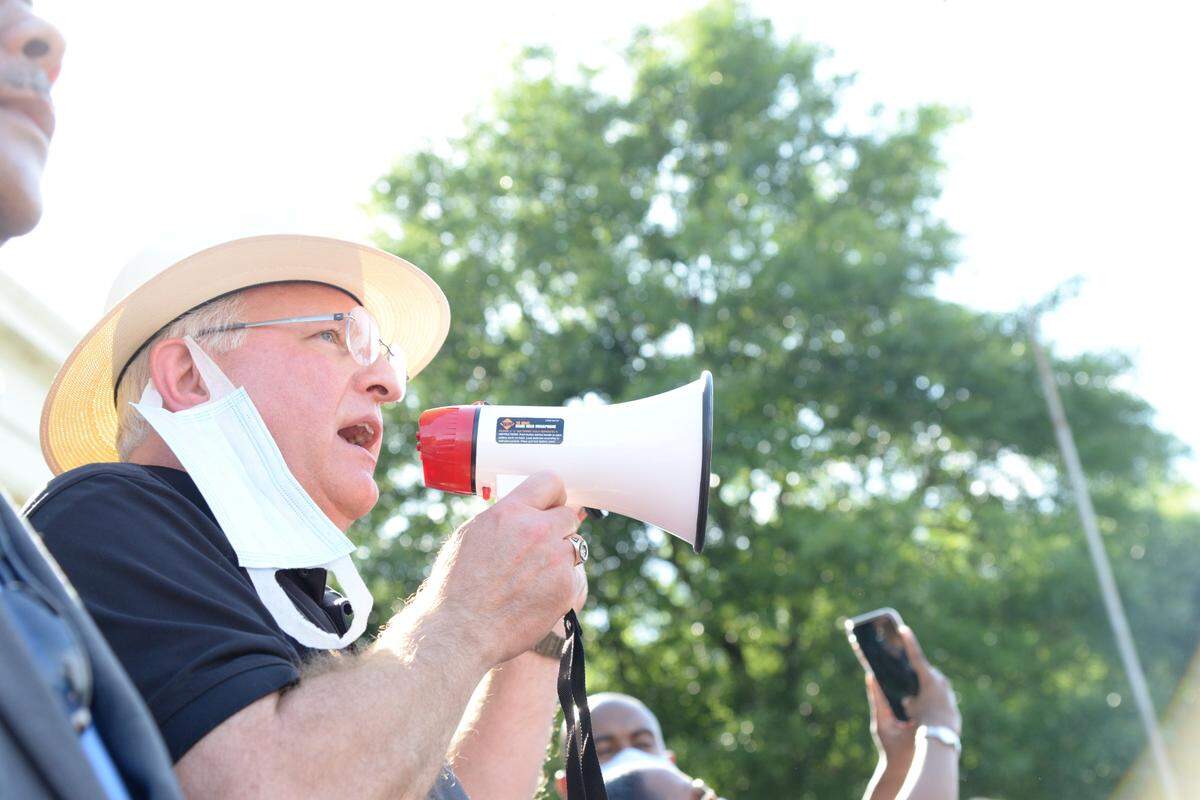
Davis: I had to voice my outrage and anguish about what had happened. As a law enforcement officer and leader, it horrifies me whenever we have people in our profession mistreat individuals. I was outraged.
Holmes: The kindness of the community… people were passing out water bottles, making sure people were alright, walking at other people’s pace. There was activism, passing out voter registration forms, calling for people to register and vote. Obviously, the marchers had a goal, one that everyone was on board with.
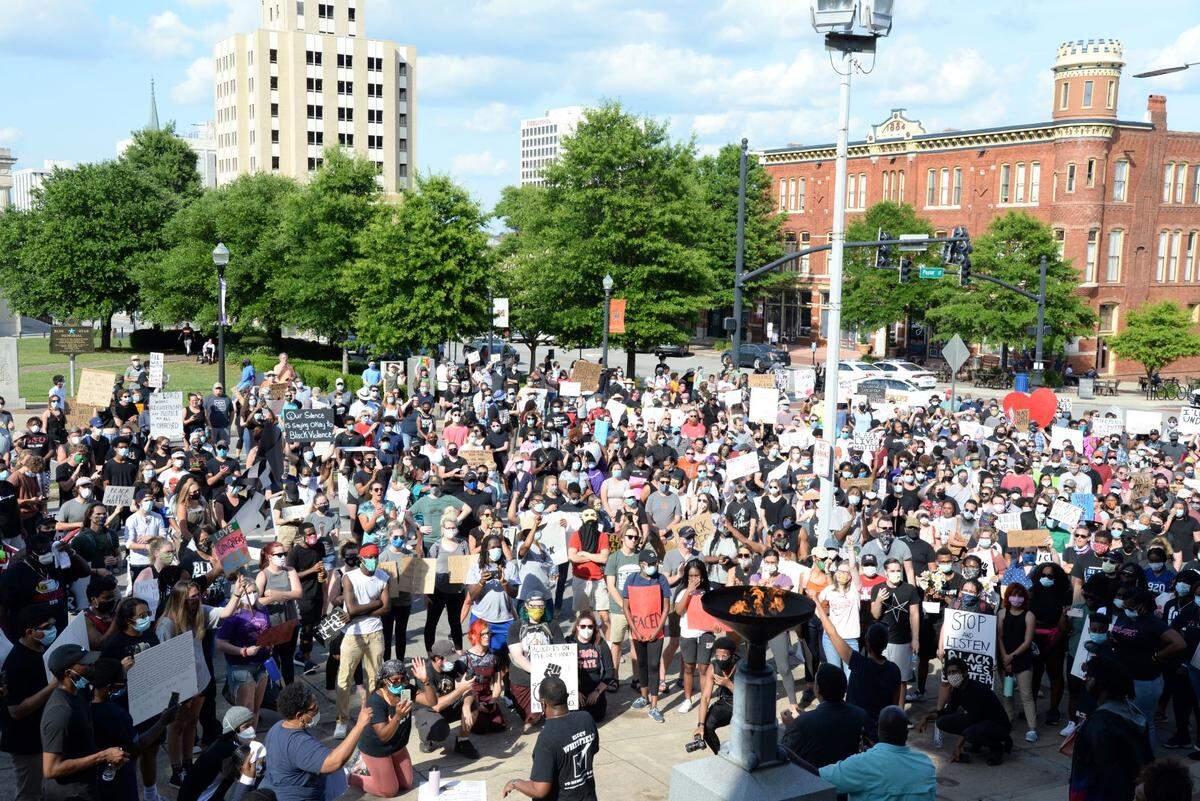
The next stop was the courthouse. Several candidates for public office including Juawn Jackson and Marc Whitfield spoke, and Andréa Glover handed out voter registration forms, calling on Maconites to vote in the upcoming municipal and federal elections.
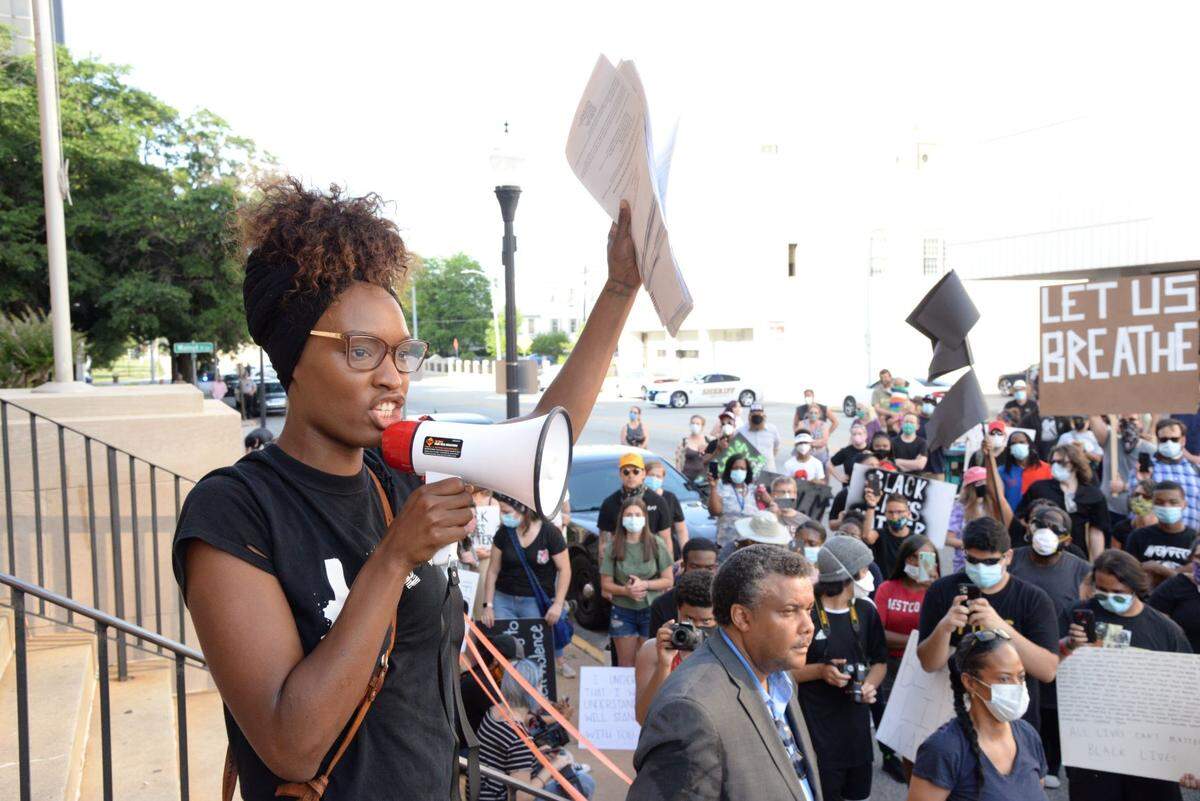
Brown: I was inspired by the ability to organize, the fact that we had leaders there to make it happen. Before the march, I didn’t know we had that in Macon. Juawn was doing his thing, Andréa did a good job. A march like that is a marker of hope when it may feel hopeless. We can still organize and create positive moments. It’s just a small city in the South, but didn’t Bibb County have a part to play in the election? It gives us confidence that we can get it done if we show up.
Foster: We galvanized voters like never before. The numbers were always there. I’m a member of the AME Church, and we’re a nation within a nation… we’re good at galvanizing, getting information and numbers and putting the word out. I worked hard in my community and to see it pay off, I did breathe easily for a few moments.
Holmes: My roommates and I were sitting down and watching the [presidential] election, updating each other in class about what was going on. The idea of people turning to politics, of people with a voice doing the right thing, that was really cool to see. If the politicians aren’t on your side, it’s tough to get anything done.
The lasting legacy
The march ended where it had began in front of the Tubman, with a final round of speeches. The long-term impact of the march, and others like it across the country, remains to be seen.
Brown: I thought you had to be one thing. If you’re an activist, you need to go the Martin Luther King Jr. route and dedicate your entire life to it. But it’s better if we have people who all have different roles to play. I don’t like it when people get onto folks for not serving in the same capacity. Some people don’t have the same gifts. We need teachers and lawyers… you can be an activist and an athlete.
Carl Jung wrote “Only the paradox comes anywhere near to comprehending the fullness of life.” Yes, I am an activist, but I’m also an artist, a speaker. You can live your life and still stand for something.
Foster: It’s so exhausting to see legislation passed in the House [of Representatives] and die in the Senate. It’s disappointing, we’ve got all of this momentum, but here at the legislative level, where we need it the most, we can’t agree that police should be responsible for their misconduct, on body cams, agree that racial profiling is bad. Why is that partisan? Even in Georgia, we tried to get a hate crimes bill passed, but then the legislators wanted to stick in stuff about police protection.
I hope the Senate passes the George Floyd Justice in Policing Act. I feel hopeless, like if it was going to happen, it would have happened within one year. The [Derek Chauvin] trial had everyone on pins and needles, and he was convicted, so you get these small wins. We need a big one.
Davis: Going all the way back to Ferguson, these tragic situations have caused changes in society and law enforcement. Law enforcement is under a lot of scrutiny, but if you’re doing your jog, doing the right thing, you shouldn’t mind the scrutiny. We try to be an open book. If we do make a mistake, we admit it and try to be better for it. It’s also made it hard to find people to come work for us, here in Bibb County and all over the country. It takes a special kind of person to get into this business, and we want those kinds of people. We don’t want a bully with a badge. Bullies need not apply, we’d rather work short-staffed.