
A century ago, a pandemic hit home forever
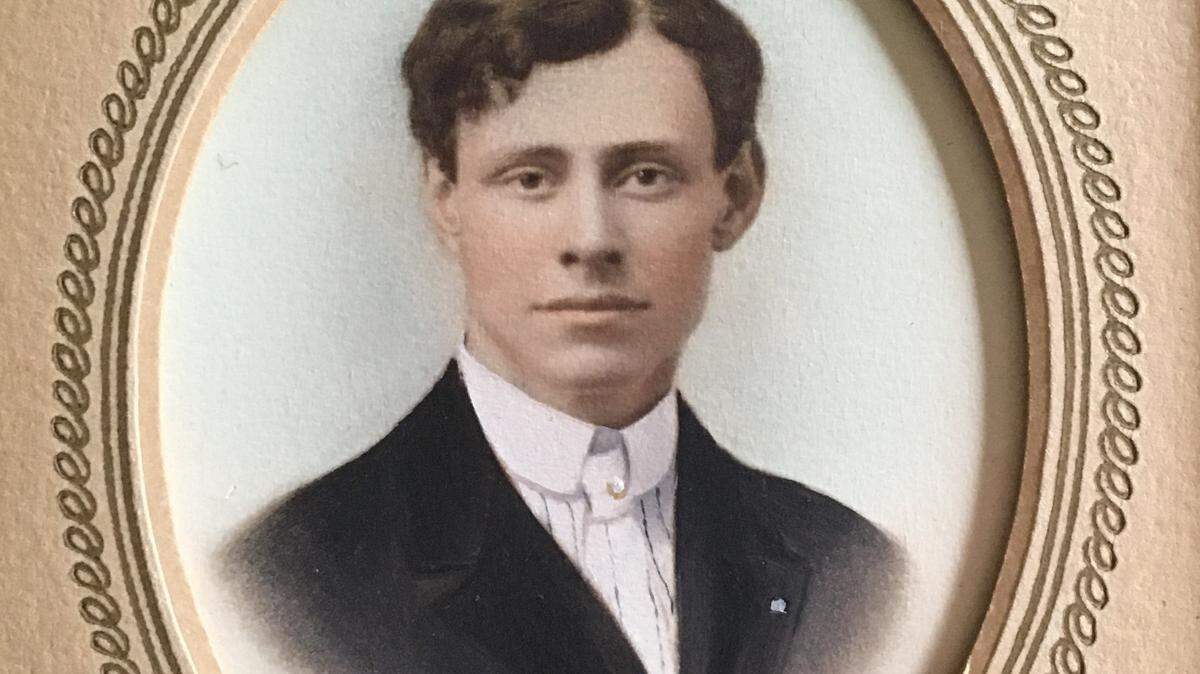
Elaine Jones keeps the framed picture on a shelf in her den. The man in the photograph looks back at her from across the years.
She never knew her grandfather, Clarence Lester Wilder. He died more than a century ago and almost most two decades before she was born. She never got to see his smile, hear his laugh or experience his joy. As a young girl, she never could crawl in his lap when he returned from a long day of working in the fields.
His name, like others of his generation, is recorded in the family Bible -- a timeline of births, deaths and other important dates. She keeps the letter he wrote asking for her grandmother’s hand in marriage.
He was only 28 years old when he died, leaving behind a wife and three children – ages 6, 4 and 2. Elaine’s father was the middle child, and he was too little to have collected any lasting memories of his dad. It left an empty chair at the table and a big hole in the lives of everyone around him.
Elaine no longer is able to visit her grandfather’s grave in the family cemetery between Powersville and Byron. The old farmhouse is no longer there, and everything around it has been swallowed by cotton fields and peach orchards.
But his epitaph tells at least part of the story. He was born on Jan. 25, 1890 and died on Sept. 15, 1918, just two months before the Nov. 11 armistice to end World War I, a date now observed as Veteran’s Day.
One assumption might be that he was a soldier killed in combat. His life, however, was swept away by another world crisis – the Spanish flu pandemic. It killed some 30,000 people in Georgia, and an estimated between 20 and 50 million worldwide – more than all the soldiers and civilians in World War I combined.
“It always was a family mystery about how and why he got sick,’’ Elaine said. “They lived out in the country and nobody else in the family got it.’’
Elaine remembers her grandmother, Mary Cornelia “Mamie” Sullivan Wilder, would tell stories of how she tried to nurse her husband back to health for eight days by placing damp cloths on his forehead to bring down his fever.
“To lose a loved one is devastating,’’ Elaine said. “And that devastation stays with you the rest of your life.’’
Three months ago, COVID-19 officially was declared a pandemic by the World Health Organization and countries began issuing stay-at-home orders.
There were plenty of comparisons to the deadly flu of 1918, and Elaine became even more intrigued with a subject she had heard and read about all her life.
She bought a 546-page paperback copy of “The Great Influenza: The Story of the Deadliest Pandemic in History” by John M. Barry. It took Barry seven years to write his New York Times bestseller, which was first published in 2004. Two years ago, it was updated for the 100th anniversary of the pandemic.
“With my family history, I was immediately drawn to (the book),’’ she said. “I underlined almost everything. There was more history and background than I knew about. It was interesting to have that connection after all these years.’’
Because she is in her early 80s, Elaine is among those who are at-risk and the most vulnerable to COVID-19. She has continued to take extra precautions. Her son and daughter-in-law do her grocery shopping. She wears a mask when she goes to the post office. She even covered her face when a friend dropped by one day last week to return some photographs.
“She had on her mask and stood on one side of my carport, and I had on my mask and stood 12 feet apart on the other end,’’ Elaine said.
The pandemic recently hit home and hit hard, just as her grandfather’s death still haunts her. A dear friend who lived in a nursing home reportedly died of COVID-19.
“We went to college together at Wesleyan and raised our children together,’’ Elaine said. “And I could not go to her funeral.’’
Ed Grisamore teaches journalism at Stratford Academy in Macon. His column appears on Sundays in The Telegraph.