
Here’s how one Georgia town’s life with coal ash inspired bills to clean it up
By the time he raised his hand to speak, Rodney Bostick was fed up.
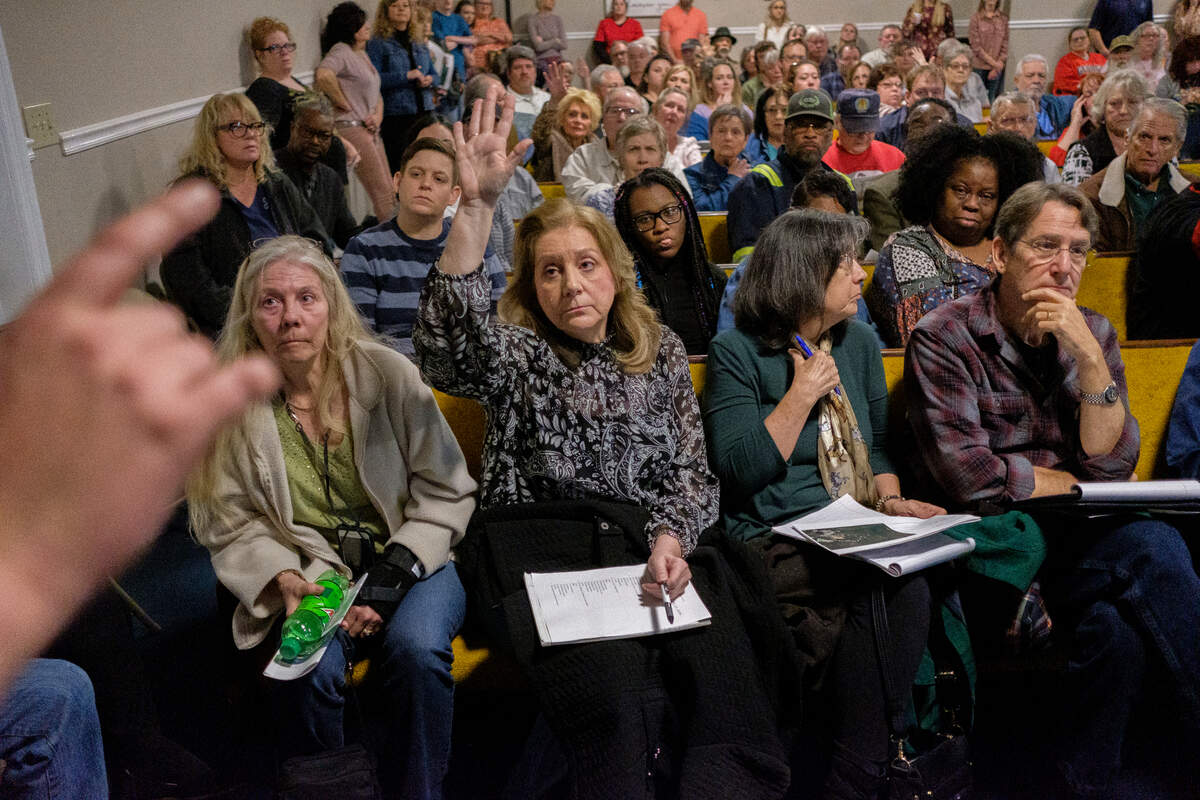
“I’m sitting here watching my friends suffer. My elected officials need to tell me what they are going to do to help us,” Bostick told about 200 people in a church Tuesday night just north of Georgia Power’s coal fired Plant Scherer, including Fletcher Sams of the Altamaha Riverkeeper. They were there to talk about the coal ash pond that many believe could have sickened, even killed, their neighbors and loved ones over the years.
“We don’t need five-year plans, we need immediate plans,” Bostick, the lifelong resident of the little town of Juliette told Sams.
“I think they’re here,” Sams responded from near the pulpit.
The plans Sams referred to are a pair of bills in the Georgia Legislature. Coal ash is what’s left over from burning coal to make electricity. House Bill 756 and Senate Bill 297 are aimed at regulating coal ash storage so that people living near the coal ash won’t have to worry whether it’s seeping into their drinking water, as the residents of Juliette do now.
If either bill becomes law, it could have big implications for the coal ash pond at Plant Scherer where Georgia Power has bought and demolished dozens of nearby homes over the years.
Also at the meeting at the church was Gloria Hammond. Hammond remembers the day the man from Georgia Power came to talk about buying the home she shared with her husband, Cason. They were just back from the hospital. The man had gone no farther than the front yard.
“I said, ‘Look, I’m telling you right now, we’re not selling nothing right now,’” Hammond said. “Because I already knew Cason was terminal.”
By terminal she meant Cason was already sick with the cancer that eventually took his life. By then, most everyone else up and down Luther Smith Road in Juliette had already sold out to the utility.
“You see, it’s just only two of us left on the road,” Hammond said.
The Hammonds sent the man packing from the property that had been in Cason Hammond’s family for something like a hundred years. That was two years ago.
“They haven’t offered me nothing,” Hammond said of the man from Georgia Power. “He just told me, he said, ‘You know, I will be back.’”
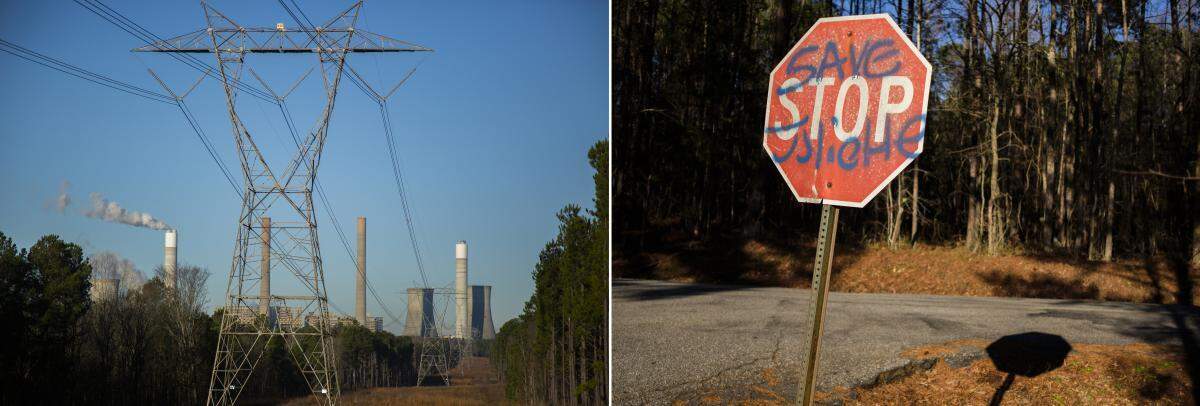
While she’s sure Georgia Power still wants the house where she is helping to raise her grandchildren, what Hammond has never known is exactly why the utility has bought so many homes in Juliette in the first place. In an email exchange, Georgia Power spokesperson Holly Crawford said it’s been to establish a buffer around their coal ash pond at Plant Scherer during the pond’s closure.
What Crawford didn’t say is why Georgia Power needs the buffer in the first place, except that it’s a part of the closure of the coal ash pond. That’s a process for which Georgia Power rate payers are partially footing the bill with the approval of the Georgia Public Service Commission.
.JPG "020420_Coal_Ash_FORUM_078_1 (1).JPG")
Like Gloria Hammond, many in Juliette wonder whether it isn’t connected to illnesses that have afflicted their loved ones, like the cancer that killed Cason Hammond.
Dale Washburn, (R-Macon), represents Hammond in the Georgia House. Soon after House Bill 756 was filed, he said he knew his constituents were worried about their water.
“I also know that Georgia Power is a, of course, a major industry, a major employer, many other things to the state of Georgia,” Washburn said.
While Washburn is not among the bill’s sponsors, Mary Margaret Oliver, (D-Decatur), is.
“We know that our water testing is showing bad results in certain wells in certain areas of the state, and we have to be more protective of our water source,” Oliver said.
In support of that bill and also to provide some answers to residents, Fletcher Sams of the Altamaha River Keeper is doing new testing. He’s taking water samples from kitchen sinks, at the Hammond place and at 99 other homes where people rely on wells for drinking water, wells drawn from groundwater that could be tainted with coal ash.
Meanwhile, Sams said while there are many things we don’t know, there are a few things we are sure of.
“We know and we can prove that the bottom of that ash pond is in contact with the aquifer,” Sams said at a park by the Ocmulgee River in downtown Juliette.
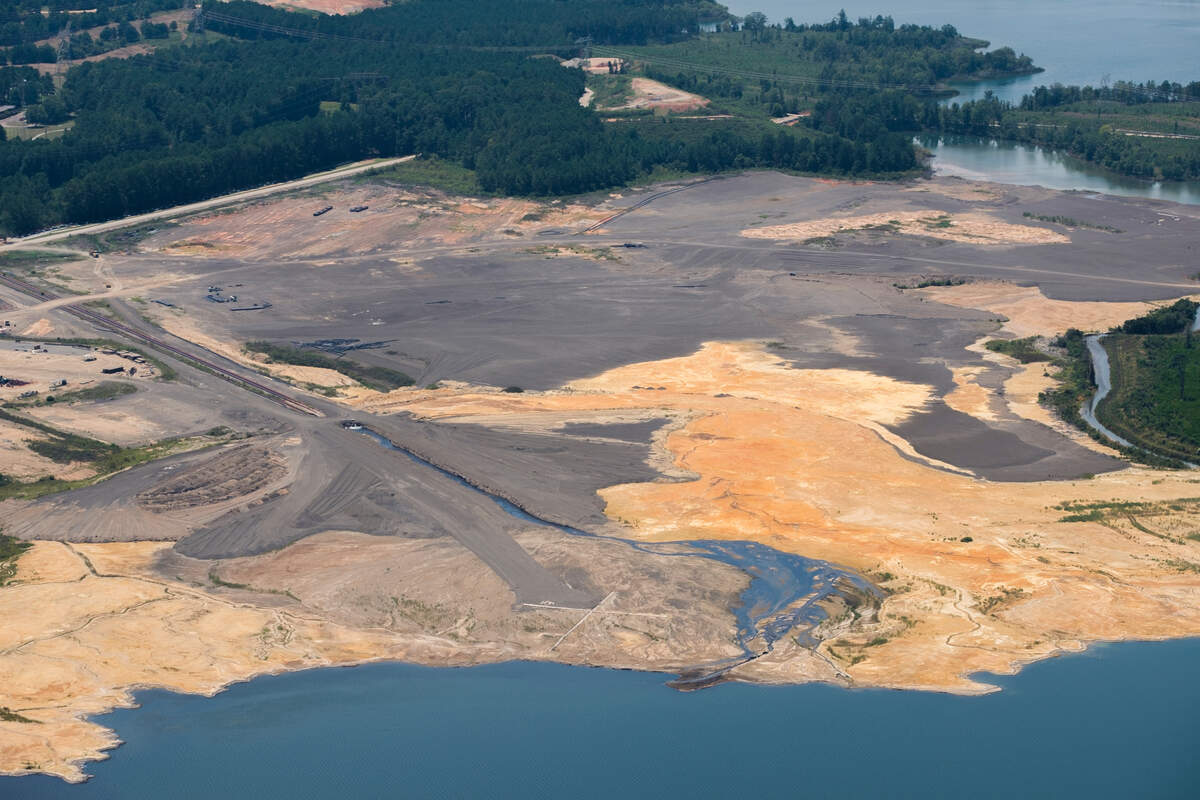
That much was made clear in hearings on the handover of coal ash management from the EPA to the Georgia Environmental Protection Division in 2019. Right now, coal ash is partially submerged in groundwater in five of the 29 ash ponds Georgia Power is closing, near the towns of Smyrna, Rome, Newnan and Carrollton as well as in Juliette. Additionally, another report suggests that coal ash toxins have been leaking from 90% of all Georgia Power coal ash storage facilities.
Georgia Power said the plans to seal the ponds above ground, but not underground, something called Advanced Seal in Place or Advanced Closure Method, are legal. For now that’s true there as well as for landfills that might store coal ash dry. But if they were storing something like your kitchen trash it wouldn’t be. By Georgia law, municipal landfills must have liners and systems to collect runoff that keep waste fluid out of groundwater. So the framers of Georgia House Bill 756 say its aim is to regulate coal ash at least as well as household garbage by mandating it be stored away from aquifers. Same for the senate bill.
The second thing we know is that there are things in coal ash can make you sick, things like heavy metals.
“So a number of these metals, these are metals like arsenic or chromium or mercury or cadmium. These are known to be toxic metals,” said Carmen Marsit, director of the Hercules Exposome Research Center at Emory University. There they help communities understand health issues through science. They will be vetting Fletcher Sams’ water samples.
“They’re concerning because if they’re in drinking water, you’re having consistent exposure to these metals that could be related to a number of different health outcomes, things like respiratory health outcomes, asthma in children or emphysema in adults. It could be related to long term development of cancers depending on the type of metal that you’re looking at,” Marsit said.
In the case of lead, the risk is neurological impairment. Lead was on the mind of the mother of the 3-year-old girl in a home Sams tested closer to downtown Juliette. The mother, who asked not to be identified by name, said she had some notion of the risks of living in Juliette before she moved there.
“You know, people kind of talked about the plant. You know, the air, the water,” she told Sams as he took notes on the family’s health. She had reminded Sams that her 3-year-old daughter has been diagnosed with elevated levels of lead not long after he arrived.
“If they would come out and be like, ‘Hey, you know, this is the situation. You know, the water, you may have to....’ And they just were open and honest about it, I think a lot of people would not be as angry and as upset as they are,” she said of Georgia Power.
“This is all the water she’s ever known. You know, if it comes back positive, she’s been exposed to that for her whole life, what do you do from that point on?” she finished.
Sams filled the requisite number of bottles for the testing, then told the mother she might want to go ahead and think about switching to bottled water.
“We’re not trying to shut down the plant,” Sams told her. “You know, we’re just trying to make sure that the mess is cleaned up.”
Via email, Georgia Power’s Crawford said when they have turned up heavy metals in their test wells, they have been within legal limits, which could lead one to assume that there are levels of heavy metals we can consume safely. Carmen Marsit, director of the Hercules Exposome Research Center at Emory University, said that’s not a safe assumption.
“I wouldn’t I wouldn’t go so far as to say safely. We don’t know really at what level a lot of these metals are considered safe, particularly metals like arsenic or cadmium,” Marsit said. “They do not have a role in the body in a normal function.”
But Marsit said there are limitations to what that data can tell us. First, he said it’s important to know the samples are one day snapshots of what was in the water. Even if they come back with high levels of heavy metals, they wouldn’t be enough on their own to say without a doubt polluted well water has been what’s made people sick in Juliette.
Instead, Marsit said the strength of the data would come in fighting future risk. If the tests come back toxic, then the better-safe-than-sorry move would be finding a way to cut off the source of the toxins before people had a chance to consume them.
“I would generally say it’s safer to, you know, try to protect people from exposure,” Marsit said. “If we can prevent the exposure, you’re much more likely to then prevent the health effect than trying to say, ‘Well, there’s not that much exposure, so it’s not so bad.’”
With coal ash, exposure prevention would likely mean locking the material away from air and water. That is what is happening in North Carolina where Duke Power is moving coal ash to lined and sealed storage after an out of court settlement, and it’s also what legislators are asking for in Georgia House bill 756.
Back at the meeting at the church near Plant Scherer, residents had a lot of questions for Fletcher Sams, mostly about how much or how little it would be to use their well water if tests come back toxic.
“Will a Brita filter get it out?” a woman asked. She was answered, appropriately, by a chorus of “nos.”
Sams told the crowd the water would be fine to bathe in, but definitely not to drink. And that even if the pond were sealed off today, it might take years for the aquifer to recover. Still, he said if they wanted to help themselves the best thing to do would be to call their state level representatives in support of the coal ash bills.
This story was originally published February 6, 2020 at 8:00 AM.