
Low-income housing may be harder to come by after tax reform puts key tool in jeopardy
Chalk it up to the law of unintended consequences.
The federal tax reform that passed this year was intended to provide tax relief. The perhaps unintended effect was a potentially massive disruption in one of the private solutions to public sector problems often beloved by Republicans and Democrats alike.
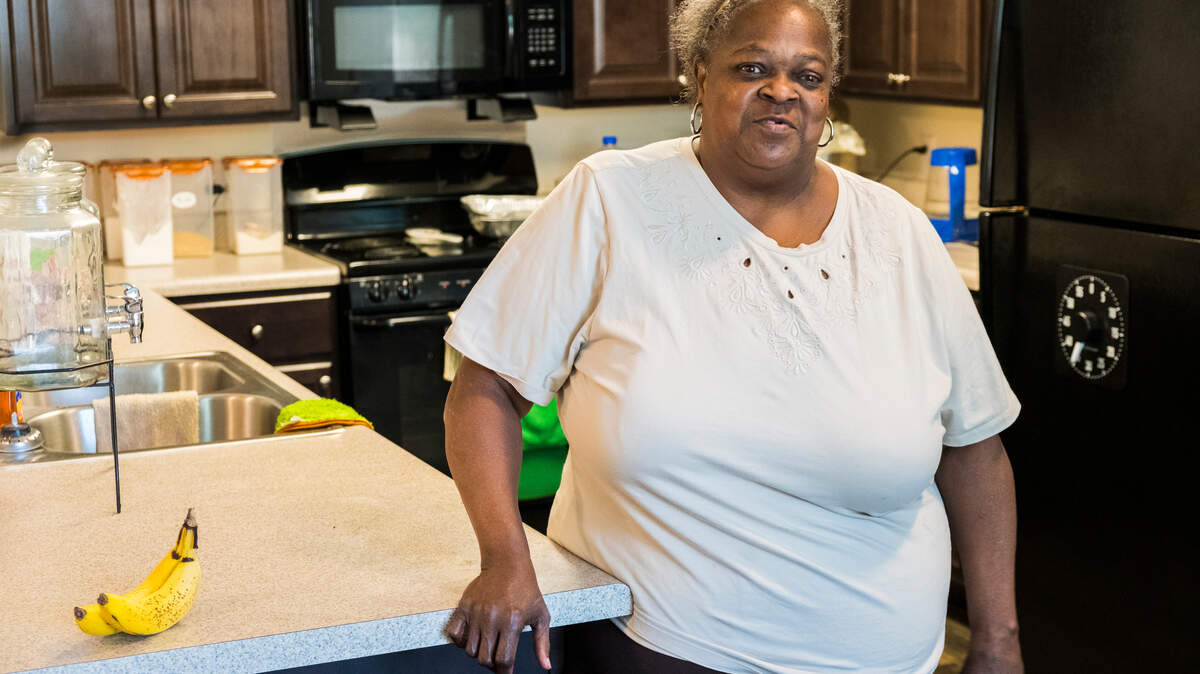
To understand what’s at stake, meet Annie Johnson. She lives in a new senior tower on part of what was once the Tindall Heights Housing Project on the south side of town.
For her, Tindall Heights meant community and a springboard into life for her kids.
“I mean people said it was bad, but still we saw about each other,” she said. “Grew up my kids there. And one got a scholarship and both my kids went off to college.”
Today her kids are both traveling nurses, a job that pays about $75,000 a year on average. Tindall Heights is gone, but the Tindall Senior Towers Apartments, where Johnson lives now, is the first of four planned phases of redeveloped low income housing on the site. It's housing that the Macon Housing Authority hopes will be a stable place not just for retirees like Johnson but for families, too. For that to happen, the housing authority has to get some money together.
Mike Austin, executive director of the Macon Housing Authority, said the Low Income Tax Credit program is how Macon and housing authorities nationwide get the cash they need.
“There's really no other tool in the toolbox right now other than the tax credit program,” Austin said.
Now, that tool is in jeopardy.
The Low Income Housing Tax Credit program got its start in 1986 under President Ronald Reagan, and it works like this: Housing authorities compete for federal credits, which, once in hand, they trade in an open market. The financial institutions that buy the credits get a big cut in their corporate tax liability. Housing authorities get millions of dollars in return, and that’s what pays for new construction.
Austin said that was great when corporate tax rates were creeping up toward 40 percent.
“If I'm corporate Joe and I'm paying 37 percent tax rate and all of a sudden I only have to pay 20, and, like, that's pretty good,” Austin said.
The tax reform passed this year set a top rate of 21 percent for corporations. With tax rates that low, the fear is that corporations just won’t need tax credits anymore. Austin already assumes he’ll need help paying for the final phase of new Tindall Heights development.
Macon-Bibb County’s Urban Development Authority is providing $1.4 million in gap funding. Urban Development Authority head Alex Morrison said the community has a natural disaster to thank for the money.
“That was funded by HUD as a recovery program for the Mother's Day tornado now 10 years ago,” Morrison said.
Austin said he’ll chase another round of credits for the fourth and final phase, too, hoping the market will settle down. So, maybe the worry is overblown.
“No it's not overblown,” said Molly Bryson, tax credit lawyer with the Ballard Spahr law firm in Washington, D.C.
Bryson has worked tax credit deals from both ends of the deal for about 20 years. She said when Mike Austin’s tax credits dropped in value that wasn’t even the tax reform at work.
“Shortly after the 2016 election, in fact, corporations and banks that were regular investors in affordable housing already anticipated that the corporate tax rate would be reduced,” Bryson said. “And so that resulted in perhaps a 10 cent or more reduction in the credit pricing.”
Just the rumor of tax cuts was enough to shake the tax credit market. The full effect of the actual tax cut should be apparent once developers try to trade the next round of credits later this year. Austin said he’s not the only one left wondering how to make the best of this.
“This is not something that's just unique to Macon,” he said. “This is a nationwide challenge.”
This story was originally published June 7, 2018 at 12:30 PM with the headline "Low-income housing may be harder to come by after tax reform puts key tool in jeopardy."