
New Georgia law changes how you can drive and makes some families cry
When David Forsee thinks about what happened to his 6-week-old grandson, he gets tears in his eyes.
On June 5, 2016, Zachary Vance was riding in his car seat in the back of his mother's Honda Fit on Ga. 247 as she stopped at the red light at Green Street near Robins Air Force Base.
"A car hit us from behind at about 65 mph ... she was distracted by her telephone, and she just slammed into us," Cassie Vance, of Warner Robins said. "My son was folded up in his car seat like a book."
The infant suffered two skull fractures, a broken clavicle, brain bleeds and collapsed lungs.
After X-rays at the Medical Center, Navicent Health, the baby was airlifted to Children's Healthcare of Atlanta at Egleston Hospital.
"We were admitted for 16 days when it was touch-and-go for that time frame," Vance said.
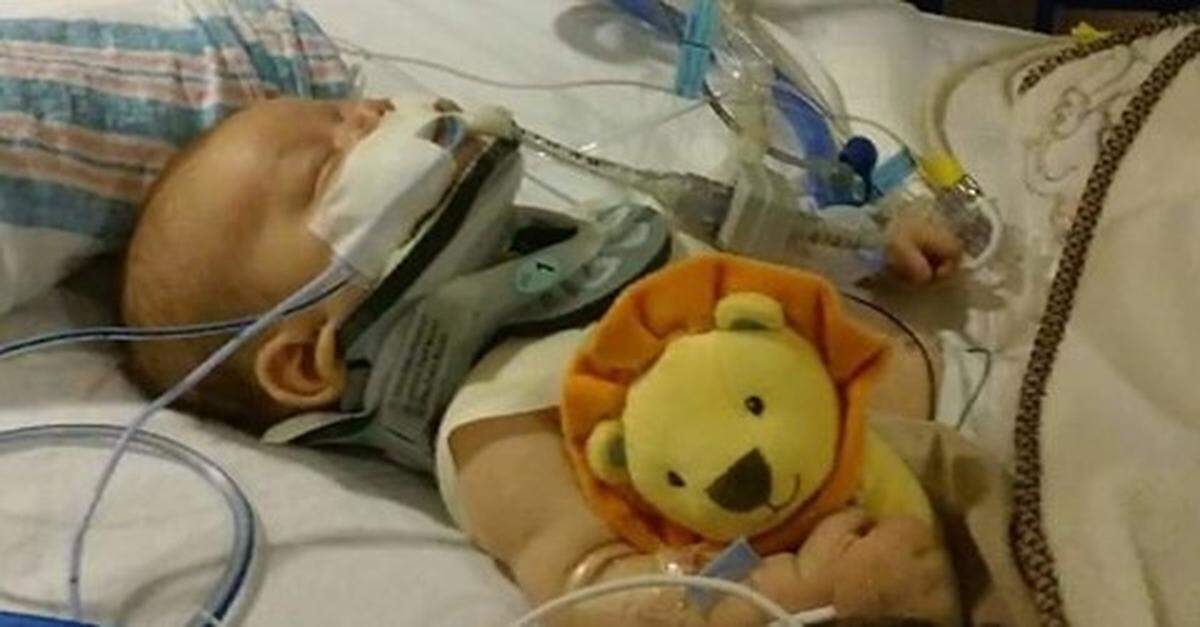
The family nearly lost him twice.
"Miraculously, here he is today," she said Wednesday, as 2-year-old Zachary was running around under the trees of the Georgia Farm Bureau on Bass Road.
Ten members of the Vance and Forsee families were joining a caravan of other families hurt by distracted drivers.
They boarded a bus chartered by the Governor's Office of Highway Safety to travel down Interstates 75 and 16 to Statesboro to watch Gov. Nathan Deal sign Georgia's new hands-free law prohibiting drivers from physically holding or supporting a wireless communications device, computer, GPS receiver, personal digital assistant, tablet or other wireless device.
The families of five Georgia Southern nursing students killed in a 2015 crash with a tractor-trailer on I-16 have also were invited to the ceremony at the Statesboro-Bulloch County Airport.
Governor's Office of Highway Safety Director Harris Blackwood said he's been waiting years for this anti-distracted driving bill which follows the anti-texting law passed in 2010.
"Hopefully it will result in people doing the right thing and putting that phone down while they're in the car," Blackwood said. "The bottom line is it will save lives, and in a year from now we'll be able to look at that and say, 'Yes it worked.' "
Through Bluetooth technology, people can still talk on the phone using hands-free systems.
"You can't hold a phone with your hands. You can't support it with your body," Blackwood said. "You can't send a text message, Facebook, Instagram or anything like that. You can't make a video of any kind."
In the law that takes effect July 1, there is an exemption for dashboard mounted cameras, radios, two-way radios, CB radios, emergency communications devices, amateur radios, medical devices and in-vehicle security or navigation systems.
The National Highway Traffic Safety Administration estimates more than 3,000 people are killed in crashes involving distracted driving each year in the United States.
Forsee, of Centerville, has spent the past two years talking to groups about distracted driving and pushing for stricter penalties for drivers.
He was elated that this year's Georgia General Assembly took the extra step and outlawed hands-on communications devices.
"This is joyful," Forsee said before his relatives got on the bus with another Macon family who lost a child in a distracted driving crash in Coweta County. "I can't thank Gov. Deal enough for signing this. ... A lot of people sacrificed to get this done."
For his daughter, the signing ceremony is a symbolic end to a difficult time in their lives.
"It means the world to us ... it kinda puts us at peace," Vance said. "We've dealt with a lot of emotional ups and downs for the whole ordeal, and it kinda puts a closure to this whole ordeal."
This story was originally published May 2, 2018 at 4:46 PM with the headline "New Georgia law changes how you can drive and makes some families cry."