
What is Macon's connection to Denmark and Liechtenstein?
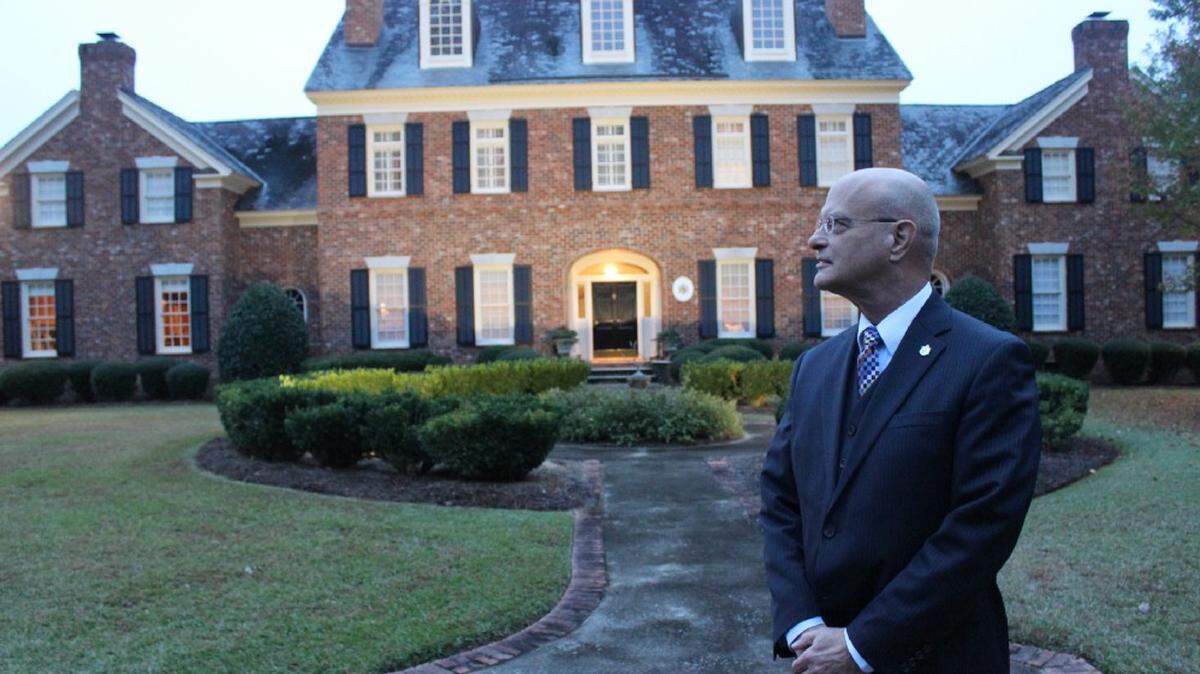
When Macon lawyer Christopher Smith got an unusually formal email from the Danish Embassy a little over 10 years ago, he wasn’t sure what to expect.
The embassy was requesting him to be an honorary consul to Denmark. In essence, he could be an unpaid diplomat between America and the western European country known for its wealth, ancient palaces, high happiness levels and buttery cookies.
“At the time I didn’t know what all was involved. But I’m a quick learner, and it’s been a delight,” Smith said.
The roles of honorary consuls are largely based on the country’s individual needs and ties to America. In addition to Smith, former Macon Mayor C. Jack Ellis is the honorary consul to Uganda, and Macon resident Bruce Allen is the honorary consul to Liechtenstein.
The genesis of the consul began in Classical Greece, where well-connected and wealth citizens, each called a proxenus, acted as diplomatic authorities between city states.
That tradition has wiggled its way through the centuries and still flourishes today, steeped in the old-world notion of maintaining peaceful and proper relationships between different regions.
“Denmark has had a consulate here in Georgia since 1802. In the old days, it had a lot to do with shipping,” Smith said.
But the job description has changed throughout the centuries and at best is somewhat hazy and flexible — an unpaid, voluntary diplomat between two different countries.
“The core constituent needs — passports, citizens in need, are always going to be part of it. But in addition, what’s really big today is public diplomacy,” Smith said.
For Smith, this means getting out the message of the country in his local community and acting as an advocate for Denmark products and businesses.
“It’s important for people to know that Denmark is a founding member of NATO and a strong ally to the United States. We also want people to know that there are over a thousand Georgians employed by approximately 65 Danish companies here, so there’s an economic angle,” Smith said.
“There’s also a cultural angle, a business angle. We like to let people know what Danish products are. Many of them you use. Lego comes to mind. I think everyone’s played with Lego. … Oftentimes they’re trying to get a new product here, and they’ll call you up and say, ‘We want to pitch our product to somebody, do you know somebody in this industry, or that industry?’ and if we do, we certainly relay that on.”
Allen was not completely caught off guard when he received a call saying the prince of Liechtenstein was requesting that he become the first and, at that time, only consul to the wealthy country with a population of just under 38,000.
“Someone had given me a heads up that I might be getting a call from the ambassador of Liechtenstein,” Allen said.
As the former president of several different nonprofits, a former dermatologist and former government liaison for the American Academy of Dermatology in Washington D.C., he found himself wondering what he was going to do next with his life. It seemed like he had done it all.
“I was sort of twiddling my thumbs wondering what I was going to do next and sitting on the boards of banks and nonprofits, and then the phone rings one day: ‘Will you hold for the ambassador of Liechtenstein?’ And I go, ‘Sure!’ ” Allen said.
During his time in Washington, Allen created strong business connections and diplomatic relationships with foreign countries, including Liechtenstein, and he had always regarded the country fondly. But never did he think he would be asked to serve in a serious capacity, much less be requested to be an advocate and diplomat for the country.
“If you want to become a consul like Chris Smith and I, the worst thing to do is apply for it. You need to find something that brings your name and expertise to (the country's attention),” Allen said.
The qualifications that held true in Ancient Greece still linger. Consuls should be well-connected, business-oriented, successful and have a pristine reputation in their community.
“Usually it’s somebody who works at a level where they can pick up the phone and call the governor, senators, if need be, no problem,” Allen said.
Smith and Allen meet those qualifications. Both are deeply ingrained in the Macon community in a number of niche ways: Smith through his love of biking and Allen through his former medical practice.
But Smith doesn’t buy that foreign countries' choices are made only on tangible accomplishments.
“They’re pretty smart, these governments are. They pick someone who they wanna hang out with,” he said.
Smith said his disposition fits well with Denmark’s eclectic bunch of citizens. They’re friendly, laid back and have a good sense of humor.
“I think that oftentimes what you’ll find, and it’s by no accident, that the consul that is selected oftentimes mirrors the values and the attitudes of the country,” he said.
This story was originally published December 18, 2017 at 1:59 PM.