30 data centers plan to use water from Ocmulgee River. What’s the impact on supply?
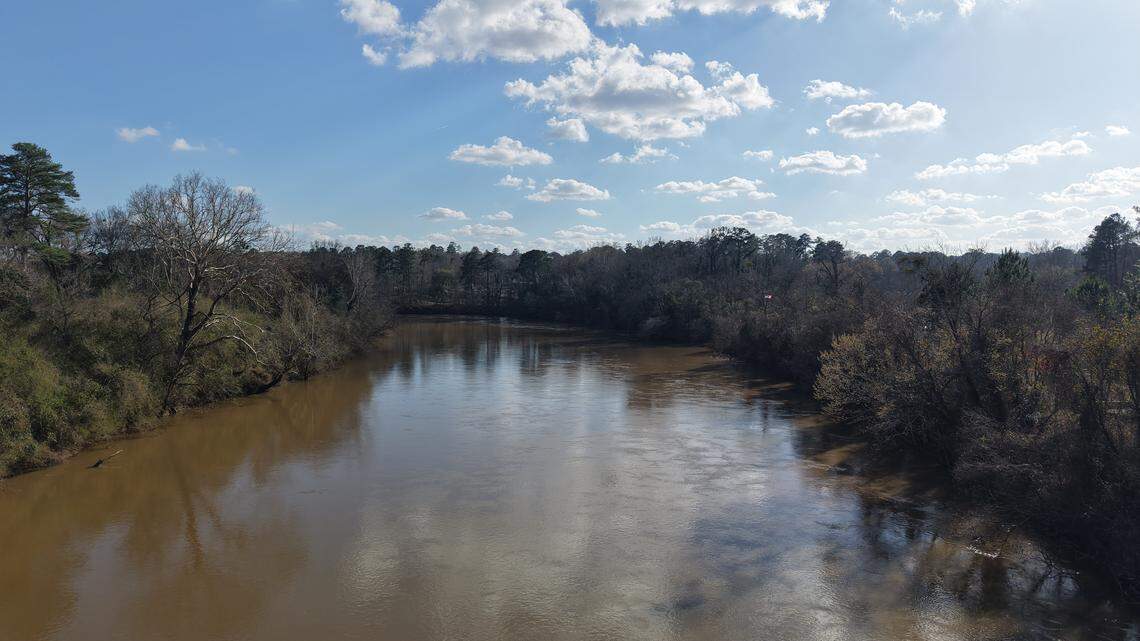
A regulatory loophole could leave state planners without a clear picture of how much water the 30 data centers planned around the Ocmulgee River basin plan to use from the waterway.
“As far as I’m aware, none of them have been permitted to drill a well or have applied for a surface water withdrawal permit,” said Fletcher Sams, executive director of the Altamaha Riverkeeper. “None of them.”
Under Georgia law, a data center can plug into a city’s water system and is treated as any other customer regardless of how much water it uses, according to Sara Lips, spokesperson for the state Environmental Protection Division, or EPD. The data centers then aren’t required to apply for a separate water permit because they’re plugging into an entity that already has a permit.
“Data centers are considered in a similar manner to any other standard customer of the municipal water system providing that service,” Lips said in an email to The Telegraph. “EPD does not have a role in determining appropriate customers for municipal water providers.”
Large data centers can consume up to five million gallons of water per day, which is equivalent to the daily water use of a town with a population of 10,000 to 50,000 people, according to the Environmental and Energy Study Institute.
Of the 30 data centers, most are proposed or under construction. Only 16 have disclosed projected water usage figures through the state’s Development of Regional Impact process, a local zoning review that requires developers to disclose anticipated resource demands.
Those 16 plan to use a combined 12 million gallons of water every day and return only 3.16 million gallons, meaning more than 9 million gallons per day will evaporate out of the basin entirely, according to Sams.
The remaining 14 have not disclosed their projected usages.
Two kinds of permits and why the difference matters
When a company wants to draw water directly from a Georgia river or reservoir, it must apply to EPD for an industrial withdrawal permit, according to the Environmental Protection Division’s website. That process requires the company to disclose how much water it intends to use, how much it will return and how its withdrawal will affect the river’s flow.
Companies like Graphic Packaging in Macon and Interfor, a sawmill in Perry, for example, hold their own industrial permits for drawing from and discharging to the Ocmulgee basin.
EPD then reviews the application, sets limits and the water usage becomes part of the official record.
Data centers connecting to a municipal water supply bypass that process entirely. They secure local zoning approval, obtain commitment letters from municipal water providers, and come online — without ever applying for their own industrial permit as a water user.
“The regulatory scheme here is they get the local zoning to allow them to be there, they get the land disturbance permits, they build the thing, they get the commitment letters from the municipal water providers,” Sams said. “The state’s not doing any water planning around it.”
A municipal water permit works differently from an industrial one. Cities apply for those permits to serve their residents — homes, businesses, schools. The permit is based on projected population growth and domestic demand.
However, some data centers say their water use is minimal relative to available municipal capacity. In Butts County, for example, Amazon’s combined water use represents only 3.3% of the local utility’s annual capacity, according to Amazon spokesperson Kylee Yonas.
Industrial-scale users supplied by municipal systems are “considered in the water demand forecasting process,” Lips said, but did not say where they are considered. The plan’s published industrial forecast contains no data center category.
The Middle Ocmulgee Regional Water Plan, last updated in 2023, allocates only 4 million gallons per day in new industrial water use between now and 2060. One single large data center can consume that entire allocation on its own in a single day, according to Sams.
Regional water planning
Georgia divides the state into water planning regions, each governed by a regional water plan that projects how much water the basin can sustain being withdrawn over the coming decades without overstressing the watershed.
The plan is broken down by sector: municipal, agricultural, energy and industrial.
Those plans inform which new permits EPD can issue and at what volumes. They are, in theory, the mechanism that keeps withdrawals from outpacing what the river can give.
The 2023 Middle Ocmulgee Regional Water Plan was built on a set of assumptions that are already coming apart, according to Sams.
In the 2023 plan, Plant Scherer, the coal-fired power plant near Juliette that draws 72 million gallons a day from the Ocmulgee, would retire Unit 3 by 2028. In Georgia Power’s 2025 Integrated Resource Plan, filed January 2025 with the Georgia Public Service Commission, Georgia Power proposed extending Unit 3’s operation until at least 2035, and possibly 2038.
The water that would no longer be used with Unit 3 coming offline was intended to balance out anticipated population growth, EPD’s Veronica Craw told the Middle Ocmulgee Regional Water Planning Council in June 2025. With Unit 3 no longer being retired, she said, that rebalancing may no longer hold.
Sams has done the math on what that means for the river.
The plan projected total basin withdrawals of roughly 280 million gallons per day by 2060. Add Scherer’s continued operation, which accounts for 71.5 million gallons per day, and the 12 million gallons per day projected by just half of the data centers — and that number climbs to approximately 364 million gallons per day.
Last year, the river ran below 364 million gallons per day on 81 days, meaning it cannot meet that demand year-round.
What happens when the river runs low
The question of what happens during a drought while a city is sharing its water permit with a data center has no clear answer.
Amazon, which has four facilities on the list, said it has taken steps to reduce its impact. Amazon AWS has projected using 0.5129 million gallons of water per day; the remaining three Amazon facilities in the basin — Legacy 75, Amazon Butts County and Amazon Data Services — have not disclosed projected water usage figures.
“Amazon’s data centers prioritize water efficiency — in Georgia, we use water for cooling less than 8% of the year, relying on natural outside air cooling the rest of the time,” said Yonas. “To further reduce our impact, Amazon is investing millions of dollars to build dedicated reclaimed water systems in Newton and Douglas Counties, transitioning those facilities to 100% reclaimed water cooling by 2030. These investments will help preserve potable water for local residents and protect the Ocmulgee River basin.”
Municipal permits carry in-stream flow protection thresholds, according to Lips. But those thresholds apply to the city’s permit as a whole, not to individual users drawing from it. It is unclear what mechanism, if any, would require a data center to reduce its water use before a city’s residents feel the pinch.
Ecologically, reduced flow means reduced dissolved oxygen and warmer water temperatures, according to Sams. The Ocmulgee is home to robust populations of Red Horse and sturgeon, and when the river drops low enough, rocky shoals that fish navigate freely become impassable, severing migration routes critical for spawning, Sams said.
Most of the 30 data centers also sit upstream of the Macon Water Authority intake — the primary drinking water source for Macon-Bibb, Monroe, Jones, Peach and Twiggs counties — meaning less flow reaches the point where the city draws its water.
For now, Sams said, the only real check on data center development in the basin is local government.
“The only thing that’s really standing in the way of these things being built and becoming operational is the city councils and the county commissions,” he said.
This story was originally published March 11, 2026 at 3:00 PM.