Middle Georgia college challenge hopes to get elementary students to build recycling ‘habit’
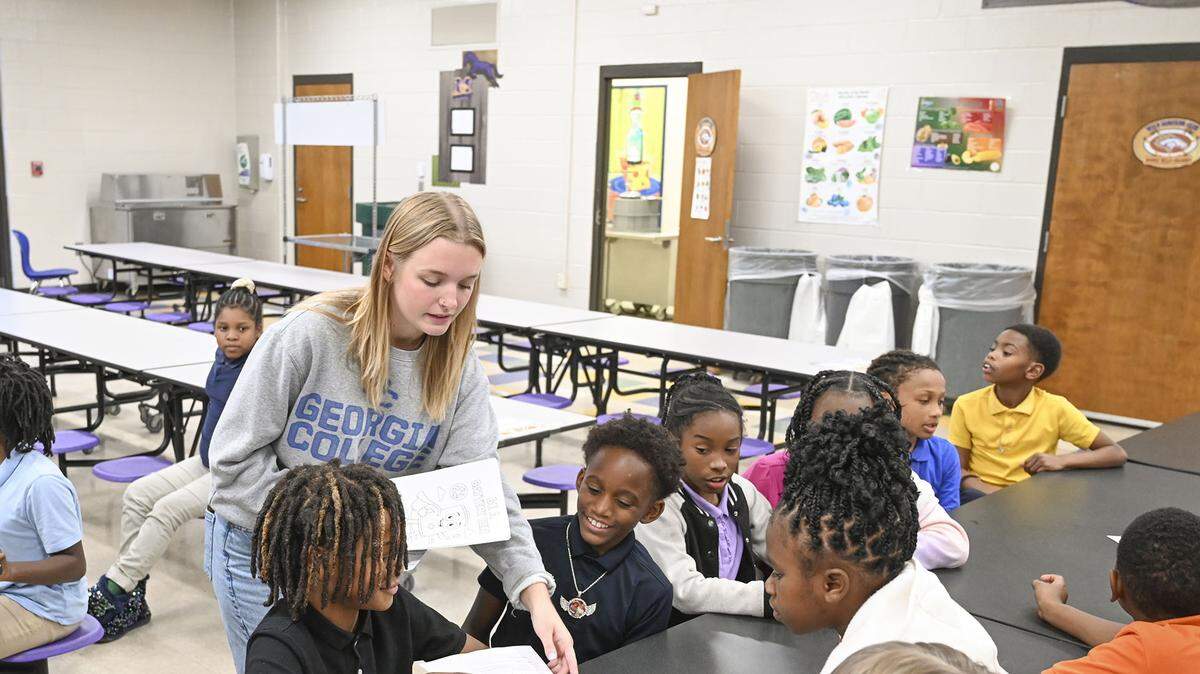
Georgia College & State University students organized a two-week battery recycling challenge at a Baldwin County elementary school to encourage the next generation in Middle Georgia to be good environmental stewards.
Between Nov. 3 and Nov. 13, Midway Hills Academy students are collecting used batteries in a schoolwide recycling contest to see which grade gathers the most. The project teaches kids about safely recycling batteries that contain toxic metals such as lead and mercury.
“Batteries contain toxic chemicals, often including heavy metals like lead and mercury, which can cause significant environmental pollution if not disposed of properly,” a news release from the school reads.
The winning class will be announced Nov. 13 — just ahead of National Recycling Day — during a celebration held as part of the school’s after-school program. The event will be sponsored by Chick-fil-A and led by GCSU professor Mengyao Xu.
“I want to, together with my students, make a change to the community here,” said Xu, assistant professor of communication and instructor of the capstone class. “Maybe, I hope, one day Georgia could have its own regulation about how to dispose of the batteries.”
Georgia College’s “Battery Hero” team, made up of five mass communication seniors in a capstone class, kicked off the initiative at the after-school program, teaching more than 100 students that batteries can be recycled.
The five seniors are Sairsha Connor, Aidan McGowan, Clary Eidell, RJ Head and Olivia Gentry.
Connor and Gentry were first inspired by Xu’s pitch of the idea in a campaign principles class in January.
“If kids learn the importance of battery recycling at a young age, they’re more likely to carry that habit with them and their excitement often inspires their parents, expanding our impact,” Connor said.
Each year, Americans trash more than 3 billion batteries, creating 180,000 tons of hazardous waste, according to LSU’s college of engineering.
Free recycling for alkaline household batteries is not widely available in Georgia, as many communities still lack accessible drop‑off programs, according to the Georgia Recycling Coalition.
The Georgia Environmental Protection Division’s page on household hazardous waste also says “reuse and recycling options for household hazardous waste (including batteries) in Georgia are extremely limited at this time.”
As of now, the initiative has collected around 75 batteries, all of which will be properly recycled instead of ending up in a landfill, according to Connor.
“We’re so proud of the students for getting excited about something that helps both their community and the environment,” Connor said.