Georgia cut emissions 33% while economy doubled over last 2 decades, report says
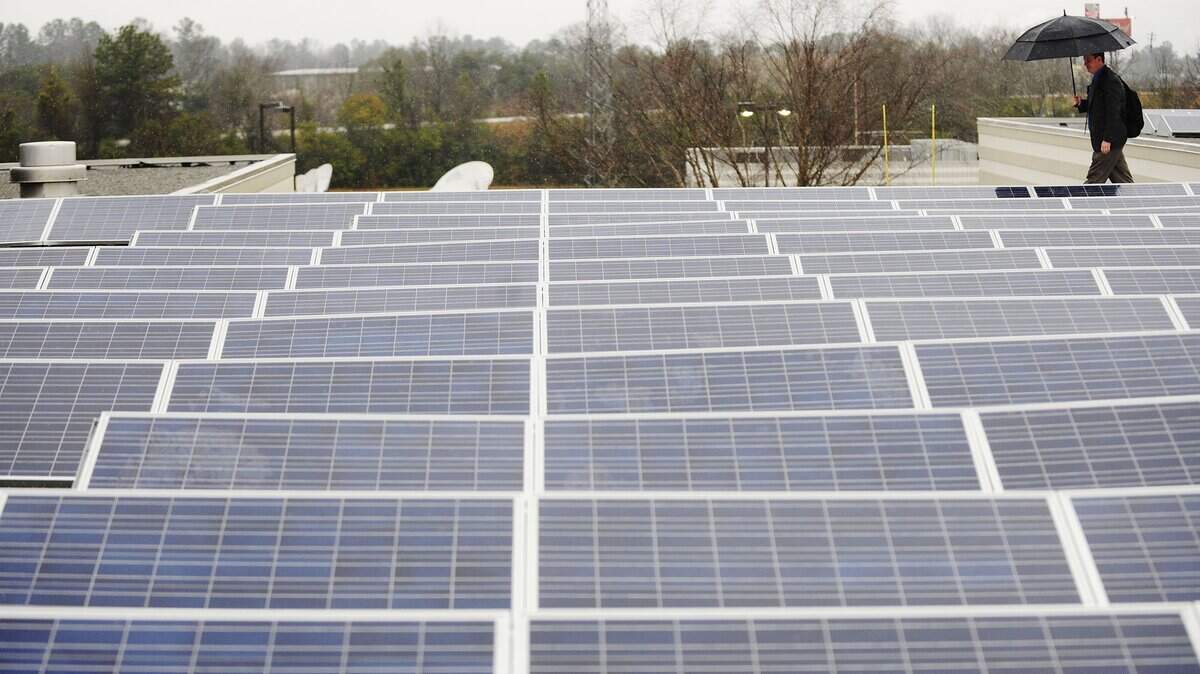
The Peach State has made major progress in reducing emissions over the past 20 years, despite its economy more than doubling, and its population growing by nearly 2.5 million people.
The state’s net emissions fell 33% from 2005 to 2024, but gross domestic product surged from $389 billion to $883 billion, a 127% increase. The data comes from a new report from Georgia Tech’s Jimmy and Rosalynn Carter School of Public Policy and Drawdown Georgia, a statewide research initiative funded by the Ray C. Anderson Foundation
“This demonstrates that climate solutions and economic growth can go hand in hand,” said Marilyn A. Brown, regents’ professor and Brook Byers professor of sustainable systems in the School of Public Policy at Georgia Tech and lead author of the report.
The report from Georgia Tech’s Climate and Energy Policy Laboratory also found that the carbon intensity of Georgia’s economy — a measure of greenhouse gas emissions per dollar of gross domestic product — has fallen by more than two-thirds.
“A lower carbon intensity indicates a greener economy, signifying progress in decoupling economic growth from the creation of carbon emissions,” the release reads.
The average carbon footprint per person declined by nearly half, from 15.8 to 8.2 metric tons per capita.
“Georgia has proven that reducing emissions strengthens our economy, creates jobs, and spurs technological innovation,” said John A. Lanier, executive director of the Ray C. Anderson Foundation and a founding partner of Drawdown Georgia. “Continuing this momentum and remaining a leader for the South in delivering climate solutions that benefit our environment, our health, and our communities requires intention and political will – I hope we will make the right choices to keep moving forward.”
Highlights from the report, “From Peak to Progress: Shrinking the Carbon Intensity of Georgia’s Economy and Society,” include how shifts across multiple sectors have reshaped the state’s emissions landscape and outlines what challenges still remain.
In the power sector, the retirement of more than 5,000 megawatts of coal-fired generation and the addition of roughly the same amount of solar capacity have cut emissions from the grid by more than half, the report said, improving air quality and public health.
By cutting electricity-related emissions by more than half, Georgia not only curbed its carbon footprint but also reaped major public health benefits, reducing sulfur dioxide and nitrogen oxides that once ranked its air among the nation’s dirtiest, the report says.
Georgia’s vast natural lands — 22 million acres of forests and coastal wetlands — absorb nearly 27% of the state’s emissions each year, making the Peach State a national leader in natural carbon sequestration, according to the report.
The amount of carbon stored in wood products also keeps rising, reflecting the benefits of sustainable forest management, the report says. Beyond their climate value, Georgia’s forestry and wood manufacturing industries employ more than 140,000 workers statewide.
“By transforming our electricity system, improving efficiency, and harnessing the power of our forests and wetlands, Georgia has achieved steep emissions cuts while building one of the fastest-growing economies in the country,” Brown said.
Georgia transportation still a major pollution source
Since the electricity sector has reduced its footprint, the state’s biggest emissions challenge and largest source of greenhouse gases is the transportation sector, producing nearly 60 million metric tons of carbon dioxide equivalent in 2024.
“To stay on this path, we must now turn more attention to transportation, natural gas use, and agriculture,” Brown said
Fueled by the growth at the port of Savannah and a sprawling logistics network, Georgia’s freight economy has become a major driver of diesel pollution, the report says. Heavy trucks, which release nearly ten times more carbon dioxide per mile than passenger cars, dominate the state’s transportation emissions.
Though electric vehicle adoption has increased, less than 3% of Georgia’s vehicle landscape is electric, according to the report.
Another source of emissions is increased direct use of natural gas, which refers to burning gas on-site for heating, cooking or industrial processes, rather than using electricity generated from gas at a power plant.
Though residential emissions from non-electric fuels, such as natural gas and propane, rose 12% from 2017 to 2021, commercial buildings cut emissions by 16.5% over the same period. Georgia’s manufacturers still rely heavily on natural gas for heat and production, and their emissions rose by only about 2% even as industrial output climbed sharply.
Emissions from the state’s food and agriculture sectors have remained relatively the same over the last two decades. Some improvements were seen in soil emissions, which shrank by 0.8 megatons of carbon dioxide equivalent, thanks to better practices like cover cropping and reduced tillage. Over that same period, electricity use in farming — driven largely by poultry operations — added 0.7 megatons of emissions, and manure management contributed a small additional increase
“Our Greenhouse Gas Emissions Tracker allows us to see where progress is being made and where challenges remain,” said William Drummond, Georgia Tech associate professor and contributor to the report. “This kind of data is essential for policymakers, businesses, and communities to make informed decisions about the future of our state.”