EPA delays coal ash cleanup. Does it affect power plants in Georgia?
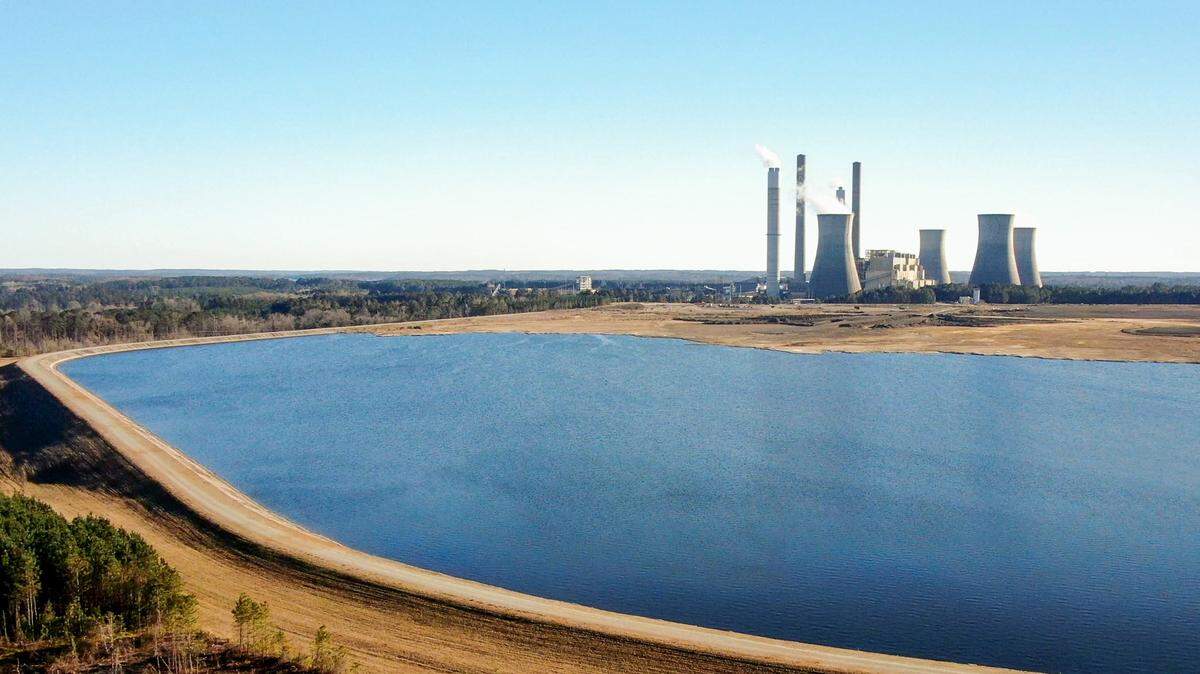
The Environmental Protection Agency extended key compliance deadlines last Thursday for power companies to monitor groundwater and clean up coal ash at coal-fired power plants, such as Plant Scherer in Juliette and Plant Bowen near Cartersville.
The EPA framed the move as part of a broader agenda to reduce government regulation, something which has been a priority for President Donald Trump’s administration. But critics worry about worsened harm to the environment and threats to water quality that could come with waiting longer to clean up coal ash.
Coal ash is produced primarily from the burning of coal in power plants, and it contains contains contaminants such as mercury, cadmium and arsenic, according to the EPA’s website. Without proper management, these toxic materials can contaminate groundwater, pollute waterways and enter the air, posing public health risks.
“President Trump recognizes that affordable and reliable energy are key to the strength of our nation and to our nation’s energy dominance,” said EPA Administrator Lee Zeldin. “Today’s actions provide much needed regulatory relief for the power sector and help deliver on the commitments outlined on the greatest day in deregulatory history to unleash American energy, lower costs for Americans, and work hand-in-hand with our state partners to advance our shared mission.”
The extensions give utility companies one more year to start cleaning up toxic coal ash contamination and to install groundwater monitoring systems. Prior to this announcement, utility companies had until 2026 to report coal ash contamination to the EPA and until 2029 to install groundwater monitoring systems.
How this will impact Georgia directly is unclear.
A decision has not been made at this time as to whether Georgia will adopt the changes to the federal rule, according to Sara Lips, director of communications and community engagement for the Georgia Environmental Protection Division. For the time being, Georgia plants still have to follow past guidelines.
Georgia Power is already in the process of closing 29 coal ash ponds and has installed approximately 600 groundwater monitoring wells since 2016 around its ash ponds and on-site landfills at both operational and closed facilities, according to the company’s website.
“Georgia Power took early action to quickly and safely begin closing all of our ash ponds,” the company says on its website. “Our priority is to protect water quality every step of the way.”
There are no changes to the company’s closure plans because of the changes to the federal policies, according to Matthew Kent, spokesperson for Georgia Power.
“Georgia Power is monitoring this, and other, changes in federal environmental policies and regulations and how they may impact our business. Georgia EPD’s CCR Rules, developed in 2016, regulates all ash ponds and landfills, including those that were not previously regulated by the 2015 Federal Rules. There is no change to our closure plans. We continue to ensure that our ash pond closure plans are protective of the environment and the communities we serve under the regulatory oversight of Georgia EPD.”
Some Juliette residents have taken issue with how Georgia Power addressed coal ash cleanup, including Andrea Goolsby.
Goolsby wasn’t one of the Juliette residents involved in a lawsuit with Georgia Power, alleging that coal ash from Plant Scherer had contaminated their well water, causing cancer and respiratory diseases. But she’s fought for safe and clean drinking water in Juliette in town hall meetings, in Gov. Brian Kemp’s office and most recently, last week, in a Zoom meeting with the EPA.
Goolsby said about the EPA, “people in these small communities are sick of them not doing their job.” She found out about the deadline extensions right after the meeting. Despite identifying as a conservative, Goolsby called Trump’s EPA “a joke.”
“I vote the way that I vote, (which is) Republican, conservative, but during this whole quest to get people access to clean drinking water and make a change, it’s really made me question who I represent,” Goolsby said.
“(They’re supposed) to protect the American people,” said Goolsby. “Whether you’re Republican or Democrat, it shouldn’t matter. Clean water, the air that we breathe, they are all God given things. They’re free. But yet now the people of Juliette, the majority of them, are having to pay for clean water.”
In July 2020, 45 Juliette residents filed a mass tort lawsuit claiming coal ash from Plant Scherer had contaminated their drinking water. They called on Georgia Power to install a protective barrier in the coal ash pond to stop further leakage into the groundwater. The case was settled out of court last year, with Georgia Power neither admitting wrongdoing nor revealing any financial payout.
Georgia Power plans to close the ash pond at Plant Scherer by leaving the coal ash submerged in groundwater, a method known as “cap in place.”