Georgia should expect a hotter and wetter summer than normal, forecasters say
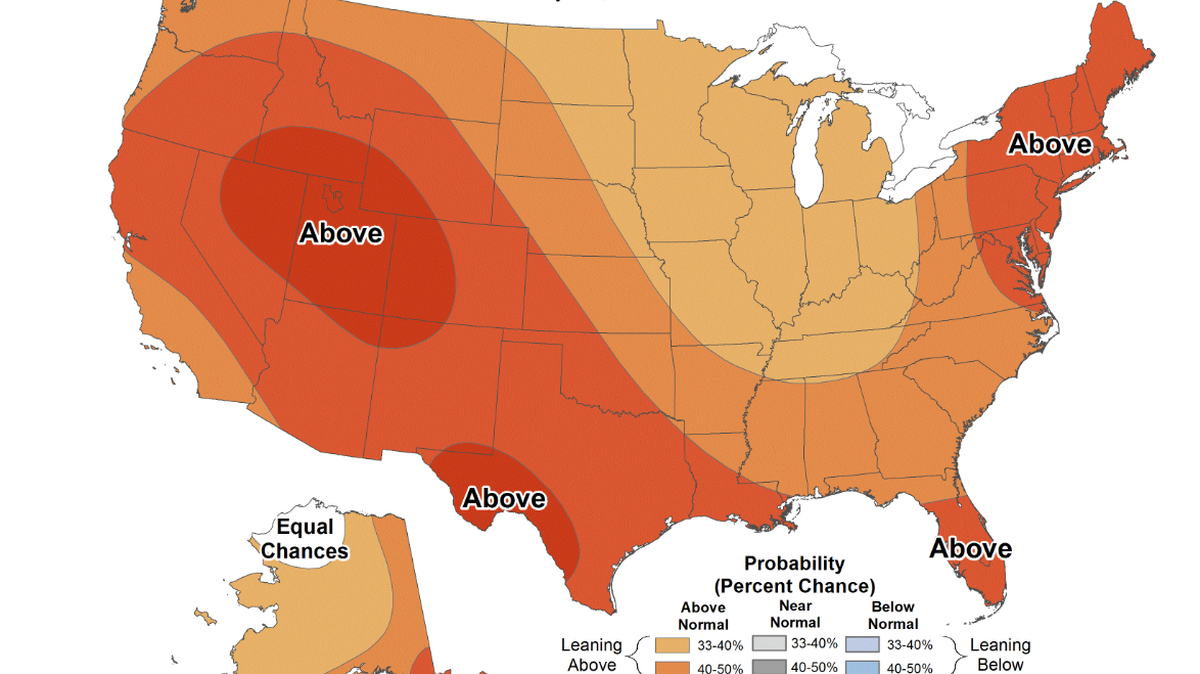
Georgia and much of the Southeast are gearing up for a hotter, wetter summer, with experts also warning of a busier-than-usual hurricane season in the Atlantic, according to the National Oceanic and Atmospheric Administration.
The June to August 2025 seasonal forecast that was released last week projects above-average temperatures across much of the Southeast, along with a slight increase in the likelihood of wetter-than-normal conditions.
“Generally, the number of days over 95 degrees are projected to increase in the South, and it is particularly acute in the southern half of Georgia,” Dr. Marshall Shepherd, director of the University of Georgia’s atmospheric sciences program, said in an email. “The intensity (how hard it rains) is increasing over time as well. This amplifies flood risks ... An area may not be wetter or drier on average, but they may have episodic extremes of intense rainfall or extreme drought.”
This summer’s pattern can be explained by a mix of natural climate variability and long-term global warming trends, according to Pam Knox, director of the UGA weather network and agricultural climatologist.
Though NOAA’s seasonal forecasts are not tied to climate change, its effects show up anyway, Knox explained.
Seasonal forecasts start from a neutral baseline with a 33% chance for above, near or below normal conditions. Because of the decades of warming due to climate change, that “normal” baseline is already shifting warmer, according to Knox. The forecasts end up predicting more heat because the historical data used to build the models already includes that warming trend.
“That is factored into those seasonal predictions,” Knox said. “Climate change is implicitly in there, although it’s not explicitly put in there, but it is reflecting in the fact that we are seeing this upward trend in temperatures.”
Rainfall is much trickier to predict than temperature, according to Knox. Wetter conditions, as predicted by NOAA, don’t necessarily mean more rain events, but rather more intense storms when it does rain.
“We do know that because the temperatures are warmer, the water vapor content of the atmosphere is going up, and that’s one of the ingredients for rain, which why some of the long term predictions indicate we’re likely to see more rain in the future, because humidity is going up,” Knox said.
But it also depends on the vertical structure of the atmosphere, according to Knox.
“We know that the vertical structure of the atmosphere is changing,” Knox said. “More of the heat is being trapped near the surface of the earth, because that heat that used to get (to the stratosphere) is now trapped by greenhouse gasses. So what we’re likely to see is an amplification of the whole weather cycle.... more floods because we’re going to have a lot of heavy rains, but more droughts, because sometimes the atmosphere is just not going to allow the development of clouds and rain, and it’s a there’s a feedback to that.”
One of the main factors in these predictions is the El Niño–Southern Oscillation, a recurring climate pattern driven by changes in ocean temperatures in the central and eastern tropical Pacific, according to the National Weather Service.
The cooler ocean temperatures associated with La Niña have eased, bringing the region into what Knox and Shepherd called “neutral” conditions — where water temperatures are closer to normal.
NOAA expects those neutral conditions to last through at least August. That’s important, Knox explained, because it increases the chances for a wetter summer. Neutral patterns create a more favorable environment for hurricanes in the Atlantic by reducing wind shear, high-altitude winds that break apart developing storms.
“This year, we’re in neutral — in either neutral or La Niña summers, we do not have that jet stream that’s right aloft,” Knox said. “So that means the storms have more freedom to go up vertically, and they can develop more. And so the number of storms that we expect to be able to go through that development cycle and become named storms is higher this year.”
NOAA’s outlook for the 2025 Atlantic hurricane season, which goes from June 1 to November 30, predicts a 60% chance of an above-normal season.
It’s forecasting a range of 13 to 19 total named storms, with winds of 39 mph or higher. Of those, up to 10 are forecast to become hurricanes, with winds of 74 mph or higher, including up to 5 major hurricanes, meaning category 3, 4 or 5, according to NOAA.
This story was originally published May 23, 2025 at 11:09 AM.