Georgia farmers will get Hurricane Helene disaster relief ‘soon,’ official says
Several months after relief funding was passed for the farmers who were hurt by the historically-damaging Hurricane Helene, those impacted got an answer to when they’ll see their approved money from the federal government.
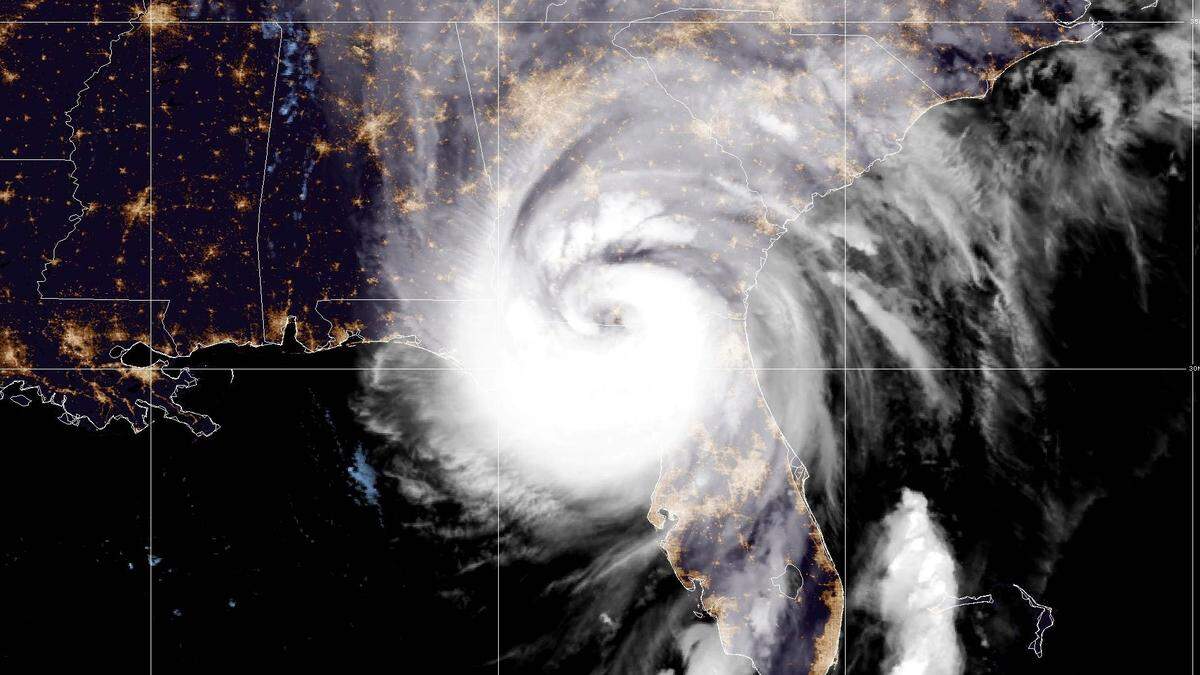
The hurricane, which killed 227 people across multiple states, swept through Georgia in September. It left weeks-long power outages, destroyed property and tens of thousands of damaged farmland in its wake.
Some 82 days later, the U.S. Senate passed the American Relief Act of 2025, bipartisan legislation that approved a $21 billion dollar disaster funding package poised to bring relief to tens of thousands of farmers and producers whose crops and products were devastated by the hurricane.
But nearly five months later, farmers haven’t seen any of that money despite multiple requests for “swift disbursement” by one of the disaster supplemental bill package leaders, Democratic Georgia Sen. Jon Ossoff.
Ossoff asked newly-appointed U.S. Agriculture Secretary Brooke Rollins Tuesday when those impacted would actually see relief.
“Soon,” Rollins answered, adding more specifically, “By the end of the month, but hopefully next week.”
Appearing in front of lawmakers for a hearing, Rollins was repeatedly questioned about this money.
During the hearing, Rollins said she’s been busy since taking on the new role, and described the other work her team at the U.S. Department of Agriculture has accomplished.
“I’ve visited 15 states, given dozens of keynote speeches and met with 1,000 farms across the country,” she said in her opening statement. “We’re working to eliminate fraud and abuse, meet daily with DOGE to ensure we’re doing right by the American tax payer.”
It’s unclear how much Georgia farmers will get
Rollins added she is willing and able to respond to messages early in the morning and late at night, and her team is working around the clock to review the disaster supplemental package as well as other USDA emergency relief packages in the form of loans or grants.
“I know many of you have reached out during this process of frozen funds from both sides of the aisle, and my goal is to respond immediately,” Rollins said in the hearing. “Sometimes it’s at midnight, sometimes it’s at 5 a.m. but my goal is always to respond and to be available. We are working around the clock, going line by line by line, we’re down to the final $5 billion out of $21 billion of frozen funds.”
The Ledger-Enquirer has repeatedly asked the USDA about when Georgia farmers would get access to relief money, as well as how much would be distributed to Georgia, but the agency hasn’t provided an answer.
Matthew Agvent, the communications director for the Georgia Department of Agriculture, said the USDA would have to answer questions about how much of the $21 billion Georgia farmers would get.
“Agriculture Commissioner Tyler Harper is checking in at least once a week with the team at USDA to get guidance on when those funds will be released to the states,” Agvent said in April.
Some relief has come, but it’s ‘pennies on the dollar’
In April, the USDA announced a $340 million relief package to Helene victims with no mention of relief for Georgia, just several other states such as North Carolina and Tennessee that were also impacted by the storm. Agvent was unaware of whether any of that was coming to Georgia. This came from a separate Rural Development Disaster Package.
But Agvent said an additional $10 billion was passed in “economic relief specifically for agriculture” on top of the $20 billion already approved. That additional funding was “pushed out in mid-March,” Agvent said, and is called the Emergency Commodity Assistance Program. There are strict guidelines for who can apply and how much they can receive.
TJ Moore, of Moore farms in Southern Georgia, who was significantly impacted by Helene in September said he applied for the ECAP grant in March. But it was “pennies on the dollar.”
“We still have a huge hole from the hurricane debt to cover up on lost profits,” he said in a text message. “The bills kept coming even though we lost half our crop. The money from the government has been pennies on the dollar compared to total losses of infrastructure and product lost.”
During Tuesday’s hearing, Rollins shared how proud she was of the distribution speed of the ECAP program and that she expects it to be similar to the disaster package, once the online portal opens.
“The ECAP portal was announced on March 17, and it was a three day turn around in moving that money out to farmers,” she said. “I believe $8 billion has already gone out, (that’s) almost all of that money out in, I would argue, record speed.”
But Ossoff, adamant that “time is of the essence” for the disaster relief to be distributed to his farming constituents, added his frustration that the $20 billion package was swiftly passed in December and has been frozen.
“We realize that this is a long time coming, and it’s related to disasters that happened a while ago,” Rollins said.
It took a year to get the package passed for Hurricane Michael in 2018, according to Ossoff. At a fraction of the time, his package passed, and he said the frozen relief is “key for farmers.”
Buck Paulk, of Shiloh Pecan farms which is just 15 minutes north of Valdosta where Helene’s eye passed through with wind speeds over 100 mph, lost 60% of his pecan crop. He said the immediate loss is $4.8 million from cost of cleanup, replanting, field and irrigation repairs, as well as income for years to come.
Paulk told the Ledger-Enquirer he plans to apply as soon as the disaster portal opens up, and that crop insurance has been a big help for the short-term.
‘Not prioritizing climate,’ despite connected impacts
In some cases, farmers have had to re-apply for funding because their funding requests were associated with climate change, Rollins told the appropriations committee.
“We’ve asked for reapplications to realign around this president’s priorities which is not DEI or climate,” she said.
Rollins’ team has been working on other weather-related issues that have affected the agriculture economy in the United States, several of which are climate-related.
Human-caused global warming has influenced extreme weather events that Ossoff and other senators are asking for money to help fix.
Rainfall from Helene was 10% heavier due to climate change, and rainfall levels on day two and day three of the storm were made 40% and 70% more likely, according to a peer-reviewed World Weather Attribution study.
Wind, which was the biggest disaster culprit in the Peach State, was 11% stronger due to human-caused global warming, the study cited. Specifically, 6.1 meters per seconds or 13.6 miles per hour or stronger wind speeds occurred during Helene.
For Shiloh Pecan Farms, wind speeds reached up to 111 mph, enough to tear down 80% of the 4,000-acre pecan farm.
This story was originally published May 7, 2025 at 12:16 PM with the headline "Georgia farmers will get Hurricane Helene disaster relief ‘soon,’ official says."