Wind turbines off the coast of Georgia could help economy, benefit marine life
For decades, offshore wind energy engineers and scientists have researched and made the pitch that coastal wind energy can supply needed energy to the grid, emission-free, that will spin for decades into the future.
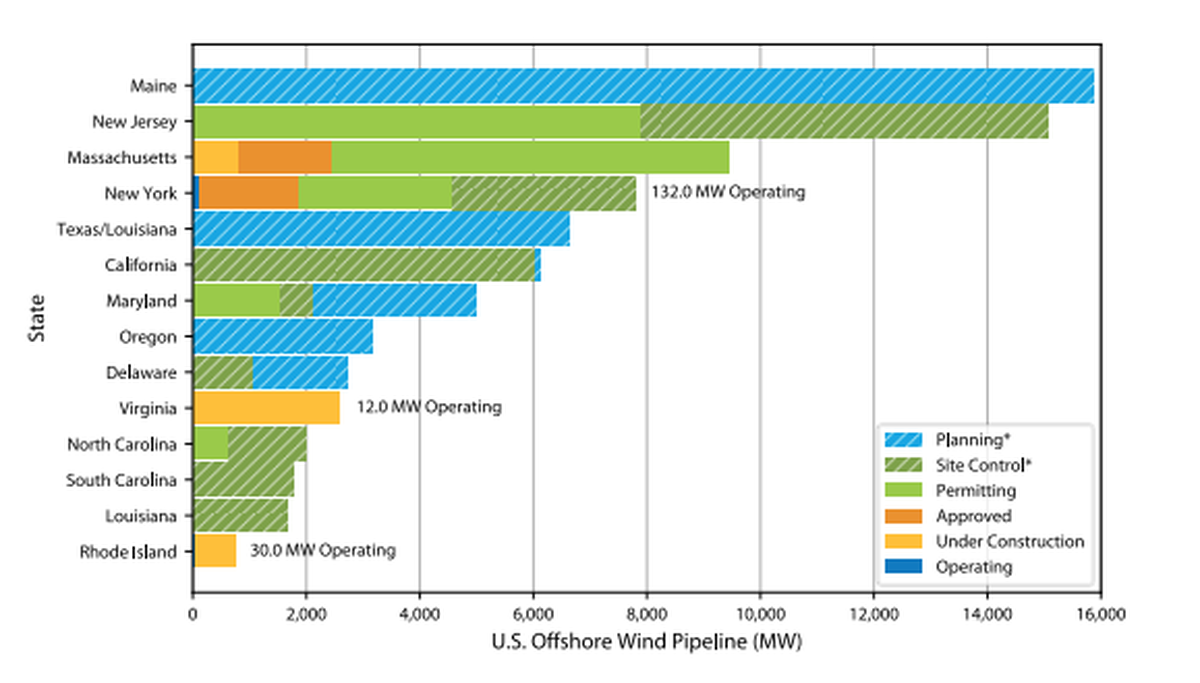
Not everyone has bought in. Georgia, for example, is one of only two states on the East Coast that lacks any offshore wind energy plans, according to a 2024 offshore wind market report.
But clean energy leader and Conservative Energy Network CEO John Szoka believes that energy developers, scientists, and the public haven’t had “the whole story,” missing a huge economic incentive to accurately value offshore wind energy.
This month, Conservative Energy Network and Joseph Nicolette, an environment net-benefit analyst with NEBA Analytics, released a first-of-its-kind study that “completed the story,” Szoka said.
The study finds that below offshore wind turbines, under the sea surface, aquatic habitat flourishes from the turbines steel monopiles.
Nicolette said the giant monopiles, which are the beams holding up wind turbines, can create value, and the benefits for the ecosystem can turn into money from scuba diving and fishing. The study also looked at benefits of monopiles of oil and gas rigs.
“After 40 years of environmental consulting and ecosystem service economic analysis, I can confidently say that offshore wind and oil and gas subsea infrastructure can provide long-term ecological and socioeconomic benefits that far outweigh perceived risks,” Nicolette said.
Because a monopile is an artificial, vertical structure that ranges in 30 feet wide and 80 to140 feet tall they serve as a habitat for mussels, barnacles and other invertebrates to grow on, a productive food chain can form. Seals and schools of fish frequented the monopiles that Nicolette studied throughout the east coast.
“They are a substrate for biologic growth,” Szoka said.
The more fish and colorful aquatic life exist in the area, the more likely divers will explore, and a market for recreational fishing opens up, the author said.
“California and Virginia have divers, and there is value to be generated there,” Nicolette said. “Ninety-nine percent of the ocean is soft sand and not reefs,” he said, and “reefs are limited in height, unlike the monopiles”
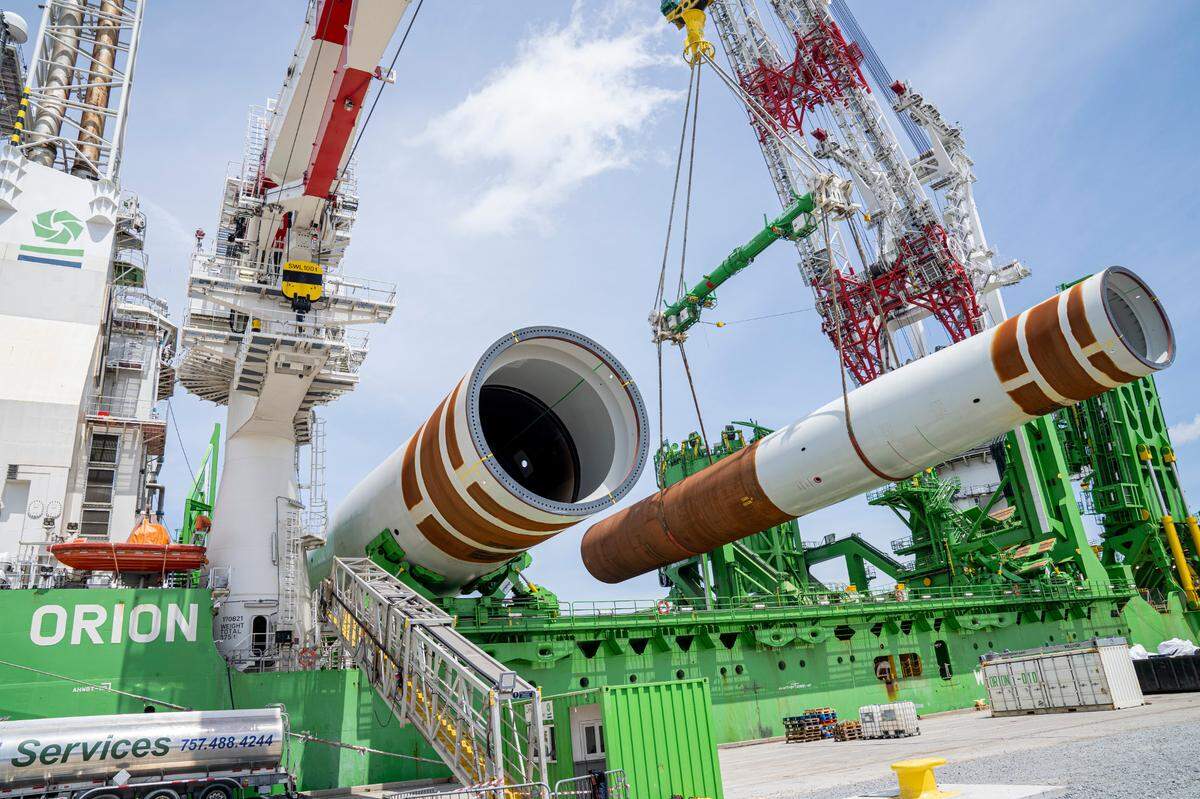
Nicolette’s preliminary study funded by CEN specifically looked at the ecosystem service potential of the 176 wind turbines and three of their substations off the coast of Virginia, called the Coastal Virginia Offshore Wind project, currently being installed.
The Coastal Virginia Offshore Wind project is scheduled to be operational in 2026. The $10.7 billion dollar project, which will go to the Dominion Energy electric grid, will have a total capacity of 2.6 gigawatts, enough to power up to 660,000 homes.
Nicolette’s net benefit analysis found the ecosystem services for habitats on monopiles could range from $61 million dollars over a 50-year period to $3 billion for an operational period of 300 years from both passive and active use.
Passive uses are a value to the public, but people aren’t there to immediately use it or gain from it. That includes food production happening that helps the food chain.
Unlike oil and gas turbines, which have exclusion zones, boats can tie off to the turbine, Szoka explained. This means fishermen can station at a monopile, or scuba divers can jump off from the location of the monopile.
Not all monopiles and ecosystems are the same. Regardless of location, a monopile and any offshore subsea station would create some level of ecosystem services, according to Nicolette.
“Offshore wind development in Georgia would not only have the potential to generate economic value for the public (through strong workforces with similar trades and have major supply chain investments including ports, major manufacturing facilities, shipbuilding, etc.) but would also have the potential to develop significant ecosystem service value for the public,” Nicolette said in an email.
Do offshore wind turbines actually hurt wildlife?
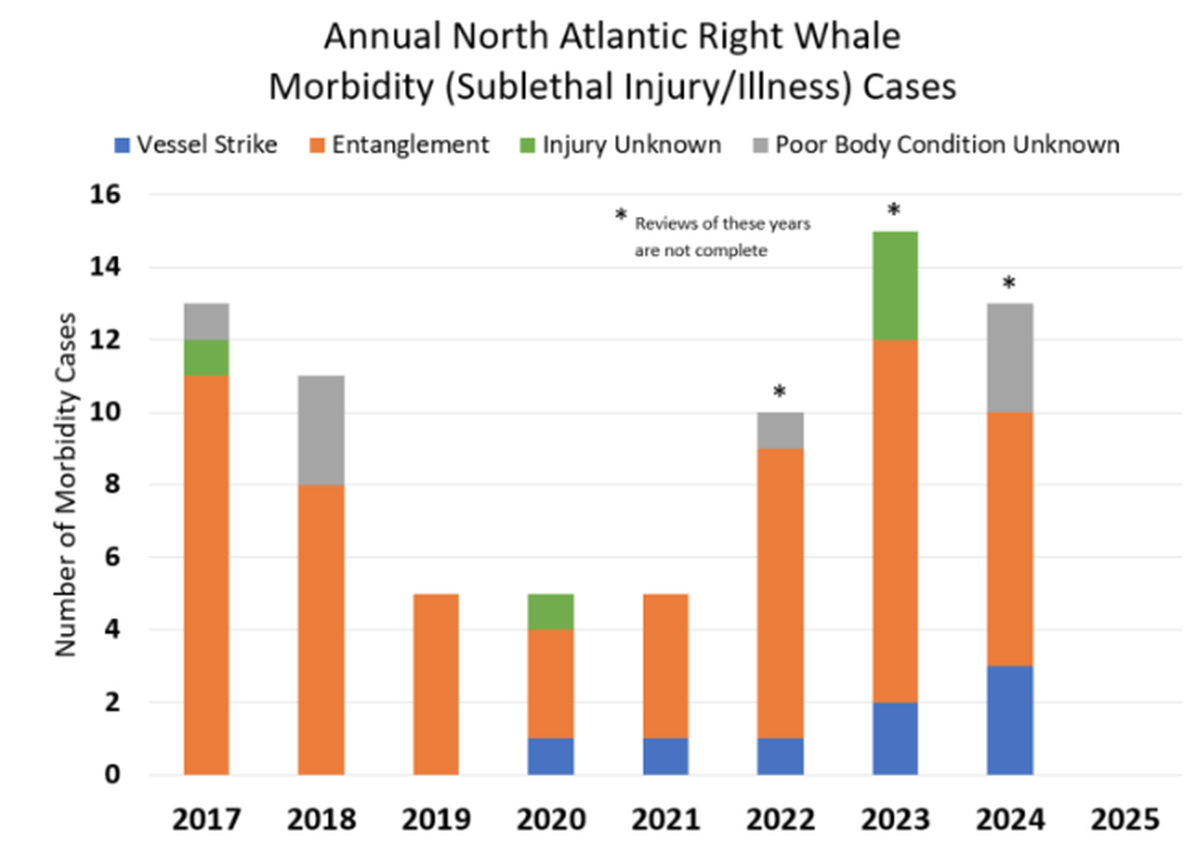
Disinformation is what drove Szoka to pursue this study. For the last decade, offshore wind has been blamed for harming wildlife like whales and birds, or depreciating coastal real estate, which Szoka said is false.
The two biggest killers of whales are entanglements are from fishing gear and vessel strikes, according to the National Oceanic and Atmospheric Administration.
“Current evidence does not suggest a direct link between wind energy projects and increased marine mammal deaths or strandings,” Sarah Sharp, veterinarian with the International Fund for Animal Welfare, said in an email.
Additionally, project areas are typically 24 to 42 miles offshore and are outside of typical flight paths for birds and bats, Nicolette’s study found.
It’s still unclear if real estate values are affected by wind turbines, according to Szoka. The oldest wind energy project on the east coast is 10 years old and it’s not a proven assertion that real estate values can go down.
President Donald Trump has called wind turbines “ugly,” “garbage,” and has spread the falsehood about whales being killed by them.
Upon entering office in January, he withdrew all federal offshore wind leases. Last week, the projects off the coast of New York that would power 500,000 homes in Brooklyn were brought to a halt.
Szoka said offshore wind is not going to hurt fish or production, but help it, along with recreational fishing.
Plus, he said, the country is facing an energy generation dilemma.
“This is exactly not the time to be picking the technologies that you like,” he said. “Conservatives are not supposed to pick winners and losers, if it’s cost effective you do it. Right now, the country is facing a dilemma in terms of energy generation.”
In Georgia alone, the Georgia Power utility company wants 8 gigawatts of power in six years to help power artificial intelligence and data centers. The company current full power generation in Georgia is about 16 GW of power.
The Virginia project is cost competitive with new gas turbines, Szoka said, and some of the turbines have been running for 30 to 40 years in Europe.
“I support offshore wind, as long as it pencils out and to benefit the rate payer.” Szoka said.
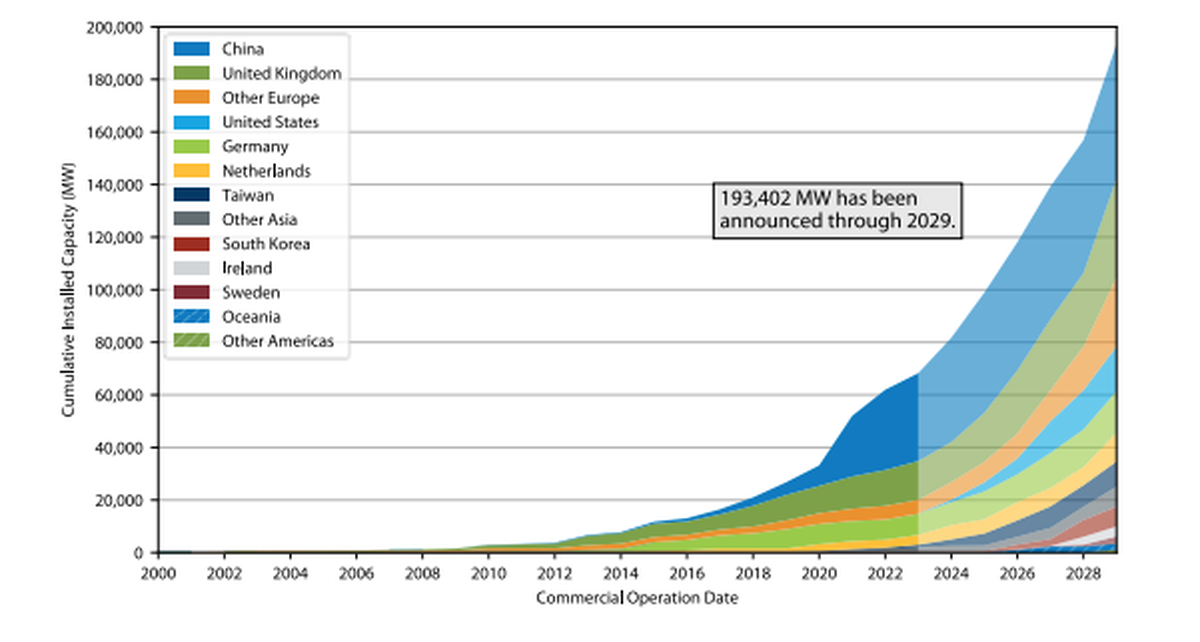
Globally, offshore wind generation has reached 453,600 MW. The U.S. comes in 10th and pales in comparison to other countries’ generation such as China, the United Kingdom and Germany.
What is coastal Georgia’s offshore wind potential?
Georgia’s 100-mile coast, though much longer than Massachusetts or Delaware, for example, has a slightly smaller wind speed than the Northeastern U.S. winds. The speeds in the area where the turbines would spin are 9 meters per second for Virginia, Delaware, New Jersey and the Cape Cod area.
Georgia is about 7.5-8 m/s, the same as most of coastal Texas and Louisiana, according to the 2023 National Offshore Wind data set published in April 2024.
Louisiana secured leases in 2023 for two offshore wind projects, aligning with its climate goal of 5 GW of offshore wind by 2035.
Nicola Bodini, national renewable energy lab wind energy physicist and lead author of the 2023 NOW study, said this is the first offshore-tailored modeled wind resource study and offers unprecedented data coverage for the region.
“In Georgia, it is generally slower than the northern regions along the U.S. East coast, but higher than Florida and the Gulf,” Bodini said in an email. “Offshore Georgia shows a strong (modeled) offshore wind resource.”
The speed is higher during the winter and spring and lower in the summer, Bodini explained.
While the NOW study is unprecedented data, in 2007, Georgia Tech prepared a report in conjunction with Georgia Power called Southern Company’s Southern Winds to look into offshore wind potential. The wind speed in their 2007 report found about the same wind speeds that the 2024 study found.
But according to Georgia Power, the state’s largest energy supplier, the company has not received competitive bids for wind in their renewable request for proposals. Wind developers are “eligible to bid-in,” but those requests “have not been submitted by the market,” Matthew Kent, Georgia Power spokesperson, said in an email.
Kent said offshore wind technology is evaluated in each Georgia Power Integrated Resource Plan and the company follows wind industry technology developments. Kent also said the 2007 report has not been updated to their knowledge.
There is no mention of offshore wind in the most recent 2025 IRP from Georgia Power.
This story was originally published April 30, 2025 at 10:16 AM with the headline "Wind turbines off the coast of Georgia could help economy, benefit marine life."