‘A livable future.’ Georgia college students urge officials to prioritize clean energy.
More than a dozen college students from Emory University showed up to a Georgia Public Service Commission hearing last week to oppose Georgia Power’s latest proposed 20-year energy plan.
Students from Emory University opposed the utility company’s 2025 Integrated Resource Plan, or IRP, at the first of many hearings in a months-long deliberation process because the plan prolongs the life of the state’s coal-fired power plants and increases the state’s dependence on fossil fuels, according to a news release from Emory University’s Sunrise Movement hub.
“(We) recognize that we are in a climate emergency, and we’re showing up to demand clean energy and climate action from the Public Service Commission,” the release said. “(We) demand that (our) elected officials prioritize a livable future over Georgia Power’s profits.”
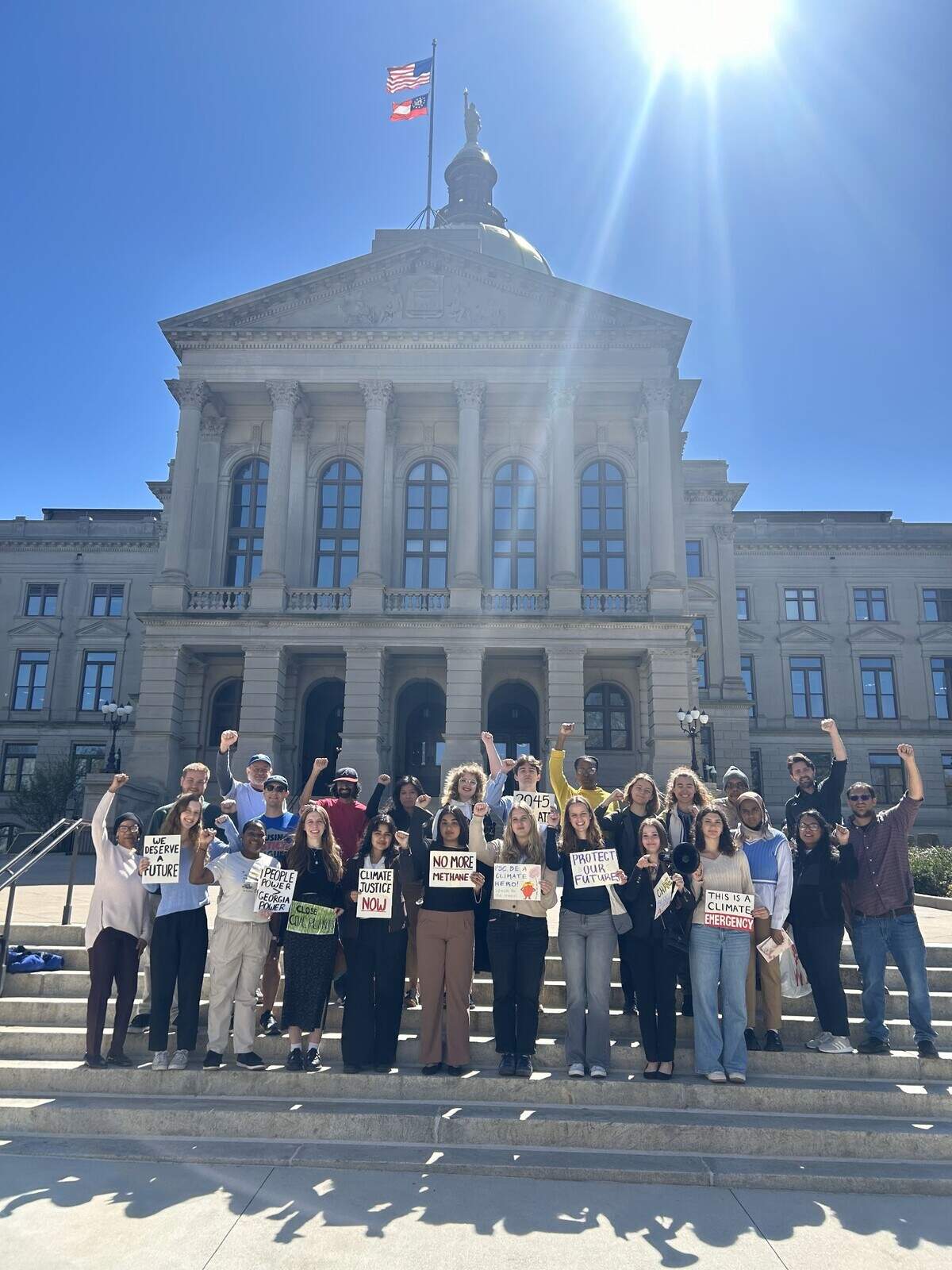
The students asked the commission to deny Georgia Power’s request to invest $1.2 billion in expanding natural gas capacity and extend the life of three coal power plants — Plant Bowen, Plant Scherer and Plant Gaston — that were originally meant to be retired by 2028.
”Georgia Power’s Plant Bowen near Cartersville was ranked 23rd in the country for carbon emissions in 2023,” said Yulia Gu, senior at Emory University. “My understanding is that Georgia Power is now seeking to delay the retirement of two of Bowen (units) until 2038 despite the fact that they contribute to declining air quality and the climate crisis.”
A majority of the students that testified either major or minor in environmental science. They expressed fear over the effects of climate change affecting their futures, their health, their communities and the environment.
“The health, the lungs, the pocketbooks and the futures of your constituents cannot take any more coal or methane,” said Ava Trachtenberg, a freshman at Emory University and president of Emory’s Sunrise Movement. “What we need is a rapid transition away from fossil fuels and towards 100% clean energy. I’m not saying this because I’m a tree hugger or Democrat.
“I’m saying this because I love this city, the state and this planet, and I want myself and my (future) kids to have a livable future.”
The students emphasized the need for immediate action to address climate change in order to lessen its impacts, and urged the commissioners to prioritize the interests of Georgia residents over corporate profits.
Several students also mentioned the significant energy burden faced by many Georgians, particularly low-income families, who are often forced to choose between paying energy bills and affording other necessities like groceries.
“Energy burden is defined as spending greater than 6% of a household’s monthly gross income on energy bills,” said Anissa Patel, sophomore at Emory. “Right now Georgia is among the top five states with the highest low-income energy burden. Quantitatively, 1.4 million Georgians are energy burdened.”
Some students shared their first-hand experiences with effects of repeated rate hikes approved by the Public Service Commission.
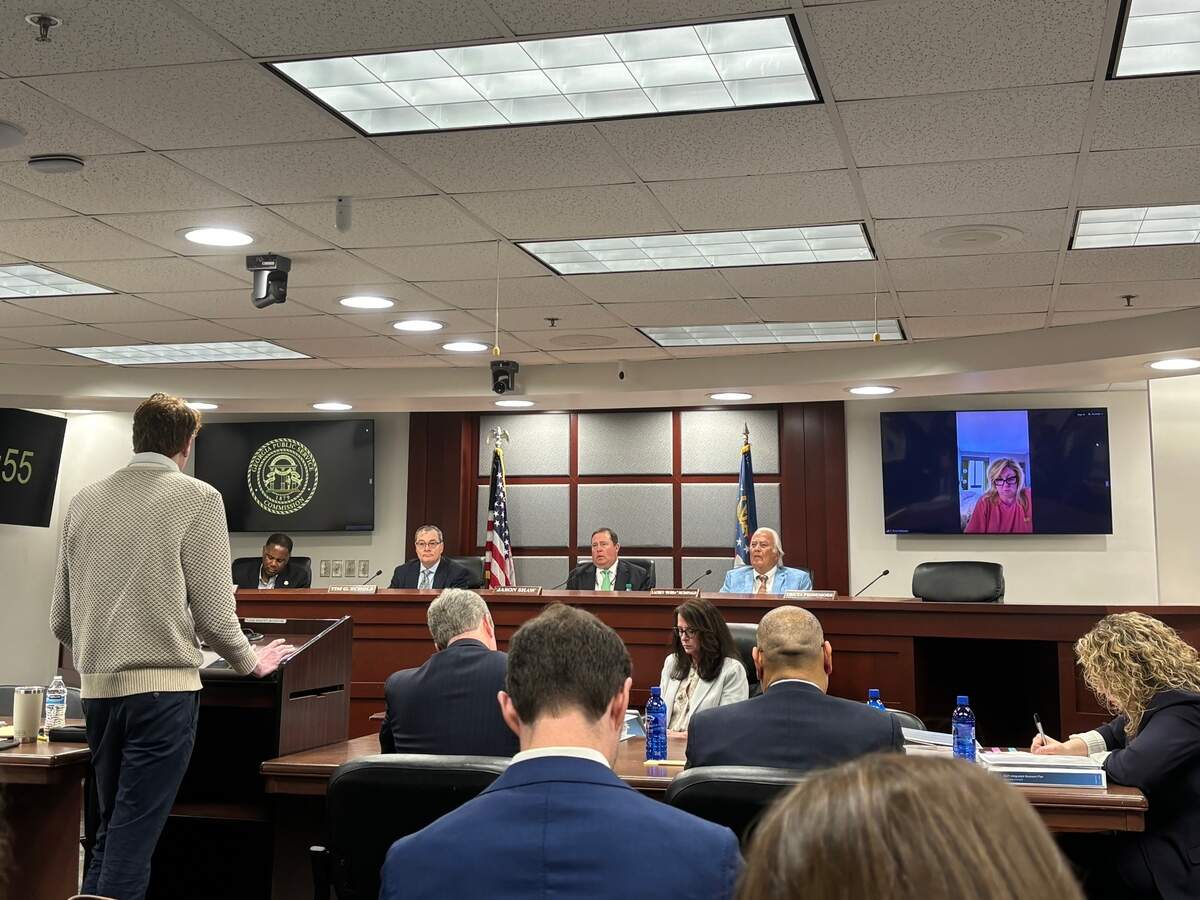
“In 2020, my family bought a restaurant ... but by 2024, our energy bill had nearly doubled, and we were forced to close,” said Jace Cooksey, a freshman at Emory who is from Jesup. “The Public Service Commission is supposed to represent us, not Georgia Power. I’m here because my friends and family in Jesup couldn’t speak to the commissioners today, but the PSC needs to hear that rural Georgians want clean, affordable energy — not more fossil fuels.”
Georgia Power explains energy needs
Georgia Power and Southern Company representatives had a panel and presentation followed by a questioning session after the testimonies were heard. They highlighted their methods for forecasting load growth, and noted the importance of the growing presence of data centers.
By the end of 2031, Georgia Power will need “up to 8,000 megawatt or so” to meet projected load growth, according Jeffrey Grubb, director of resource policy and planning at Georgia Power.
“What we’re looking at (with) the IRP is always how do we provide that reliable service to meet the load,” Grubb said.
The continued operation of all four units at Plants Bowen and one singular unit at Plant Scherer provide a combined 4,000 megawatts of power to the grid. The utility company is looking into the potential co-firing of natural gas with coal at these plants as well.
They also proposed upgrading gas units at Plant McIntosh, adding 268 megawatts of power to the grid. More energy demand is proposed to be met through upgrading existing carbon-free power sources including nuclear and hydroelectric, while adding more solar and battery storage.
“The remainder of the need will be identified through a capacity (request for proposal) being conducted by the company that was approved by the PSC in the 2022 IRP, the results of which will be filed this summer at the Commission for approval,” said Jacob Hawkins, Georgia Power spokesperson.
The maintained operation and infrastructure upgrades are cost-effective because it avoids the need to build new generation and associated transmission, according to Grubb.
Common for PSC to hear from college students
Tom Krause, public information officer for the PSC, said the commission has seen college students testify in groups like this in recent years’ IRP and rate case hearings.
“I think it might’ve been unique 10 or 15 years ago, but not unique in the past few years,” he said.
A handful of Georgia State University students were supposed to testify March 25 alongside the Emory students, but we unable to make it.
“We are working with GSU’s Earth Club and some students at Clark Atlanta to bring more students to the next set of hearings in May,” Trachtenberg said. “(In addition), a group of 17 college and high school students (not affiliated with Sunrise) have been working on a website about the PSC to educate and engage people over the past year with a grant from the city of Atlanta.”
A group of freshmen founded Sunrise Emory this November in the wake of the election, according to Trachtenberg, one of the founders. The Sunrise Movement is a national movement of young people working to “end the reign of fossil fuel elites, invest in Black, Brown, and working-class communities and create millions of good, union jobs,” Trachtenberg said.