Were rate hikes, Vogtle to blame for Georgia Power customers’ service disconnections?
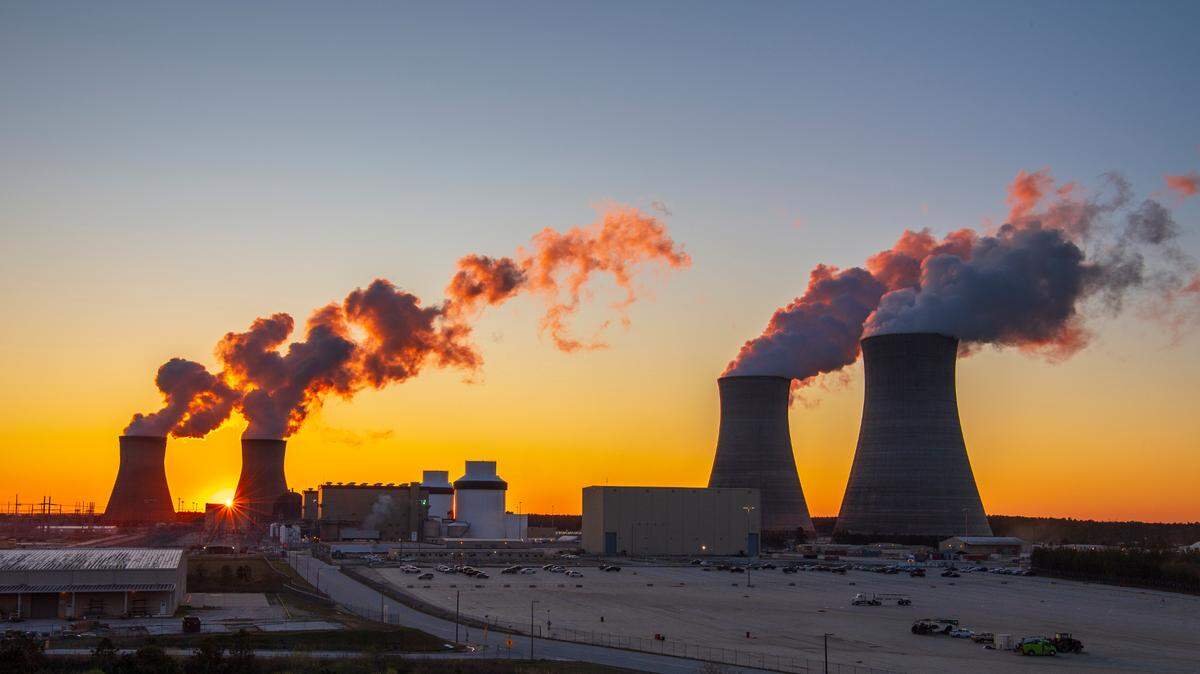
Nearly 190,000 Georgia Power customers were disconnected in 2024 due to the inability to pay bills after a record-high rate increases were implemented in recent years, according to a recent report from coalition of Georgia-based environmental groups. The report credits the rate-hikes, and therefore the disconnections, to Plant Vogtle construction costs.
But Georgia Power said the disconnections had no correlation to the construction of Vogtle, and that the average number of residential disconnections had not changed significantly in recent years. Nearly two-thirds of disconnected customers pay to restore their service by the next day, said John Kraft, the media relations manager for Georgia Power.
The Georgia-based groups still indicated in the report that while ratepayers faced increasingly high power bills, eventually reaching the sixth-highest in the nation, Georgia Power pulled in a record $17 billion over the years Vogtle was being constructed, the report said. Last year, the company’s profits grew by 22%, reaching a total of $2.5 billion, according to a financial report from Southern Company, the parent company of Georgia Power.
By May 2024, rates had gone up 23.7% — the highest the state has ever seen — after Vogtle Units 3 and 4 took 15 years to build and cost $36.8 billion, more than double the original timeline and budget of $14 billion, according to the coalition’s report.
Rates increased about 10% after Units 3 and 4 were fully operating. Half of this increase went in affect in August 2023, a month after Unit 3 reached commercial operation, and the other half in May 2024, a month after Unit 4 reached commercial operation.
The Public Service Commission, a five-member elected body that regulates the utility company, authorizes each rate increase.
“On December 19, 2023, the Georgia PSC voted to approve $11.1 billion in costs being imposed on Georgia Power ratepayers,” the coalition’s report reads. “This is approximately four times more expensive than any other generation choice would have cost.”
The cost was calculated using a Vogtle Construction monitoring report from Georgia Power, which indicates the total capital cost and financing of Vogtle was about $13.7 billion and about $2.6 billion was absorbed by Georgia Power.
That left $11.1 billion for customers to cover, according to Patty Durand, co-author of the report and founder of Cool Planet Solutions, one of the groups in the coalition along with Georgia Women’s Action for New Directions, Nuclear Watch South, Georgia Conservation Voters, Concerned Ratepayers of Georgia and Center for a Sustainable Coast.
That total includes about $3.5 billion of financing costs that were incurred during construction. In 2010, at the beginning of the project, the state legislature allowed Georgia Power to recover financing costs through an nuclear financing mechanism called the Nuclear Construction Cost Recovery tariff, also known as “CWIP” or “Construction Work in Progress,” which is paid by customers via their monthly bills.
Ratepayers paid about $3.5 billion dollars through this tariff, according to the semi-annual report. At the end of 2023, the PSC allowed Georgia Power to recover nearly $7.6 billion from its customers through a stipulation, pushing the total customer cost over $11 billion.
The cost of Nuclear Construction Cost Recovery tariffs raised bills another 8% to 10% for 15 years, according to the coalition’s report.
The history of Units 3 and 4
The Alvin W. Vogtle Electric Generating Plant has four nuclear reactors. The first two came online in 1987 and 1989, and the second two in 2023 and 2024. Georgia Power began planning the plant in 1971, and it’s jointly owned by Georgia Power, Oglethorpe Power, the Municipal Electric Authority of Georgia and Dalton Utilities, according to Southern Company.
Georgia Power had originally planned to construct four reactors in Burke County on the Savannah River, but the project was scaled back to two reactors after the company nearly went bankrupt from cost overruns only 10 weeks after beginning construction, according to the coalition’s report.
Georgia Power began construction for the second set of reactors in 2009 after Congress passed the Energy Policy Act of 2005 which offered “significant incentives to the nuclear industry, including loan guarantees, tax breaks and limiting liability to utilities by extending the Price-Anderson Act, which provides protection from the full financial consequences of a nuclear accident,” the report said.
The new reactors were to produce enough energy to power 500,000 Georgia homes and businesses, according to Southern Company.
The main contractor for the project was the company that designed the reactors, Westinghouse, which eventually declared bankruptcy in 2017 in the middle of constructing Units 3 and 4.
Despite the bankruptcy, the PSC voted to continue the project, and a new schedule and budget were adopted.
In July 2023, Unit 3 reached commercial operation and in April 2024, Unit 4 reached commercial operation. Today, all four units provide Georgia Power customers with around 2,131 megawatts of energy.
The rising cost of electricity in Georgia
The cost of building and starting Plant Vogtle Units 3 and 4 made electricity bills go up by about 10%, which was fully implemented after Unit 4 went online in 2024.
Making power bills even higher, the PSC also set Georgia Power’s return on equity to 11.9%, allowing the company to get an 11.9% return on investment. The electric utility industry norm is 9.5%, according to the coalition’s report.
“This rich ROE delivered $700 million in excess profits to Georgia Power and is a key reason why Georgia Power bills are ranked as the 6th most expensive power bills in the country,” the coalition’s report reads.
Were the nuclear reactors needed?
Each nuclear reactor produces 1,117 megawatts of energy and Georgia Power owns 45.7% share of the project, meaning the two new reactors add 1,020 megawatts of generation to their energy mix and a 7.5% expansion to their overall capacity.
On top of being costly for that many megawatts of power, the report argued that the nuclear reactors were unnecessary.
“Georgia Power did not need to build Plant Vogtle reactors 3 and 4,” the report reads. “Energy sales have been flat both nationally and in Georgia for two decades (and) Georgia Power’s generating capacity is nearly three times the peak reserves recommended by NERC, the National Energy Reliability Corporation.”
But the power company said it’s “counterproductive” and “misleading” to look at past energy demands for reasons not to need Vogtle 3 and 4, as the state is in “a completely different economic landscape and position,” Kraft said. The state has seen “extraordinary growth” and there’s a “critical need” for dependable baseload energy that will power economic growth in the coming years, he said.
What caused the overrun?
The report credits Vogtle’s overrun to three main causes: poor management, both executive and on-site, and deploying an incomplete reactor design, the Westinghouse AP1000.
Westinghouse, the main contractor responsible for the design and construction of the reactors, declared bankruptcy in 2017, causing significant delays and legal complications. This also gave the PSC an opportunity to pull out of the project, the report said. They did not, but rather further upped the budget.
The reactor design itself was relatively untested and had engineering challenges during construction that led to delays too.
“We are stuck with the most expensive power ever produced,” said Brionté McCorkle, co-author of the report and executive director of Georgia Conservation Voters. “Georgians deserve safe, affordable energy, and the Vogtle nuclear reactors are the opposite. Imagine what we could have done differently with the $36 billion dollars.”
Is nuclear power a clean source of energy?
Nuclear power is generally considered a cleaner energy alternative because it produces minimal carbon emissions, which is the primary gas causing climate change. But is it technically “clean?”
Nuclear power plants generate “highly radioactive waste that remains lethal for hundreds of thousands of years” that then has to be stored on-site, which is a challenge that has been long-debated, according to the report.
The pollution that comes from nuclear power isn’t just the radioactive waste. The mining of the uranium fuel and the construction of the plant are also pollutants.
“In Vogtle’s case, for 15 years construction activities have been heavy emitters of carbon emissions, including the extensive use of concrete which produces significant amounts of carbon dioxide,” the report reads. “So much concrete was used to build Plant Vogtle’s new reactors that, according to Georgia Power, it was the equivalent of paving a sidewalk across the United States from Miami to Seattle.”
This story was originally published March 25, 2025 at 6:00 AM.