Georgia’s biggest power provider has released new energy plan. Here’s what’s in it.
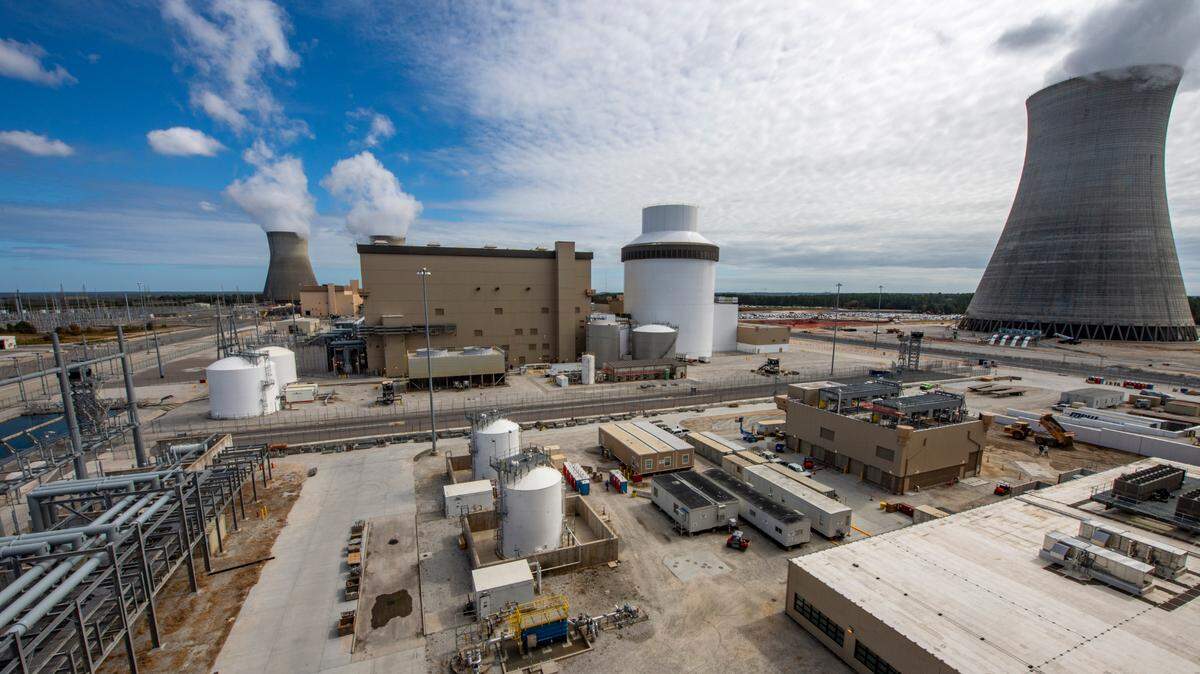
Georgia’s utility giant, Georgia Power, released on Friday its latest plan to power 2.7 million homes and businesses through the next decade and beyond.
The 2025 energy plan, called the Integrated Resource Plan, has a mix of proposed sources that has some cheering and others discouraged. The plan was handed over to state regulators at the Public Service Commission, who will have to approve the plan in order for Georgia Power to have state permission to follow that guide.
The plan keeps coal-fired power plants and natural gas plants in operation, but there are rolling commitments to retire coal-burning power plants and convert plants over to methane gas. Also in the plan are goals to update hydroelectric power plants and nuclear plants (Plant Vogtle 3 and 4), and use more renewable energy, such as solar power. They also plan to experiment with virtual power plants and efficiency management, which energy experts have long called for.
The new plan will add up to 4,000 megawatts of new renewable energy by 2035, expanding existing renewable plans to approximately 11,000 megawatts.
“The company’s integration of cleaner natural gas has helped reduce overall carbon emissions by more than 60% since 2007,” Georgia Power said in a statement.
The current capacity for renewable energy hovers at about 7% of all of Georgia Power’s energy.
Maggie Shober, the research director for Southern Alliance for Clean Energy, said the plan is “blunted by using fossil fuels” despite the plans to add more renewable energy.
“Although the plan filed by Georgia Power (Friday) has several positive developments for renewable energy, storage, and energy efficiency, the impact of those requests will be sadly blunted by a continued investment in fossil fuel infrastructure,” Shober said in a statement.
“The plan proposes extending the operation of power plants that burn fossil fuels such as coal in addition to the previously approved build-out of new fossil gas units…There is room for a lot more clean energy in Georgia’s future.”
There are three coal-powered plants that won’t be retired until 2034 under the plan: Plant Scherer in Juliet, Plant Bowen in Euharlee, and Plant Gaston in Wilsonville, Alabama.
Plant McIntosh, near Savannah, would add 268 MW, adding more natural gas to the air. Natural gas produces methane, much more potent than carbon when it comes to its damaging effects to the climate, according to scientists and the Environmental Protection Agency. It’s approximately 82.5 times more potent than carbon dioxide.
A typical coal-fired power plant in the United States emits around 1 ton of carbon dioxide, the most common greenhouse gas, per megawatt-hour of electricity generated, according to the U.S. Energy Information Administration EIA. This can differ by plant.
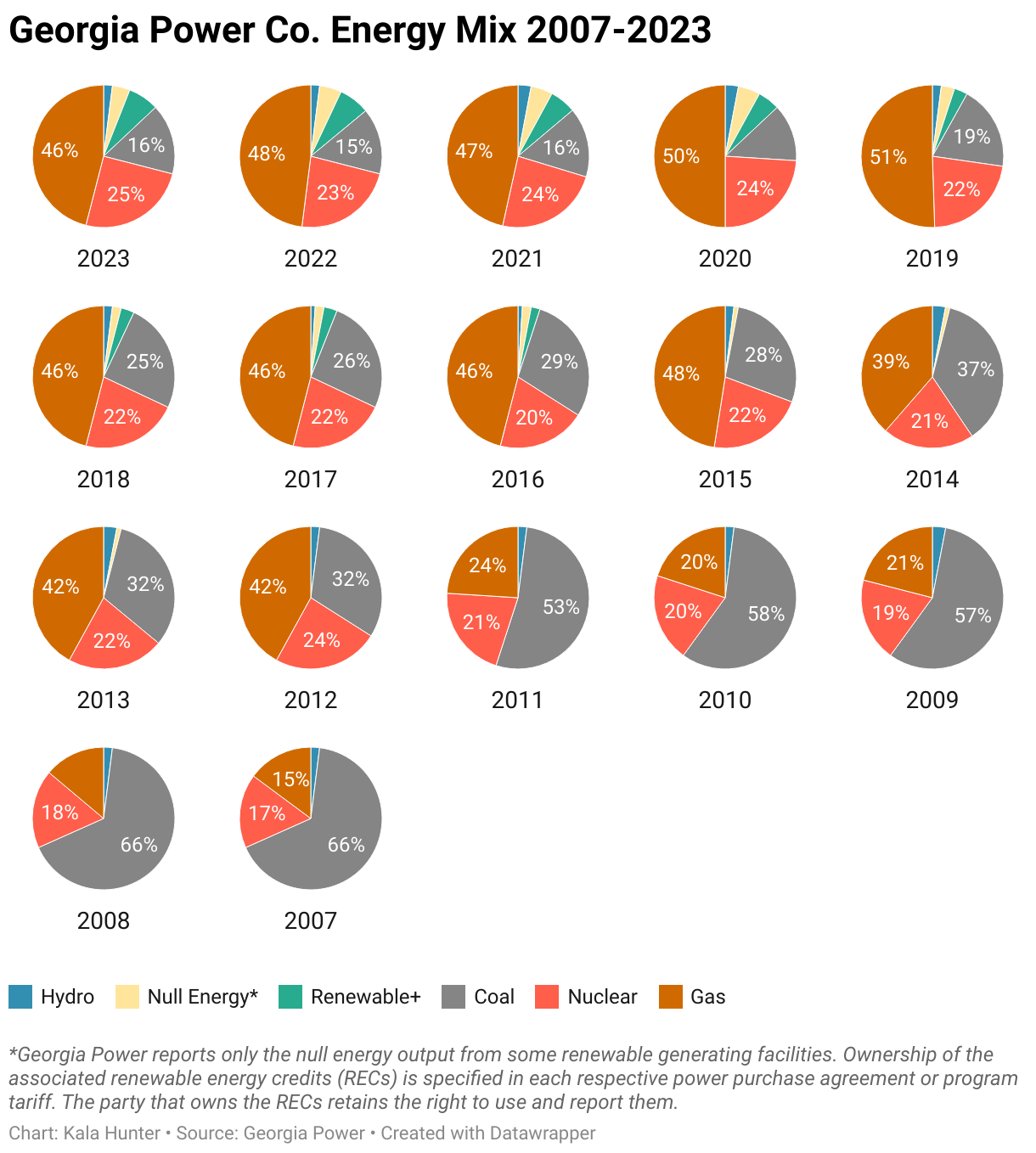
Georgia Power called their plants the most “advanced coal-fire plants in the world”
“(The coal plants) have state-of-the-art technology to reduce the environmental footprint of those facilities, including scrubbers, selective catalytic reduction systems and baghouses,” Georgia Power’s 2025 IRP press release said. “These advancements have resulted in reductions in main air emissions by more than 95% over the past few decades.”
Will residents ‘foot the bill’ of this power plan?
Energy policy experts and environmental lawyers are worried that Georgia Power’s plans could leave customers vulnerable to higher costs.
“Fossil fuels, like coal and methane gas, leave customers vulnerable to costly utility bill spikes,” said Jennifer Whitfield, an environmental lawyer at the Southern Environmental Law Center. “Georgia Power’s residential customers already pay some of the highest electricity bills in the country.
“In 2023 there was a $2 million spike in methane gas and coal costs that resulted in the average residential customer paying an extra $16 a month. In contrast, solar energy has no fuel cost.”
Previous Georgia Power energy plans going back several years – including those in 2022 and in 2023 – have allowed for bills to climb up to $43 per month.
“The IRP places too much reliance on dirty and costly fossil fuels that undermines the utility’s commitment to transition to a low-carbon future,” Patrick King II, Georgia policy director with the Natural Resources Defense Council, said in a statement. “This will continue to force the ratepayers of Georgia to foot the bill of these risky and costly fossil fuel infrastructures.”
Georgia power said the coal plants have been reliable for Georgia Power customers for decades.
“The only takeaway from this proposal is that Georgia Power doesn’t care if its customers get asthma, lose their homes in stronger and more frequent hurricanes, or put off medical care in order to pay their skyrocketing bills. Georgia Power is only interested in continuing to rake in record profits off our backs,” G Webber, Sierra Club Georgia chapter director, said in a statement.
Big energy needs expected
Georgia Power’s 167-page IRP forecasts the amount of energy the company will need to provide properly for Georgia, but coalitions of concerned citizens and a recently created watchdog group, Georgia Utility Watch, are calling for more transparency in those calculations.
“Over the next six years, Georgia Power projects approximately 8,200 megawatts (MW) of electrical load growth – an increase of more than 2,200 MW by the end of 2030 when compared to projections in the 2023 IRP Update,” Georgia Power said in its press release.
Cool Planet Solutions, Georgia WAND, Georgia Conservation Voters and Center for a Sustainable Coast partnered to form Georgia Utility Watch, calling for concern over Georgia Power’s motives and “overestimating forecasts.”
“These staggering increases total 16,800 MWs of new generation, or the equivalent of 8 new Vogtle reactors that would cost $275 billion,” Patty Durand, director of Georgia Utility Watch, said in a statement.
The 2023 IRP forecast growth was blamed on new data centers coming to Georgia in droves.
“The lack of independent verification of claimed data center commitments is the responsibility of the Georgia Public Service Commission,” they said in a statement.
The AJC found Georgia Power has often overestimated actual peak demand for its electricity.
Just one week before the 2025 IRP was due Friday, the PSC adopted a new rule changing the terms for higher usage customers:
“ ... any new customers using more than 100 megawatts of energy can be billed using terms and conditions beyond those used for standard customers to address risks associated with these large-load users,” the rule states in a news release.
The watch dog group called this change a “ploy to undercut recently introduced legislation to require data center to pay the full cost of new generation built to serve them. The rule changes are completely discretionary.”
Other proposals in the 2025 IRP:
A proposal for increased demand-side management programs, which, if approved, would help households use less energy, allowing Georgia to creep closer to its Southeastern peers in investing in wiser energy usage, SELC communications spokesperson Terah Boyd said in a press release.
Piloting a virtual powerplant program. Virtual powerplants offer an “innovative, and can improve efficiency of existing resources,” Codi Norred, executive director of Georgia Interfaith Power and Light in a statement.
For the next six months, the Georgia PSC will hear arguments for and against this plan from Georgia Power, energy experts such as SELC, as well as the public before voting on implementing the plan.
This story was originally published February 3, 2025 at 3:08 PM with the headline "Georgia’s biggest power provider has released new energy plan. Here’s what’s in it.."