Boise’s geothermal system heats some homes, buildings, water — and it could do more
Renewable energy comes down from the sky. Turbines capture the power of the wind, and solar panels collect the sun’s rays.
It can be found on the Earth’s surface, in the form of water from rivers and streams.
But it is also underground, in the pockets of water buried beneath layers of rock known as aquifers. I think most people know what aquifers are. But you could still say something like, But it is also underground, in pockets of water beneath Boise and other places.
Radioactive material beneath the Earth’s surface is decaying. That process gives off heat and can warm water below the surface to high temperatures.
Some of that water gurgles up naturally as hot springs. But it can also be tapped, brought up with pumps and used to heat buildings or domestic water.
Boise has the nation’s largest geothermal system, and one of the oldest systems in the world.
Much of Boise’s downtown is heated by geothermal energy. The Warm Springs Water District heats many of the homes along Warm Springs Avenue in East Boise, and was founded in 1892.
The city has its own system, which heats the rooms and water at City Hall, as well as the rooms in about 96 other buildings nearby for a total of 6.5 million square feet. About a third of those buildings also have their water supply heated by the energy. The state also has a small system that heats the Idaho Capitol, and the Veterans Administration has a small system that heats the Boise VA Medical Center.
Though geothermal energy is a small slice of the city’s energy supply, city leaders are looking to expand the system. They see the city’s natural ground reserves as an important component of a shift away from nonrenewable energy to combat climate change.
“I find this to be one of the most exciting opportunities that we have when we look at a clean heat future and a carbon-free future both for our city and for our state,” Mayor Lauren McLean said at a meeting of the Western Governors’ Association on Monday, Oct 24, in Boise.
Last fiscal year, the city’s geothermal system offset more than 9,000 tons of carbon emissions, which is the equivalent of removing 20 million vehicle miles from the road, according to the city.
Boise has a 100% clean electricity goal for city government by 2030. The city has a “stretch goal” of getting to that number by 2023, according to Public Works Director Steve Burgos.
Two percent of the city’s community energy use — not including transportation fuels — comes from geothermal.
“That’s actually a significant amount of energy that’s used in Boise,” Burgos said.
How does the geothermal system work?
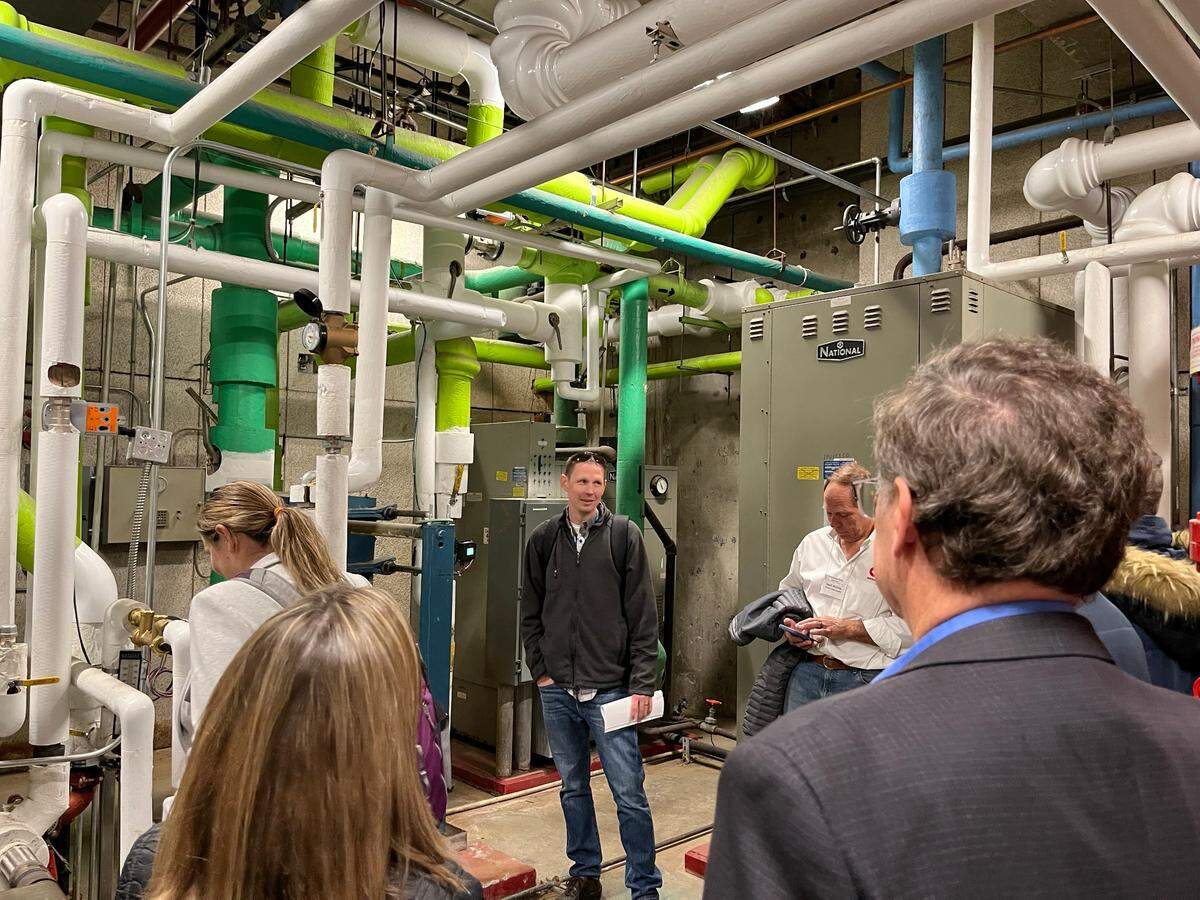
Running along the edge of the Boise Foothills is a fault line, according to Jon Gunnerson, the geothermal coordinator for the city.
Below the surface is water heated to 177 degrees.
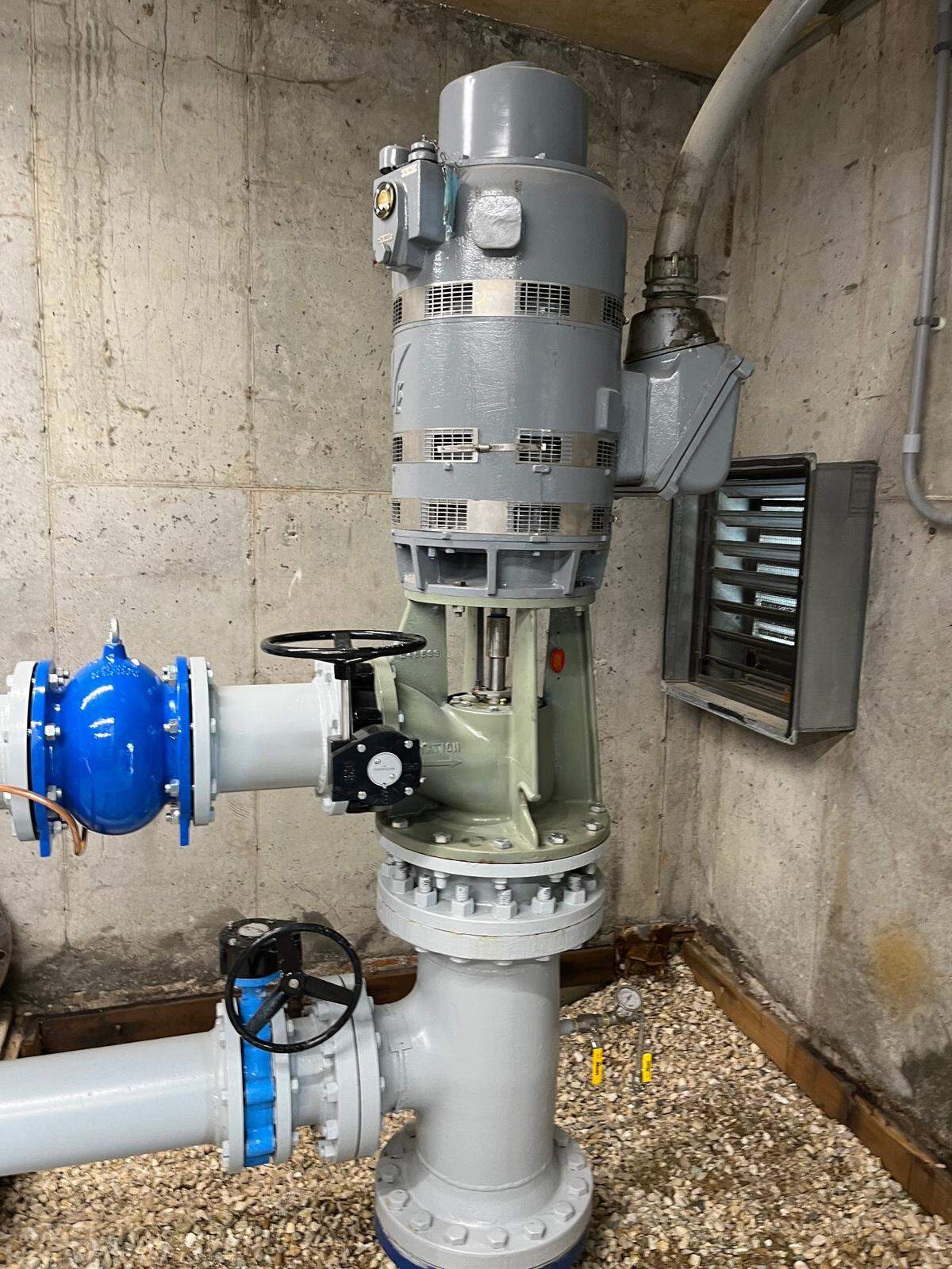
Boise has three production wells at depths between 600 and 900 feet below the surface in Military Reserve, Gunnerson said. Only two of the wells are in use.
That hot water is piped to buildings downtown, and arrives at about 170 degrees.
With heat exchangers, buildings can transfer the heat in the water to another medium, and use it to heat air or other water used for drinking. Buildings connected to the system pull about 50 degrees worth of energy from the water and send it back into pipes at about 110 to 120 degrees, Gunnerson said, where it is reinjected back into the aquifer near Julia Davis Park.
“We are now in a position where we have the water rights for it, we have additional pumping capacity, we have pipeline capacity,” Gunnerson said. “We are looking at more growth.”
Boise is looking to bring more buildings downtown onto the geothermal system by marketing the program, Gunnerson said. The city is also considering mandating geothermal heating for buildings that fall along the existing system, and the current draft of the city’s ongoing zoning rewrite includes provisions benefiting buildings that use geothermal energy, among other conditions.
Boise’s system has the capacity to grow by about 20% to 30% with most of the existing infrastructure, Steve Hubble, the city’s climate action manager, told the Statesman.
“It’s great that we’re doing so much,” Gunnerson said, but he noted that there are a lot of other countries — including China — that have developed their geothermal resources much more than Boise or the U.S. has.
‘We need to raise our energy IQ’
Travis McLing manages geothermal research at the Idaho National Laboratory in Idaho Falls and is working to educate Idahoans about the potential of geothermal.
Boise has applied for a grant from the Department of Energy with the Idaho National Laboratory, and part of the research includes examining how the city could integrate cooling into its geothermal system, Burgos said.
Known geothermal resources are largely concentrated in the West, and Idaho has the third largest known resources of any state, McLing said.
In addition to Boise, many small communities in Idaho — like Stanley, Cascade, Grand View and Twin Falls — could benefit from geothermal energy, he said.
“Idaho takes more credit and does less geothermal than any other state that has the potential,” McLing said.
According to the governor’s office, an estimated 17,000 gigawatt hours of geothermal power potential exists in Idaho — a figure that could increase as more research is done. The state produces only 13 megawatts, McLing said. Of the electricity produced in Idaho — which does not include systems like Boise’s, which directly use geothermally heated water — only about 0.5% of it comes from geothermal, according to 2020 data from the Energy Information Administration.
“Idaho is particularly vulnerable because we bring in so much energy across our borders,” McLing said, noting that the state imports all of its liquid fuels and 60% of its electricity. He said the state should consider enacting policies that incentivize homegrown energy.
The Western Governors’ Association, a nonpartisan association of governors in the American West, has a geothermal initiative to “examine opportunities for and barriers to the increased deployment of geothermal energy technologies” in the West, according to its website.
The 2023 initiative was launched by Colorado Gov. Jared Polis, a Democrat.
“There’s always people looking around about more (geothermal) development here,” Idaho Gov. Brad Little said at a meeting of the association on Monday, Oct. 24. “That’s why we love geothermal, because it’s there every day, all the time.”
This story was originally published October 28, 2022 at 6:00 AM with the headline "Boise’s geothermal system heats some homes, buildings, water — and it could do more."