Which COVID test is best? Rapid antigen tests more effective than thought, study says
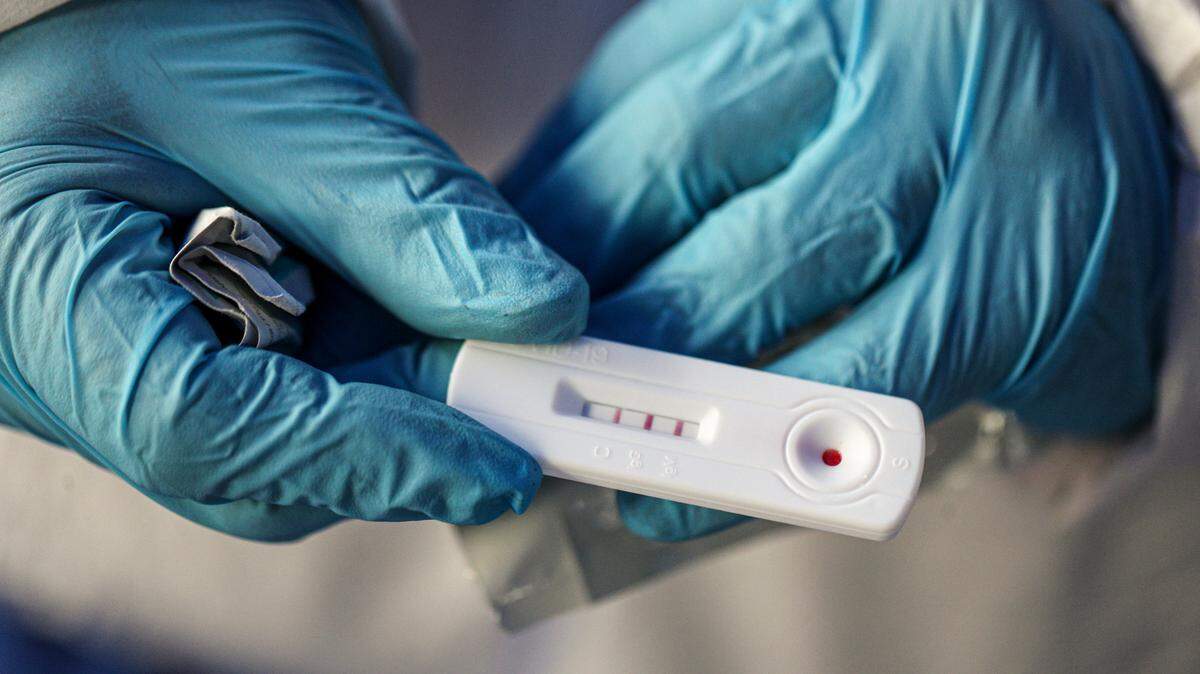
There are two types of COVID-19 tests: PCR and rapid antigen.
They both work by analyzing nasal or saliva samples from people, but the tests differ in how they process them — as well as how accurate they are at doing so.
PCR coronavirus tests are the standard for health professionals during the COVID-19 pandemic and are proven to be more accurate than their antigen cousins. But now new research reveals rapid tests are more effective than previously thought.
A study of more than 6,000 people who visited the Baltimore Convention Center Field Hospital in Maryland found rapid antigen tests accurately detected coronavirus samples in 87% of patients with symptoms and 71% of those without symptoms.
PCR tests are nearly 100% accurate, but there are still risks for false positives, researchers say in their study published Dec. 1 in the journal Microbiology Spectrum.
All tests were conducted between December 2020 and January 2021, and all participants, who were ages 26 to 41, received both types of tests.
Lead author of the study Dr. Zishan Siddiqui, assistant professor of medicine at the Johns Hopkins University School of Medicine, said the rates “surprised” his team “because they were so high.”
“This is a significant finding because the rapid test offers a number of advantages over the PCR test, including time savings, both in sampling and processing,” and results within 15 minutes, Siddiqui said in a news release. “And most importantly, ease of distribution and application — basically anywhere — which can help overcome COVID testing disparities in medically underserved communities.”
What are the differences between PCR and rapid antigen tests?
PCR tests work by taking a small sample of coronavirus genetic material and replicating it “thousands of times so it can be more easily detected,” researchers say. They require trained laboratory technicians and special equipment that only some testing facilities have.
The tests also take at least an hour, likely more, to process samples, yet people may not receive their PCR results for days. One study found average wait times are longer for Black (5 days) and Hispanic Americans (4.6 days) than white Americans (3.9 days).
Rapid antigen tests, on the other hand, come in pre-made kits with laboratory-produced antibodies that can glue onto proteins sitting on the surface of coronavirus particles in patient samples. Anyone can complete the test, and it can be taken anywhere, offering results within 15 minutes.
“What we determined was that while the PCR test may be a better test from a clinical perspective — as it’s basically 100% accurate at detecting (the coronavirus) — the rapid antigen test appears to be better from a public health standpoint because of its ease of use, and the fact that it proved to have sufficient accuracy, specificity and reliability for detecting the coronavirus in a high-volume setting,” study senior author Dr. James Ficke, professor of orthopaedic surgery at the Johns Hopkins University School of Medicine, said in the release.
Generally, rapid antigen tests will detect higher levels of the coronavirus, meaning a positive test result may reveal a person is very contagious, experts say. But they do have higher rates of false negatives than the more accurate PCR tests, which are more sensitive and catch lower levels of coronavirus in people, Dr. Robert Shmerling, an associate professor of medicine at Harvard Medical School in Boston, wrote in a Harvard blog post.
Still, “a negative result suggests there’s too little virus to infect others, at least at the time of the test,” he said.
Antigen tests are hard to find — and expensive
Health experts say it’s a good idea to take rapid antigen tests at home, especially before gathering with others, now that federal health officials have authorized several that you can buy. However, the tests don’t come without some limitations.
They’re hard to find and costly — between about $10 and $40.
Researchers of the new study used the BinaxNOW COVID-19 Antigen Test manufactured by Abbott Laboratories headquartered in Chicago. Retailers sell them for about $25 in a box with two tests.
In October, the White House announced it would invest $1 billion in rapid at-home coronavirus tests in response to high demand and an ongoing shortage.
On Dec. 2, President Joe Biden announced Americans with private insurance can get reimbursed for any at-home rapid COVID-19 tests they’ve purchased. At-home tests will also be distributed throughout community sites, such as health centers and rural clinics.
This story was originally published December 9, 2021 at 4:10 PM with the headline "Which COVID test is best? Rapid antigen tests more effective than thought, study says."