
Six months into the COVID-19 pandemic, what we know about GA deaths and testing
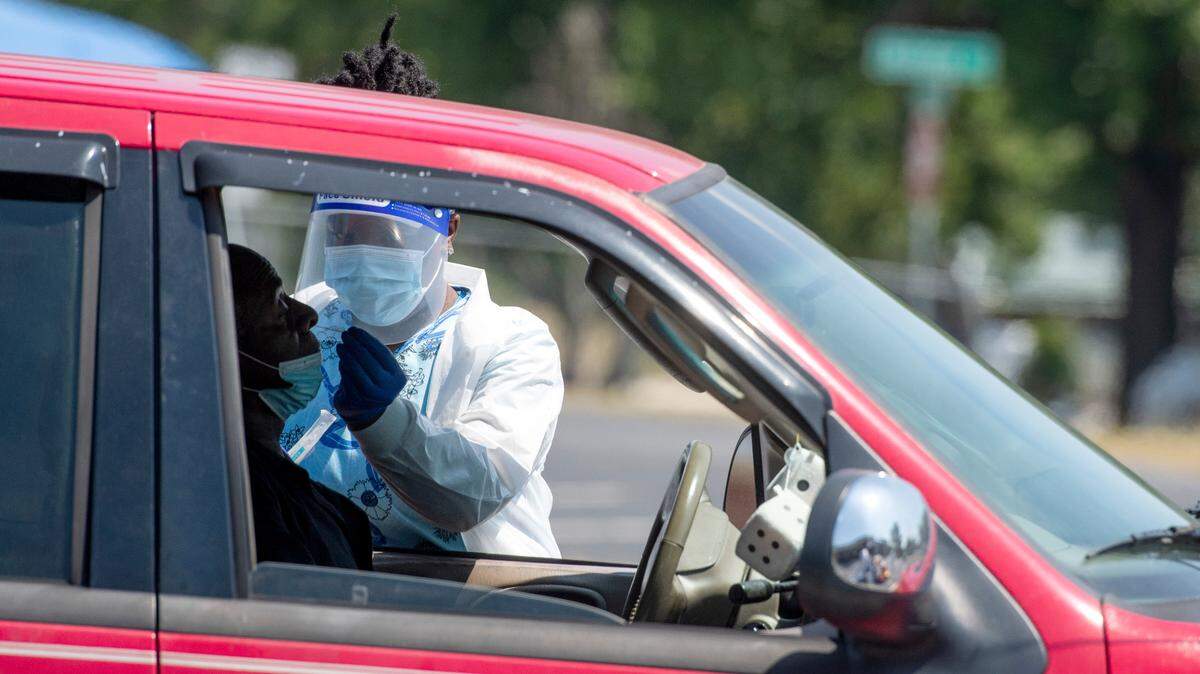
The coronavirus became a widespread outbreak in the United States around six months ago, and in that time, medical professionals have pumped out information about the virus and how to stop the spread.
As of Sept. 10, Georgia has reported 287,287 COVID-19 cases and more than 6,000 deaths, and Macon-Bibb County has reported 5,619 positive cases with 142 deaths, according to the Department of Public Health.
Staying on top of new COVID-19 information is difficult, so the Telegraph talked with local experts to round up the most up-to-date information.
Here are some of their answers to common questions asked about the virus:
How is COVID-19 different from the flu?
Dr. Jennifer Hoffman is an infectious disease physician and associate professor of infectious disease for Mercer University’s School of Medicine who practices primarily at Coliseum Health. She said the main difference between the COVID-19 virus and influenza is that there is no vaccine and no effective treatment for coronavirus.
“COVID is a novel virus that the world has never been exposed to before. It’s probably been circulating among bats for however many years, but it’s never been introduced to the human population,” she said. “There’s no pre-existing immunity. We don’t yet have the vaccine against COVID or effective treatment, which we do for the flu.”
Although the new coronavirus and the flu have similar symptoms, such as a fever and muscle aches, Amber Schmidtke, a public health microbiologist, said there are symptoms that are unique to COVID-19, such as a sore throat or the loss of taste and smell.
Both the flu and COVID-19 are spread through respiratory droplet transmission, she said.
“What this means is that the little droplets of saliva that sort of leave your mouth or nose when you are breathing or coughing or talking,... they can float in the air for up to three feet ,” she said. “One of the ways that influenza and COVID differ from one another is that where influenza is primarily a respiratory disease, COVID-19 or the virus that causes it is also a vascular disease. So, it causes things like blood clotting, which can lead to things like strokes and heart attacks, and other significant complications.”
The six feet requirement for social distancing is a safeguard because the droplets on average float around three feet, but they can go further than three feet, she said.
How should we interpret the data presented about COVID-19 testing?
Michael Hokanson, the spokesperson for the North Central Health District, said the Georgia Department of Public Health looks at the positivity rate to tell whether or not the virus is spreading more or less.
For example, if the virus was at a stable or decreasing level, the number of tests performed would increase and the positivity rate would decrease.
“However, if your testing increases also show an increase in positivity rate. That means the disease is continuing to spread,” Hokanson said. “That’s one of the reasons why we emphasize people looking at the positivity rate when it comes to getting a picture of how it’s affecting our community, not just the number of positive tests, not just the number of total tests performed.”
Schmidtke said one of the problems public health officials face when reporting data about any illness is under-reporting because people will either be asymptomatic or can deal with the illness themselves at home and won’t get tested.
“Honestly, if there’s an error in our reporting, it is probably that we are under reporting rather than over-reporting,” she said.
Are people getting counted twice?
If a person gets tested at a doctor’s office, the office and the lab analyzing the test are required by law to report the results to the Department of Public Health, Hokanson said, but the person does not get counted twice.
Every person who gets tested has a number associated with them, so if they get tested multiple times, the record goes into their case file, Hokanson said.
Although he said human error will always exist in the system, there is not enough error to change the positivity rate, he said.
“Within our district, our epidemiological team reviews records constantly. We do data cleaning at a very quick rate to make sure that those duplicates are eliminated and then any false data is scrubbed out of the system to reflect actual reality as best as possible,” he said.
Shmidtke said COVID-19 is not the only illness that the physician and the laboratory both have to report results to the health department.
“There have been mechanisms in place for years now to deduplicate when we have the same individual being reported twice because again, the physician and the laboratory are supposed to report, so that system has already been in place,” she said.
How are deaths determined to be COVID-19 related?
Hoffman said she has seen memes on social media that say only 6% of the deaths that have been reported as COVID-related deaths actually died only of COVID. She said this is a complete misinterpretation of the statistics.
“It’s normal for people who are critically ill to have multiple, multiple diagnoses on their death certificate, so it doesn’t mean they actually died of something else. That’s a misconception,” she said. “The death certificate is filled out by the attending physician on the basis of their clinical judgment.”
Hoffman can’t imagine a physician falsifying death certificates, and she doesn’t understand what the motivation would be to do such a thing, she said.
“That would be criminal. That would be fraud on my part if I falsified a death certificate, and that’s a big deal. I could lose my medical license,” she said. “We’re not trying to drive up the numbers artificially here. If anything, sometimes they worry that we’re under-counting cases of COVID-related deaths, but I certainly don’t think that we’re over-counting.”
“Only old people are dying.” What do you say to people when you hear this?
“I get the impression from those sorts of things that people are trying to say that the virus is not serious or that somehow our old individuals are expendable. I take issue with that because I don’t think that that is a community-minded mindset to have in this situation,” Schmidtke said.
All of the COVID-19 deaths are preventable, she said, and survival and death are not the only two outcomes. Some people have severe quality of life problems after they recover from the coronavirus, she said.
Hokanson pointed out that many local cases are young adults.
How susceptible are kids to the virus?
Kids can definitely get the virus, Schmidtke said. She said she believes the reason children didn’t seem to contract COVID-19 at the beginning of the pandemic is because they didn’t have the opportunity to get it. Schools closed down and there weren’t large gatherings of kids, she said.
What is herd immunity? Why are people talking about it?
“The concept of herd immunity is that when enough people in a population are immune to a particular infection, then an infected person doesn’t really have any susceptible targets to pass the infection on to because everyone they come into contact with is immune,” Hoffman said. “We are not sure if herd immunity is even a possibility for COVID because it’s unclear how long your immunity to COVID lasts after an infection.”
Assuming at least 70% of the population would need to get infected to have herd immunity, Hoffman estimated that the United States would suffer more than 1 million deaths before achieving herd immunity.
“Number one, we’re not sure if herd immunity is even possible. But number two, if it is, to me, the cost is just not acceptable,” she said.
Schmidtke said a vaccine would have to be available to achieve herd immunity.
“If we were talking about getting to a place where we reached that threshold, we would have an uncomfortable amount of death to go along with it, and I think it’s more death than I think any of us are really prepared to be okay with,” she said.
How long does it take to make a vaccine?
It usually takes years to create a vaccine unless there is a public health crisis, but if a vaccine is created for COVID-19, Schmidtke said it has to be mass-produced as well.
“While we want to get a COVID vaccine here, the public trust that we have in vaccines right now is a delicate thing,” she said. “I think all of us want an end to this as soon as we possibly can, but I think we all want to do this in a safe and effective way.”
Why is contact tracing important?
“Contact tracing is an important part of any infectious disease response, not just COVID-19,” Hokanson said. “What contact tracing does is it starts off with a case investigation. A case investigator will interview the person that is tested positive, learn about where they were and who they were in contact with during their infectious period. Then, the contact tracers will use that information to reach out to the individuals that the infected person was in close contact with. The rule is within six feet for cumulatively 15 minutes.”
Anybody who was in contact with the infected person will get guidance on how to proceed.
“The recommendation is that the individual get tested for COVID-19 10 days after exposure, and the reason why that is, is if a person is exposed on day one and they get tested day one, the virus might not have had time to actually impact the system,” he said.
Hokanson said he understands people don’t like answering phone calls from people they don’t know, but he asked that people talk to NCHD.
“What we’re trying to do is keep you safe and healthy and keep our community safe and healthy,” he said.
Will smoking protect me from the virus?
“I believe there was one small study way back at the very beginning of this in February or March that suggested that it might, but further studies since that time have shown that smoking is most certainly not protective and is actually a risk factor for severe disease. Any kind of pre-existing lung disease is going to make you worse off if you get COVID,” Hoffman said.
Why does it matter whether people wear a mask?
“The reason we wear a mask is to protect the people around us, but also to protect yourself from the droplets that might be circulating in the air around you,” Schmidtke said. “It takes a bit of a community mindset and the idea of putting the needs of others ahead of your own. It’s uncomfortable to wear a mask. I don’t particularly enjoy it either, but I know that the little old lady that I’m passing in the grocery store is at a high risk, and I would never forgive myself if I accidentally gave her something that kills her.”
People should make sure their masks are covering their mouth and nose, Hoffman said.
“Masks are probably the single most important protective measure that we can make, other than a complete lockdown which no one really wants to go back to, to prevent COVID from spreading in our community,” Hoffman said. “I see so many people walking around with their masks underneath their nose, and if you’re going to do that, you almost might as well not even bother wearing one at all because you’re still breathing your virus all over everybody else.”
If I’m young and healthy, why should I practice social distancing?
“It’s part of your responsibility to your community. That’s the the major reason is that you should quarantine so that if you’ve been exposed and you then catch COVID, you don’t pass it along to someone else who isn’t young and healthy, maybe your parents, maybe your grandparents, who might get sick and end up in the hospital or even die,” Hoffman said.
Young and healthy people can still get really sick from the COVID-19 virus and have permanent damage from the disease, she said.
Will social distancing weaken my immune system?
“No, no, it will not at all. We are exposed to plenty of bacteria every time that we go to the bathroom, every time that we eat, every time that we touch a doorknob, our immune systems are still getting plenty of practice,” Hoffman said. “To tell you the truth, that sort of so-called practice is only really important for very young children. Adults have a fully formed, fully functioning immune system that doesn’t need to be constantly re-challenged. Their immune system is going to be just fine even with a little bit less exposure to pathogens.”
What types of activities can I do safely?
“I would say you can pretty much do anything safely. If you’re doing it alone,” Hokanson said with a laugh.
He recommends hiking, camping and other outdoor activities, he said.
What about eating in a restaurant?
“I would always prioritize outdoor dining as compared to indoor dining,” Schmidtke said.
Although she has not eaten in a restaurant since the pandemic started, she said she still tries to order food for delivery from restaurants as much as possible.
“You can take every precaution into account but nothing will prevent COVID-19 100% if you are around others,” Hokanson said.
Is it OK to relax social distancing for holidays?
Nope.
“The reality is that we’re all taking different risks,” Schmidtke said.
If masks and social distancing work, why are we still doing it?
“I think the reason we’re still having the problems we are is because we’ve not had enough adherence to those recommendations,” Schmidtke said. “The reality is that short of having a shelter-in-place order again, I don’t think that we’re going to bring this thing back down to zero until we have the vaccine, and even then, it’s going to take a few months for us to vaccinate enough people to get to that herd immunity threshold.”
Schmidtke estimated that the pandemic will last at least another eight months.
“We really haven’t taken the steps unfortunately to limit transmission in our communities. We can’t eradicate it with the strategies that we’re using right now, so the best we can do is try to keep it within limits that our testing and our contact tracing is able to adequately monitor the spread of illness and try to limit the spread to others,” she said.
When will it end?
Hokanson said he does not have a crystal ball.
“Throughout this entire pandemic, what we say one week about a trend could immediately go the opposite way the following week. We see spikes and we see dips all the time,” he said.
The Department of Public Health has seen a decrease in demand for testing, Hokanson said, and he asked that people get tested if they believe they need to.
“I cannot tell you what next year is going to look like, what next month is going to look like, what next week is going to look like, so we would not be able to tell you by x date and x time, it’s going to be under control.”
This story was originally published September 11, 2020 at 5:00 AM.