
From the Caribbean to COVID-19: Five doctors receive ‘trial by fire’ in Macon
In late June, five doctors arrived in Macon to begin their residencies.
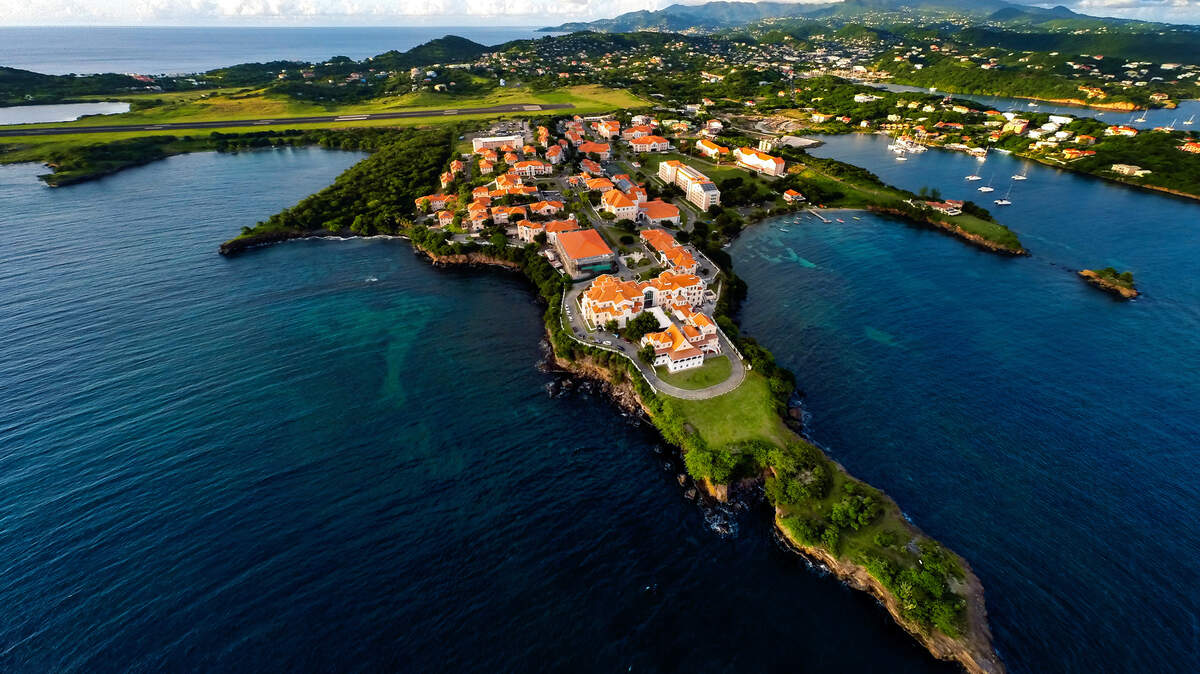
They had been trained 2,000 miles away in Grenada, West Indies and matched with Macon hospitals in March, just before the COVID-19 pandemic sparked a shelter-in-place order from Gov. Brian Kemp.
The connection between Georgia and St. George’s University in Grenada may seem tenuous. But Dr. G. Richard Olds, the President of St. George’s University since 2015, explained that a small percentage of all practicing doctors in Georgia are alumni of St. George’s.
“We’re the largest English speaking medical school in the world, and we train a lot of Americans. Many are from Georgia, and they generally like to return home to do their residency training practice,” Olds said.
Twenty-three SGU graduates are starting residencies in Georgia this year, in specialties ranging from anesthesiology to emergency medicine to pediatrics. Mary Kuyvenhoven, Nosson Lerner, Jennifer Boatwright, Natali Berger and Nicholas James are in Macon.
‘Trial by fire’
Detroit native Dr. Nosson Lerner, an emergency medicine doctor, began his residency with HCA Healthcare and the Mercer University School of Medicine.
“I have a very non-traditional background,” Lerner said, “I was raised in an ultra-Orthodox Jewish home, so I grew up with the black hat or the beard or the long curly sideburns.”
Lerner was the first in his family to graduate from college, and the first to pursue a graduate program of any sort.
“Having the non-traditional background and not having that secular education growing up definitely made getting into med school, I think, the biggest struggle. Once I got into SGU I feel like it’s, I don’t want to say smooth sailing because med school is definitely anything but smooth sailing, but I feel like my path has been a lot more clear,” Lerner said.
The COVID-19 pandemic has made Lerner’s residency more difficult.
“I would use the term ‘trial by fire,’” Lerner said. “Starting residency during COVID, nothing could have prepared me for this.”
Lerner emphasized the importance of wearing masks.
“It’s scary times definitely, but I think that if people do the right thing to basically take precautions that hopefully will minimize the health impact and the number of deaths,” Lerner said. “It’s just frustrating when people (don’t wear masks). Like, I’m wearing an M95 plus a mask over it and a face shield for a 12-hour shift and I’m obviously not running out of oxygen. People think that a simple cloth mask is gonna make them hypoxic. And that’s just not how any of that works.”
‘Baptized by COVID’
Like Lerner, Kuyvenhoven is also an emergency medicine doctor who began her residency at HCA Healthcare and the Mercer University School of Medicine.
“I wanted to be a doctor when I was growing up (because) people in my family had health problems; you go to the hospital a lot, and I always just felt like doctors had all the answers,” Kuyvenhoven said.
Her struggles as a resident, even despite the addition of COVID-19, aren’t much worse than the typical experience, she said.
“I think it’s just the normal, working 12 hours plus extra hours and like changing your sleep schedule type difficulties, but nothing abnormal for residents, I’m sure,” Kuyvenhoven said.
She did say the effect of the pandemic, however, was noticeable.
“it’s affected everybody in the sense that graduating medical school didn’t have the same celebratory effect I think we were all hoping for. And we didn’t have that big rush of relaxation before it started. And then when we started, my uncle actually emailed me and said that we have been baptized by COVID, which is kind of true,” she said.
Kuyvenhoven, and Indiana native, said she’s enjoyed Macon.
“I like it, it’s hot down here. Every day, it’s hot. But I really like it. It’s really beautiful. Everybody that I’ve met is very, very friendly. Hopefully, when things open back up, I’ll get a chance to visit the Allman Brothers museum and kind of enjoy downtown, but what I’ve seen so far I’ve really loved,” Kuyvenhoven said.
The medical pipeline
Kuyvenhoven and Lernen are examples of what SGU’s president described as a lack of medical school openings for American students. While American medical schools have raised concerns about the quality of education students receive in Carribbean medical schools, Olds noted that U.S. schools don’t have room for tens of thousands of qualified candidates.
Training students from rural or small urban areas, as well as students from lower socioeconomic backgrounds, will result in more physicians who want to work in those communities, Olds said.
“The solution in Georgia and Macon specifically is [to] get more kids from Macon in the medical schools, any medical school, but get them into med school,” Olds said. “[Medical schools are] basically training the sons and daughters of wealthy Americans, and then wonder why they don’t go to poor areas in the United States. We’ve got to start training physicians that are qualified, but they come from the full spectrum of our population.”
This story was originally published August 17, 2020 at 7:00 AM.