
Reusable surgical mask developed at Mercer to offset local shortage due to coronavirus
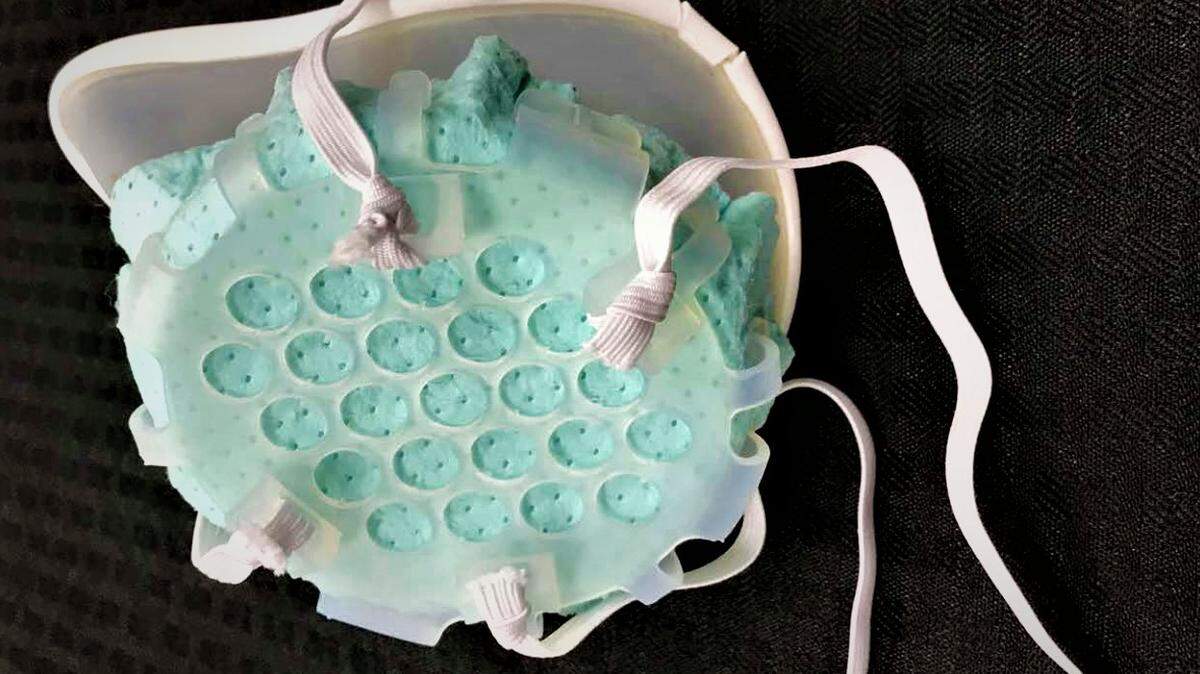
With the scramble on to find surgical masks for medical workers amid a shortage wrought by the new coronavirus, professors and students at Mercer University have in a matter of days fired up 3D printers along with their own ingenuity to fashion makeshift masks.
Their improvisational efforts are not unlike similar ones across the country as health care workers battle the COVID-19 outbreak.
But the Mercer team set its sights on developing reusable protective masks in hopes of delivering them to front-line physicians and nurses in Middle Georgia until standard, FDA-approved N95 masks become more widely available.
Production has been slow in the beginning.
Late last week, Mercer engineers had the capacity to make four masks a day. By midweek this week they hope to increase that to six a day.
For now, they have enough materials to make 300 or so masks.
“We are being cautious because we know we’re using a material that’s gonna be safe to be in proximity to the skin,” said Joanna Thomas, an assistant professor of biomedical engineering at Mercer.
Thomas, along with others in the university’s engineering departments, helped develop a viable prototype mask, which she said they will “hopefully get out to the public very shortly.”
One of the early difficulties in crafting the masks was making sure it sealed to a wearer’s face properly without having to be custom-fitted to the unique contours of person using it.
The Mercer engineers found a soft, silicon rubber tubing that can easily be slit and slid over the cover of the mask’s edges “that then forms the seal for the face,” Thomas said.
“Many of the designs that you’re seeing that have been shared on the internet, they’re not FDA-approved and they’re stopgap measures. They’re better than a cotton mask for sure, but we were looking to find something that was gonna pass a test similar to what an N95 passes.”
The Mercer prototypes begin with a 3D-printed mask with the edge-tubing added by hand. The masks also have a unique clip-on front that holds the air filter in place while it is being worn.
The mask’s components can be disassembled and cleaned with an alcohol solution. Thomas said it may also be possible to clean them with a bleach solution that some hospitals have begun using.
“The main components of the masks can be reused, and then it’s gonna be up to the user to determine how frequently they choose to change out (the filter) material,” she said.
The masks, which Mercer tested with Coliseum Medical Center physicians and nurses last week, haven’t been approved by the FDA, and the university isn’t guaranteeing their effectiveness or safety. Mercer is also making the design files available online. They’re intended to be used as a stopgap until other certified personal protective equipment is available again, according to the university.
The Mercer team was also working on producing clear, protective face shields for health care workers.
Thomas said they had enough materials to make about 225 of those, and that they welcome donated supplies to keep their assembly line going.