
Federal incentives have sparked a $12 billion clean energy manufacturing boom in Georgia
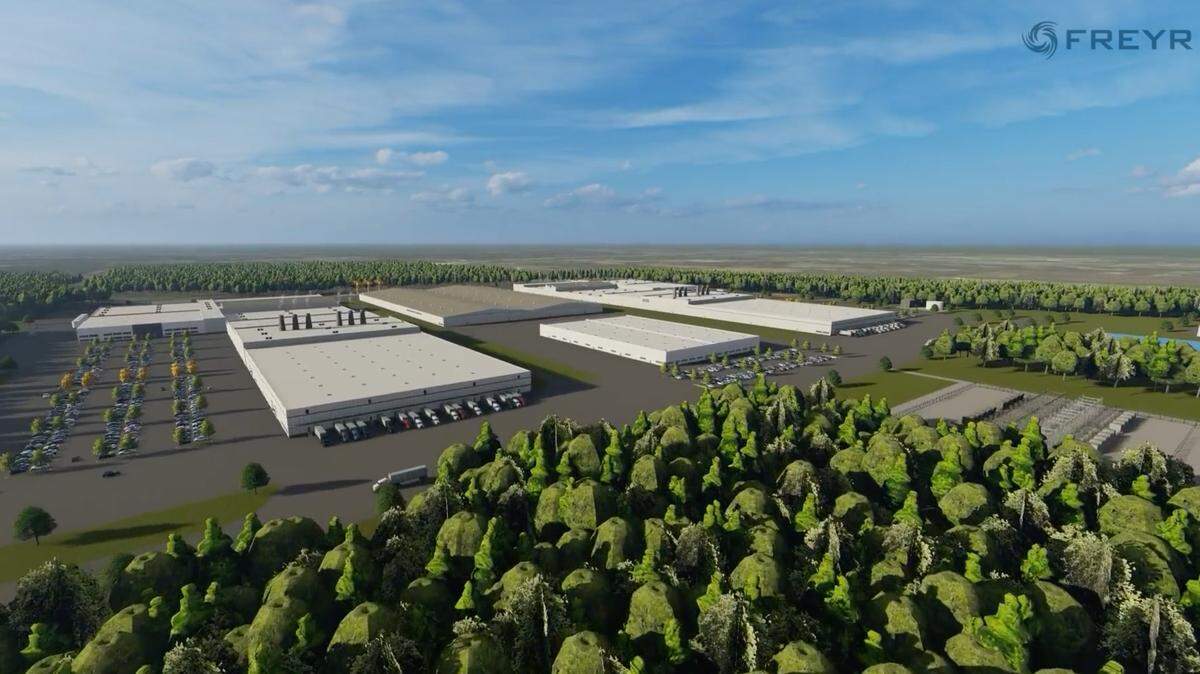
Companies have invested billions of dollars to build large-scale manufacturing plants in Georgia after Congress passed two bills designed to encourage businesses to boost U.S. production of clean energy and semiconductors.
A new report by the Financial Times surveying the large-scale manufacturing projects nationwide in those sectors announced since August, when the Inflation Reduction Act (I.R.A.) and CHIPS Act were passed, found that Georgia is home to the second largest number of newly announced factories of any state.
The report identified 75 new manufacturing projects with capital investment of at least $100 million nationwide that have been announced since the two bills’ passage. South Carolina is home to 11 of the projects, the most of any state, followed by Georgia’s 10.
The sites in Georgia are clustered in the northern and eastern parts of the state. None are located in the Macon or Columbus areas.
The planned facilities include four battery plants, four factories for electric vehicle parts and chargers, one that will supply a material used in solar panels, and one that will supply materials for semiconductor manufacturing, according to data the Financial Times provided to the Telegraph.
Last summer, the I.R.A. was passed without Republican support after months of negotiation between Senate Democratic leadership and a holdout on the party’s right wing, West Virginia Sen. Joe Manchin. Days later, the Senate passed the CHIPS Act with bipartisan support.
The two bills were intended to encourage the growth of a domestic supply chain in industries in which the U.S. competes with China, as well as incentivize clean energy production in order to combat climate change, through a combination of loans, grants, and tax credits.
The bills have sparked a nationwide manufacturing boom. Since their passage, companies have committed $204 billion in large-scale investments in those sectors — double the amount committed in 2021. Georgia’s share of the new investment is around $12 billion.
Despite the Democratic backing for the legislation, 75% of the investment tracked by the Financial Times was in Republican congressional districts.
The national Democratic Party has sought to associate itself in the minds of voters with the job growth promised by the manufacturing boom. Earlier this month, Vice President Kamala Harris visited Dalton — represented in Congress by Rep. Marjorie Taylor Greene — to tour the Qcells solar factory.
An expansion of that facility that was announced in January, and enabled by I.R.A. tax incentives, was billed as the nation’s largest ever investment in clean energy manufacturing. Locally, Democratic and Republican politicians in Georgia vied for political credit for the project.
The largest of Georgia’s 10 facilities on the list is a Hyundai and SK electric vehicle battery manufacturing plant in Bartow County that was announced in December. The plant will require an estimated investment of $4-5 billion and supply 3,500 jobs.
The 10 projects did not include Hyundai’s Bryan County megasite and Rivian’s planned facility in Walton and Morgan counties — two massive electric vehicle plants that were announced prior to the passage of the I.R.A.
The new projects will cumulatively create 10,700 jobs, according to the Financial Times data.
This story was originally published April 21, 2023 at 11:51 AM.