
Religious leaders deemed essential to boosting contraception worldwide
YOGYAKARTA, Indonesia -- Religious tradition runs deep in this ancient city in the heart of Indonesia.
The country's oldest Islamic university and one of its most influential Muslim charities are here. In the city center, an ornate 18th century palace complex is home to one of the world's last surviving Muslim dynasties. Even health care here is often linked to religion; several of Yogyakarta's leading medical centers are operated by Islamic charities.
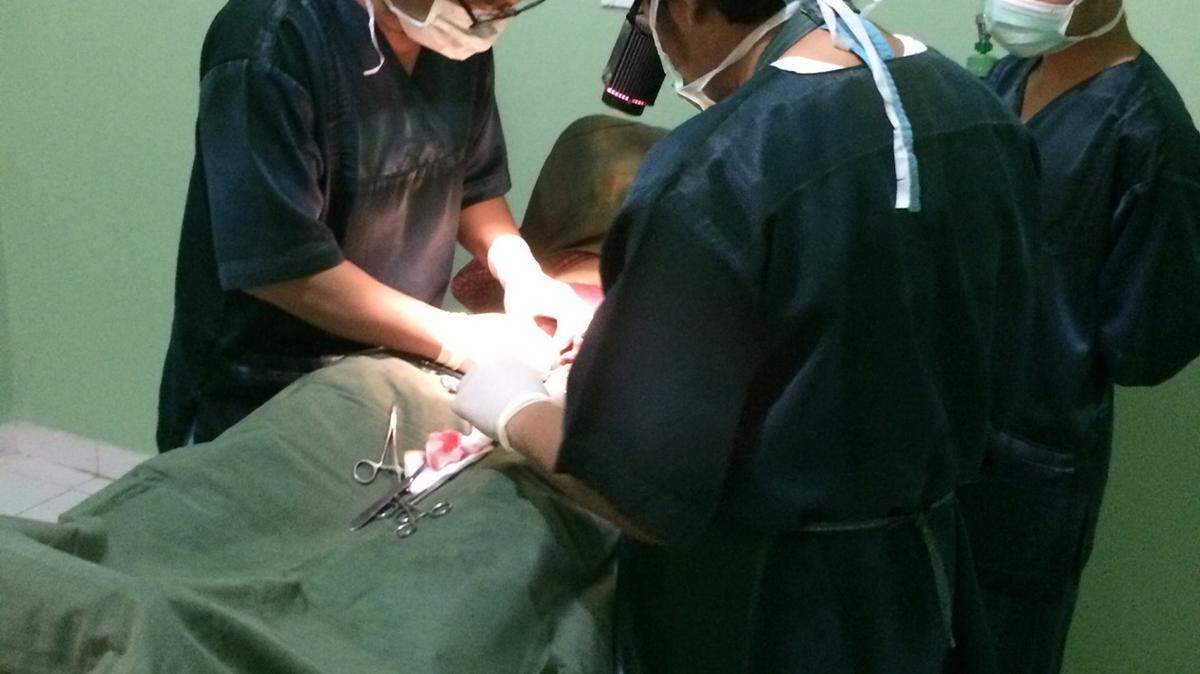
Yet religious hospitals and clinics in Indonesia, the world's most populous Muslim-majority country, do something that many religiously affiliated medical providers in the United States do not. They dispense contraceptives, including IUDs, birth control pills and condoms. Some perform sterilizations.
In the U.S., many religious institutions are locked in a fight with the federal government over birth control that is set to go before the Supreme Court next month. Elsewhere, in contrast, religious groups are increasingly joining governments and health officials in a global effort to expand access to birth control.
Last week, even Pope Francis connected family planning and health, saying contraceptives could be used to prevent pregnancies in places where the Zika virus, which has been linked to birth defects across Latin America, is spreading.
"Anything related to sex is controversial or uncomfortable, but with maternal and child mortality still so high in many parts of the world, people have become much more willing to work on this issue," said Mona Bormet, program director for Christian Connections for International Health, a U.S.-based consortium of Christian aid organizations. "The unmet need is just huge."
The health needs are driving a revolution worldwide in family planning.
World Vision, a multibillion-dollar evangelical Christian aid group based in Southern California, is helping governments ensure dependable supplies of contraceptives.
In West Africa, Muslim, Catholic and Protestant leaders recently formed a partnership to exchange information about promoting family planning in their religious communities.
In Indonesia, a group of Muslim scholars has endorsed vasectomies as a form of birth control.
The family planning campaign comes as global health officials work to save the lives of more than 300,000 women who die annually from complications of pregnancy and childbirth.
Although maternal mortality rates have dropped by nearly half since 1990, deaths remain high in many poor nations, driven in part by unintended and high-risk pregnancies. And progress has stagnated in some places.
In sub-Saharan Africa, for example, a woman is nearly 40 times more likely to die in childbirth than in the U.S., according to World Health Organization figures.
"If we were able to provide family planning services to all the women in the world who want them, we would prevent more than 50 million unintended pregnancies every year," said Dr. Babatunde Osotimehin, head of the U.N. Population Fund.
Widespread health coverage would also prevent 15 million unsafe abortions, Osotimehin said, noting that unsafe procedures are a leading cause of death among pregnant women in many poor countries.
Resistance from the Catholic Church in the Philippines and in Latin America has slowed family planning efforts in those places. And opposition from Muslim clerics in Iran, Pakistan and other Islamic countries remains a major barrier.
With progress lagging in many countries, advocates are now engaging churches, mosques and other religious institutions with messages that harmonize family planning with traditional religious teachings, including those that encourage procreation.
Both Islam and Christianity, for example, stress the importance of providing for children and ensuring their health and well-being, precepts that religious scholars cite in support of policies that allow families to plan how many children to have and how closely to space the births.
"There is this misperception that modern forms of contraceptives are inconsistent with faith," said Susan Otchere, who directs family planning programs for World Vision.Today, the country's universal health insurance system, created in 2014, provides Indonesians with coverage for all modern forms of contraception, including IUDs, birth control pills and hormone implants.
Indonesia's health care reforms haven't eliminated all barriers to family planning, particularly for adolescents.
The insurance program provides contraceptive coverage only to married Indonesians, for example, reflecting persistent objections to premarital sex.
And across Indonesia, abortion is illegal, except in emergencies.
This story was originally published February 26, 2016 at 9:08 PM with the headline "Religious leaders deemed essential to boosting contraception worldwide ."