
Hollywood's problems portraying religion go way beyond Islam and Muslims
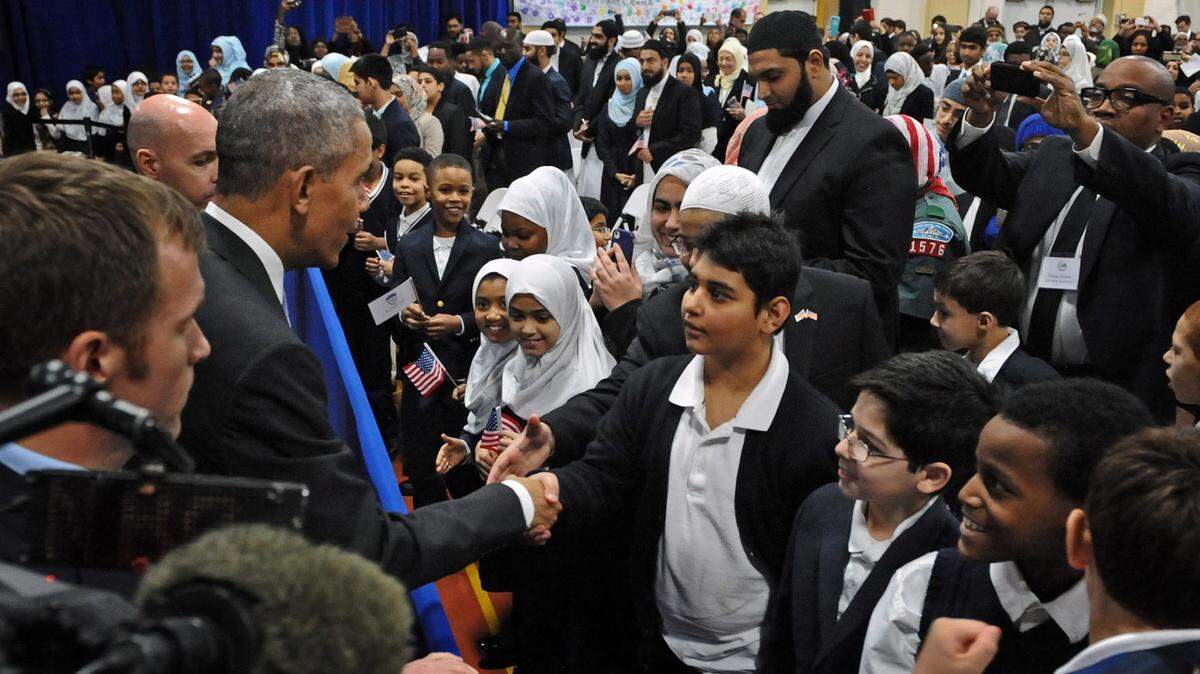
When President Barack Obama visited the Islamic Society of Baltimore this month in his first visit to a mosque during his presidency, he issued a sharp rebuke to the entertainment industry.
"Part of what we have to do is to lift up the contributions of the Muslim-American community not when there's a problem, but all the time," Obama said. "Our television shows should have some Muslim characters that are unrelated to national security. It's not that hard to do. "
I'm with Obama in believing that it's long past time that Hollywood moved beyond its tired Muslim terrorist plots and into a broader representation of people who practice Islam both at home and abroad. But I think he's making a mistake in comparing the representation of Muslims to that of African-Americans, and not just because Muslims are people of many races and ethnicities.
Islamophobia certainly plays a role in the persistence of these storylines. But if Hollywood has trouble telling stories about Muslims in other contexts, that's in part because the entertainment industry isn't good at talking about the daily practice of religion, no matter what a character's faith is.
Hollywood tends to use religion to drive the plot of a show or movie.
"Spotlight," Tom McCarthy's Oscar-nominated movie about the Boston Globe's reporting on the Catholic church's coverup of widespread sexual abuse by a startling number of priests, is terrific not least because it examines the power of the church in the region in a way that goes beyond ethnic color.
The film paints a portrait of the lawyers, school administrators, police officers and ordinary civilians who deferred to Cardinal Bernard Law (Len Cariou) or carried out his wishes, and tallies the cost that dissenters paid for speaking out against the church.
In the CW's darling telenovela "Jane the Virgin," Jane's (Gina Rodriguez) Catholic faith is the key to explaining her response to a patently absurd situation. Jane, who does not plan to have sex until she gets married, is accidentally inseminated and becomes pregnant.
If she wasn't devout, Jane might simply have terminated the pregnancy and extricated herself from the whole mess, and there would be no show as a result.
That mass culture often depicts Muslisms as terrorists absolutely grows out of the prejudices that bloomed like ugly flowers after Sept. 11 and have continued to grow like weeds in the years since.
But these storylines are also a result of the entertainment industry's bias toward using religion to drive the action in storytelling, rather than to flesh out character details or to drive smaller-bore plots.
If Hollywood is going to find new ways to depict both Muslims and the practice of Islam, the industry will have to swim against public sentiment and teach audiences to regard Muslim characters in new ways.
Rather than relying on developing existing tropes, movies and television will have to create their own.
This story was originally published February 12, 2016 at 9:31 PM with the headline "Hollywood's problems portraying religion go way beyond Islam and Muslims ."