
'From the pit to the pulpit': Inmate 153063 will become a megachurch pastor in Kansas
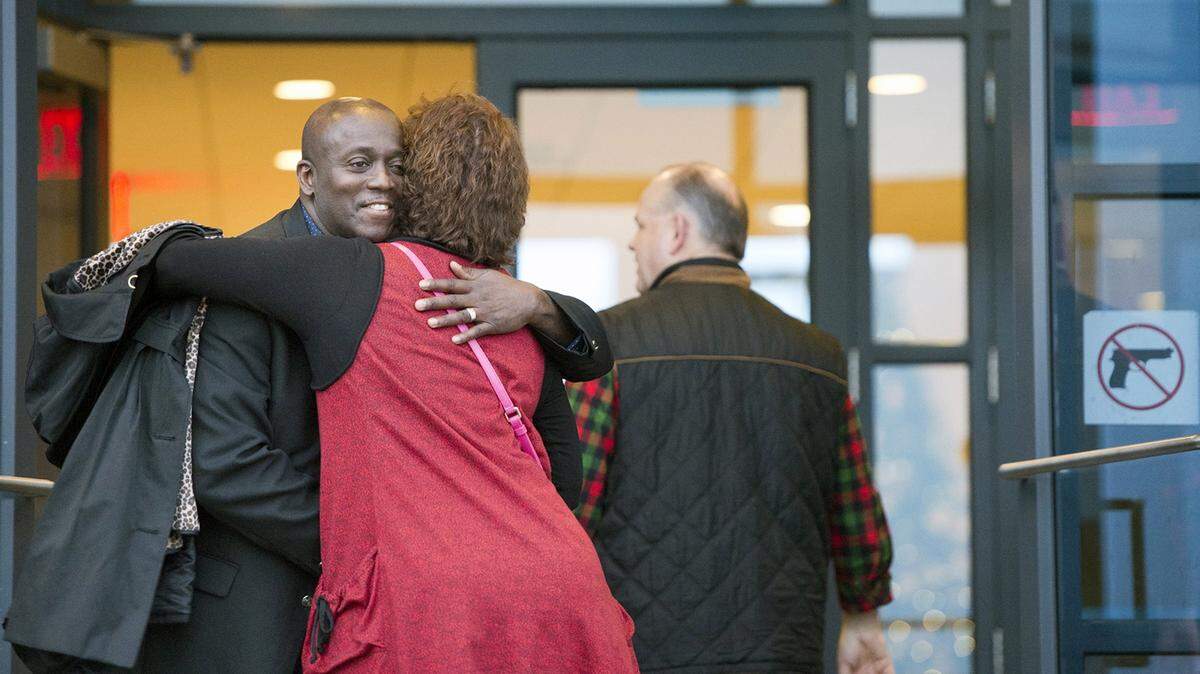
Darryl Burton sits a few feet from his desk in Kansas City, Missouri, where an open laptop waits.
He's got a research paper to write. At least 10 pages on the doctrine of Scripture and what the words in the Bible mean to him. After that, he has two more graduate papers and some reading to wrap up for seminary at Saint Paul School of Theology.
Pretty heavy stuff for a man who never finished high school. And who not long ago was a skeptic, full of questions about God and the religion his late grandmother clung to so closely. Burton had stopped going to church as a young teen, unable to relate or see how God was working in his life -- living in urban St. Louis, where he and his eight siblings, mother and grandmother were stifled by poverty.
His grandmother's words warned: "One of these days, boy, you're going to need Jesus. I only hope you remember to call on him."
Today, with the booming voice of a seasoned preacher, Burton tells his story across the country and abroad to prisoners and churchgoers, students and civic groups. And he recalls how his grandmother's words echoed in his mind during the late 1990s as he faced life behind bars as Inmate 153063 inside the Missouri State Penitentiary.
Eventually, he says, those words, along with a newfound faith and a team of people who believed in him, led him "from the pit to the pulpit."
"I just kept hearing, 'One of these days, boy...,' " Burton says, sitting inside his office on the campus of United Methodist Church of the Resurrection in Leawood, Kansas. "I just couldn't get that out of my mind. So I said, 'OK, let's learn about this Jesus.' "
Part of Burton's story has been talked about across the country for years, flashed in headlines and television newscasts. He served 24 years behind bars for the murder of a St. Louis man before a judge ruled that his 1985 trial was constitutionally flawed and overturned that conviction. It was based on the testimony of two men, one who kept changing his story and another who had more felony convictions than the jury was told.
Since his 2008 release, which lawyers and supporters fought eight years for, Burton has been asked to speak in venues from big halls to biker bars. Many have marveled at his ability to move beyond the nightmare of spending nearly all of his adult life in a prison cell for a crime he said he didn't commit.
As Burton sees it: "If I hadn't forgiven them, I would still be in prison. A spiritual prison."
This month, he completes seminary. And soon he'll start full time at the Leawood megachurch as an associate pastor in congregational care. He'll continue some of the work he has done as a Church of the Resurrection intern and pastoral associate, helping families in need and working with a men's group, showing people what true forgiveness looks like.
"There's no one who represents himself more humbly than Darryl," said Karen Lampe, the church's executive pastor of congregational care. "He just wants to do the very best he can. I think he's trying to make up for lost time.
"He is one amazing gift for us."
A gift the church wouldn't have received if not for the letters Burton wrote and some of the answers he received. He estimates that he wrote more than 700 letters during his time behind bars, reaching out to legislators and attorneys, Oprah Winfrey and groups dedicated to freeing wrongly convicted inmates.
He penned an especially memorable one in 1998, before his religious skepticism turned to conviction.
"Dear Jesus Christ," he wrote.
"If you're real and you know all things, you and I know I'm innocent. If you help me get out of this place, not only will I serve you, but I will tell the world about you."
"Sincerely yours, Darryl Burton."
A TWO-DAY TRIAL
On a June day in 1984, Burton had gone to see his parole officer. He was 22, had his GED and planned to start classes at Forest Park Community College in St. Louis. He wanted to study business administration and sociology.
After a burglary charge, Burton was set on his future. He wanted to spend more time with his infant daughter.
Then St. Louis police showed up and arrested him for the death of Donald Ball, a man who had been shot while filling his car with gasoline. Even as Burton was being booked into the city jail, he thought everything would be OK.
The truth would come out. After all, he wasn't even in the state when the murder happened. He'd been in Washington state, visiting a friend.
Witnesses said the man who shot Ball was a light-skinned African-American. Burton has dark skin, tagged with many nicknames growing up, including Lights Out.
The killer was described as 5 feet 5 inches. Burton is 5 feet 10.
No physical evidence or suggested motive ever tied him to Ball's death.
"I thought I'd be let go within 24 hours," Burton said.
He said he saw his public defender just once before the trial, and no one worked to get receipts or other documents that would have proved he was in another state at the time of the shooting.
Burton recalls the trial lasted two or three days. The prosecutor called two witnesses. One was a man he'd never met, the other a man he'd known in his younger days. Both said Burton killed Ball.
"I couldn't believe people would go in and lie on me," Burton said.
It took jurors less than an hour to come back with their verdict. Burton was sentenced to 50 years without the possibility of parole.
Before he left the courtroom, he had a message for the judge: "I don't know how long it will take, but I'm going to fight this case until I prove I'm innocent."
Burton spent countless hours in the prison law library, researching and writing briefs and motions.
In 1990, he heard back from Centurion Ministries, a small organization in New Jersey. Founder James McCloskey and his group were dedicated to taking on cases of inmates wrongly convicted. Because of the demand for help, it would be 10 years, the group told Burton, before it could take on his case.
He would wait. He wrote Centurion Ministries two or three letters a year to make sure the group didn't forget about him.
In the late 1990s, Burton picked up the Bible and focused on the words in red ink, signifying the words of Jesus. He related to the man and his stories. Some of Jesus' edicts were harder.
"Jesus said, 'Love your enemy,' " Burton said. "And I'm like, 'What?' "
Pray for them -- "And I'm thinking, 'Yeah, right, I'll pray a building falls on them.' "
Forgive them -- "That's impossible."
Through gritting teeth, Burton started to pray for the people who had lied about him, for the people inside the justice system.
He read Luke 23:34: "Then Jesus said, 'Father, forgive them, for they do not know what they are doing.' "
After a while, he no longer prayed through clenched teeth. The words and intention flowed freely.
"It became real, and I began wanting what was best for those people."
'LEARNING TO WALK'
The world changed without him. His first day at the Missouri State Penitentiary in Jefferson City, Missouri, he had walked under a massive welcome banner with the words "Leave all your hopes, family and dreams behind."
He walked out of prison in August 2008, unsure of the freedom and hopes and dreams he could have.
At TGI Fridays that night, he asked Cheryl Pilate, a Kansas City attorney who worked with Centurion Ministries since 2000 to free him, if the restroom was an area where he could go.
"It was obvious he was overwhelmed," Pilate said. "When you haven't been in the outside world for 24 years, everything is new, everything is different. It takes a while to come to terms with it."
'HE'S HELPED PEOPLE'
At Church of the Resurrection, where Burton started as an intern in 2013, he's visited homes to talk with families going through rough times. Before Lampe's son had surgery last year, she wanted Burton to be the one to give him a blessing -- "I knew it would be beautiful."
Burton also leads a men's group at the church where members have experienced problems from addiction to incarceration to relationship woes.
"He's helped people in our congregation that have forgiveness issues," Lampe said.
Earlier this month, she sat with Burton and went over his annual review. She gave him goals for the year and told him he'd have until January 2017 to complete them. But she's learning that's not how Burton works.
"He said, 'They told us in prison when we had something to do, we had to walk out and start doing it,' " Lampe said. " 'I'm going to walk out and start doing it.' "