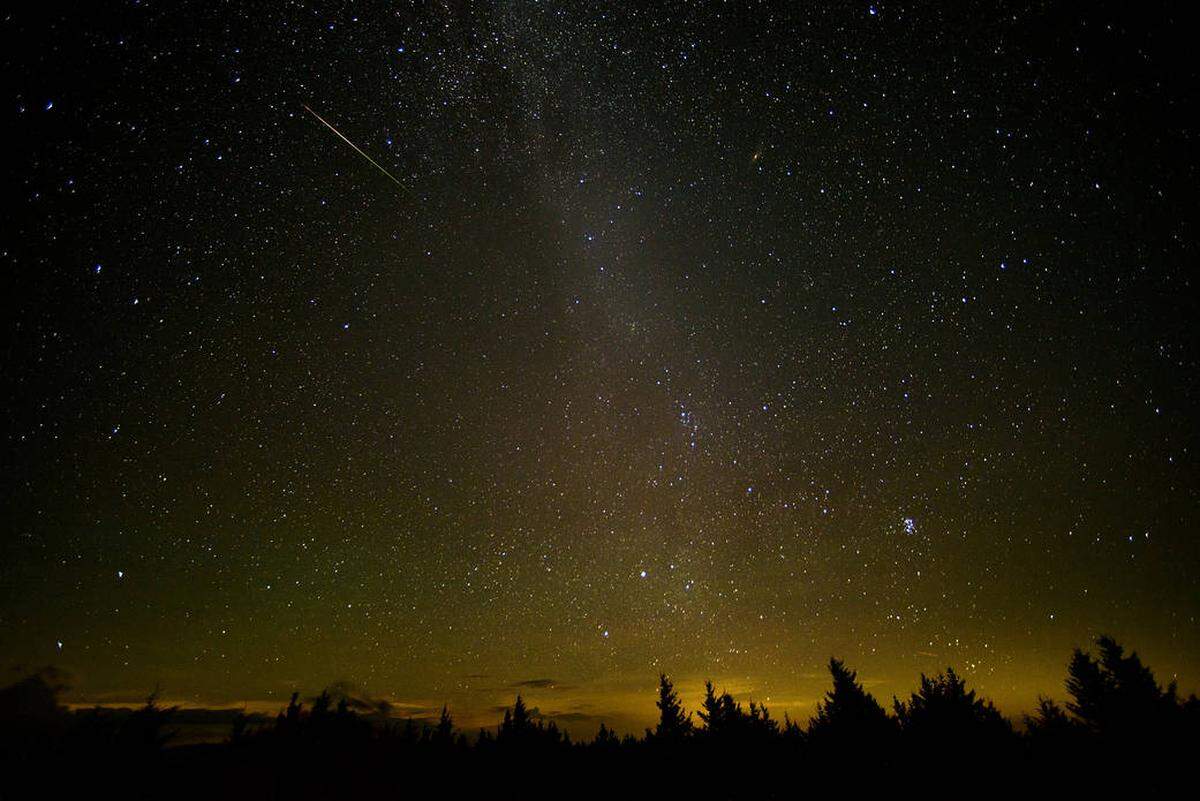
The Perseid meteor shower peaks this weekend. Here’s when & where to see it in Middle GA
This weekend will be one of the best times of the year to stargaze as the Perseid meteor shower peaks. Here’s what to know and how to catch a glimpse of the annual meteor shower in Middle GA.
What is the best day to see the meteor shower?
The meteor shower will be most prolific with an estimated 50 to 100 meteors an hour, Sunday (Aug. 11) night and into Monday morning. But the days surrounding the peak will also be great opportunities to catch a glimpse of a few shooting stars.
The half moon may pose a problem early Sunday, washing out all but the brightest meteors.
“Although the moon will be 50% illuminated during the peak of the Perseids this year, it will set around midnight, providing dark skies until dawn — ideal for meteor watching,” said Daisy Dobrijevic, reference editor at Space.com.
The Coast will have a waxing crescent moon all weekend, according to the local almanac.
The shower will continue nightly throughout the month with a smaller volume of meteors than this weekend’s peak, ending Sept. 1. A waning crescent moon starts Aug. 27 and may offer a second window for meteor hunting.
When is the best time?
“The best time to look for meteors is in the pre-dawn hours,” said Dobrijevic.
The shower will be at its most visible nightly from 11 p.m. CST. until dawn. The view will be best after midnight.
Where is the best place to view shooting stars?
Choose a location away from city lights and above ground level to escape the glare of the lights. A hill in the countryside would be ideal.
Georgia stargazers have only identified a couple of great places to meteor hunt in Middle GA: F.D. Roosevelt State Park in Pine Mountain and the Charlie Elliott Wildlife Center in Mansfield.
The Farmer’s Almanac recommends giving your eyes about 20 minutes to adjust to the dark skies.
Avoid any possible glare of the moon by facing away from the moon or stargazing in a moon shadow, any dark spot where the moon is blocked (by a building, a row of trees, etc.) but a portion of the sky is still visible.
In what part of the sky and near what constellations will the meteor shower be?
The shower will be visible everywhere. But, for the best view, look up and to the northeast. In Middle GA, you may catch a few shooting stars from a second meteor shower, Aquariids. The Southern Delta Aquariids meteor shower started in July and will remain active through Aug. 23. Its peak was July 28 and 29. The shower was most visible in the southern hemisphere.
“Though the southern delta Aquariids are best viewed from the Southern Hemisphere, they can sometimes be visible to those in the mid-latitudes in the Northern Hemisphere,” said Dobrijevic.
Try focusing on the darkest part of the sky and remember to check your forecast to avoid cloud coverage.