
Are backyard feeders actually harmful to songbirds?
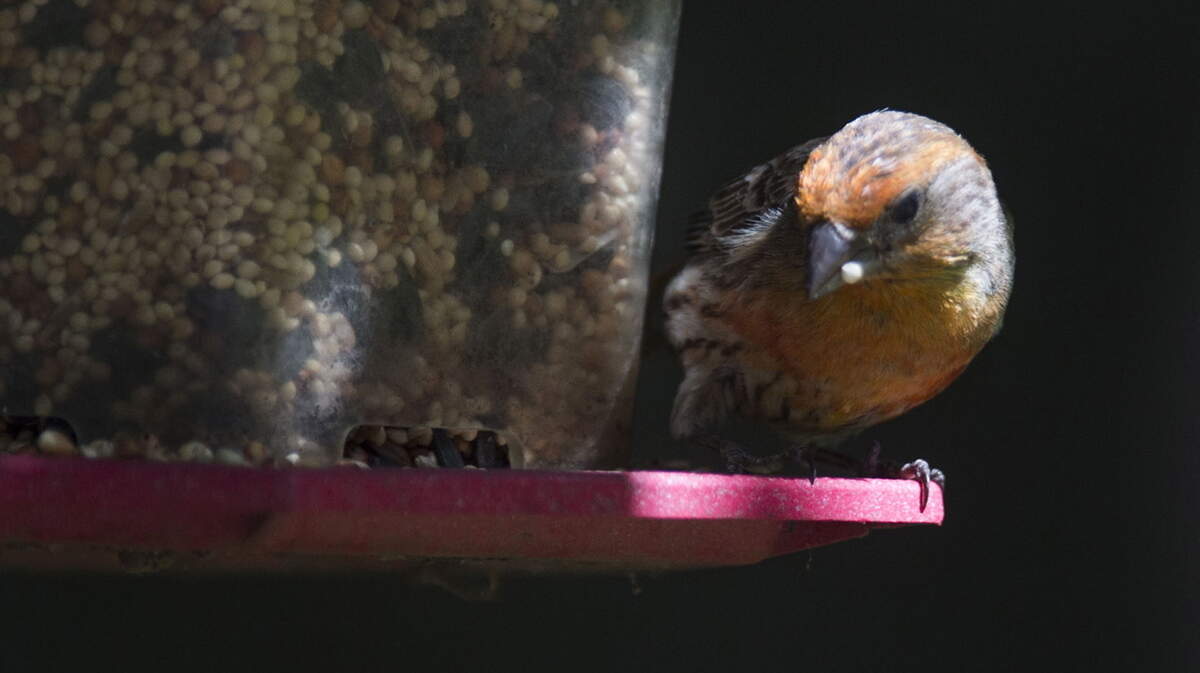
SACRAMENTO, California -- Joy is the word that comes to mind as Margot Bach describes how it feels to look out her sliding-glass door and watch the songbirds fluttering into her yard to eat the seed she puts out for them.
"I love to see them around," said Bach, 69. She had just finished filling the cylindrical feeder on the small concrete patio that pretty much fills the backyard of her Pocket-area home. A variety of songbirds twittered in the nearby trees.
"I love the sound they bring. I love the nests that they build."
Yet Bach's seeming act of kindness -- a ritual shared by the estimated 50 million Americans who feed birds around their homes -- has become something of a controversial practice in California in recent weeks. Last month, state wildlife officials said that feeding birds is "highly discouraged" following a disease outbreak that killed an estimated 1,000 songbirds statewide.
The outbreak, tied to salmonella bacteria, affected pine siskins, a nomadic finch whose range extends across the United States. Most of the bird corpses were found around backyard feeders.
"Disease problems associated with bird feeders are well documented," Department of Fish and Wildlife spokeswoman Jordan Traverso said in an email. "Sadly, bird feeders are for people, not for birds. Like so many other things with wildlife, it's really a people problem rather than a wildlife problem."
But how big a problem? Is this common garden feature really so damaging? The answer varies, depending on whom you ask.
Those who work in the bird-feeding trade -- by one estimate a $5.5 billion industry in North America -- say the practice is safe. They argue that disease outbreaks are preventable and rare.
Susan Hays, executive director of the Wild Bird Feeding Industry, a trade group based in North Carolina, said research sponsored by her association found that bird-feeding provides a direct benefit to birds.
"The data show that those birds who use wild bird feeders are in better health than wild birds who do not have access to bird feeders," Hays said.
Wesley Hochachka is assistant director at the bird population studies program at Cornell University's Lab of Ornithology, one of the nation's most esteemed bird research centers. He said bird feeding can be helpful in colder climates when heavy snow and ice cover birds' natural food. But overall, he said, the science is mixed on whether feeding birds is beneficial to their health.
Still, Hochachka noted, backyard feeders can bring less tangible benefits, in terms of shaping societal values.
In an increasingly urban society, he said, bird-feeding helps people connect with nature. That, in turn, helps promote policy decisions that are less harmful to the environment.
Hochachka said he probably would not have become an ornithologist if not for the backyard feeders around his home growing up.
"So it's just being able to see things first-hand, very close, that sparked an interest in me. In terms of general conservation and exposure to the natural world, bird feeders are a way of making that easy and making that connection," he said.
The National Audubon Society is among the groups that say feeders can be good for birds, as long as one follows guidelines for proper feed and sanitation.
That includes buying feeders that feature perches rather than large platforms where waste can accumulate. It also means scrubbing out feeders with a 10 percent nonchlorinated bleach solution at least a few times a year.
Still, Michael Lynes, director of public policy for Audubon California, isn't exactly enthusiastic about the practice.
"In general, if people ask me personally, I tell them the birds will be OK if you don't feed them," Lynes said. "You don't need to do that to help them survive."
This story was originally published April 6, 2016 at 6:16 PM with the headline "Are backyard feeders actually harmful to songbirds? ."