
Growing succulents: Expert shares tips for cultivating these trendy plants
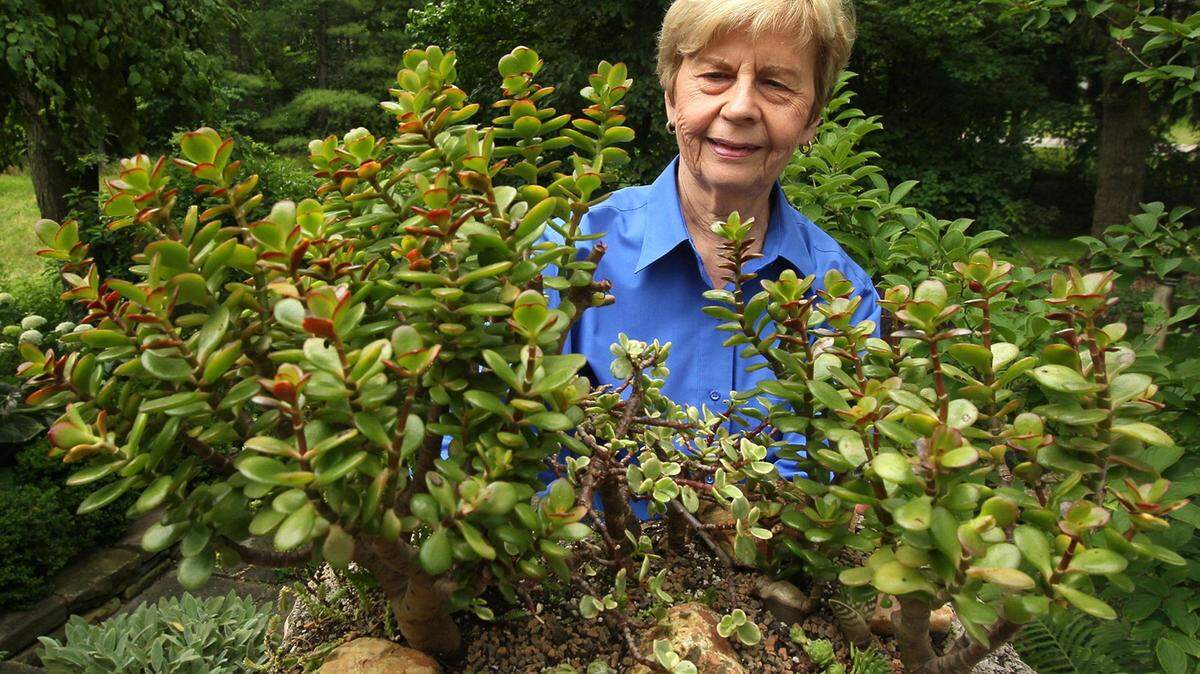
Take a look around Bill Hendricks' collection of 4,000 succulents, and it's easy to understand the recent craze for these high-style, easy-care plants. One with rosette shapes are taking center stage in container designs and bridal bouquets.
More architectural forms are becoming the go-to accessory for today's mantels and tabletops. And still other strappy types are being tucked in living walls, galvanized frames, topiary forms, birch logs, thrift-store stilettos, vintage spice tins, fairy gardens, green rooftops and even doghouse tops.
What trendy homeowners are now discovering, the 72-year-old Hendricks has known for decades.
"I've always been fascinated with succulents," he says. "I'm fascinated by their diversity, their color and 'wow,' and their stories from different places all over the world."
At age 7, Hendricks says, he bought his first succulent, a thick-leaved aloe plant, at a Cleveland dime store. He credits that still-living aloe plant with spurring his lifelong love of plants and leading him to a successful career in the nursery business.
Today, he is president of the 500-acre Klyn Nurseries, a wholesale nursery in Perry, Ohio, and was named 2014 Grower of the Year by Nursery Management magazine. While his nursery grows 1,850 species of landscape plants, Hendricks says, he keeps the succulents as a hobby.
"I'm not into sports; I'm into plants," Hendricks says. "That led me to an interest in geography and travel. So when I travel, I travel to see plants."
Hendricks explains that all cacti are succulents, but not all succulents are cacti. Succulents are plants that have the ability to store water within their leaves, stems or roots. Like a camel's hump, these adaptations allow the plants to survive long stretches without water. (Cacti, on the other hand, are a distinct family of succulents and are distinguished by their signature spines.)
Today, Hendricks grows succulents and cacti in a 100-by-30-foot greenhouse at Klyn Nurseries. All are meticulously labeled and grown mostly in clay pots packed onto raised tables, with a few hanging from containers.
He points to one Eastern prickly pear cactus, or Opuntia humifusa -- he prefers using plants' botanical Latin names -- and shares the story of an East German plant-swapping friend. In the 1960s, Hendricks had sent him seeds from this succulent found in Castalia, Ohio. Hendricks was surprised to learn in his friend's return letter that he was familiar with the town from his World War II days as a German officer; turns out, he had been a prisoner of war at nearby Camp Perry.
As Hendricks walks to the center of the greenhouse, he shares a story of the ponytail palm (Beaucarnea recurvata) that once climbed to the ceiling with its Hershey Kiss-shaped base and palmlike top. In 1966, he purchased the plant in a 4-inch pot for $1.25.
Over the years, it outgrew its various pots and eventually Hendricks' greenhouse. Although he found a new home for the plant at the Cleveland Botanical Garden, the 1,000-pound plant was too difficult to move, so it had to be cut into pieces and removed from the greenhouse.
This story was originally published January 27, 2016 at 9:42 PM.