
Dahlias reveal their true nature in dentist's secret garden
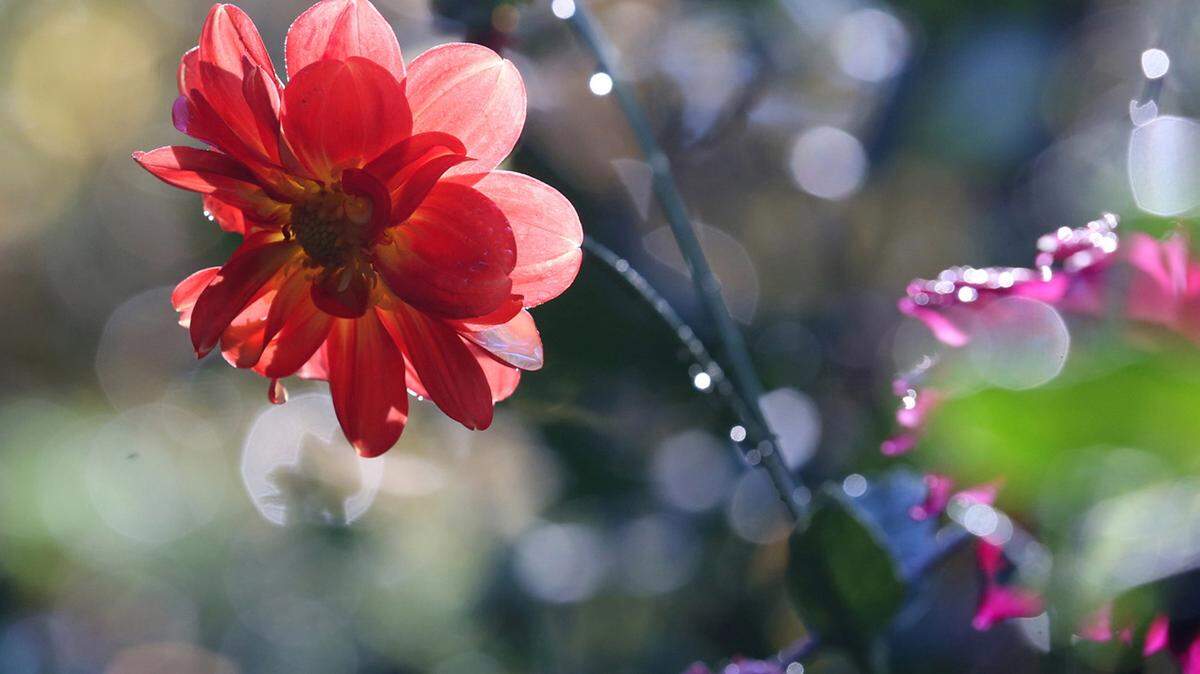
AKRON, Ohio -- As he did last fall, Dr. John Learner has gathered seeds at his home for an experiment that will bloom next summer in the garden behind his dental office in Cuyahoga Falls.
The patch is a test plot where Learner breeds dahlias, hoping to develop a new variety that will catch the fancy of dahlia show judges and maybe even other gardeners.
This fall, he planted 1,500 dahlia seeds, only 20 of which produced flowers that show promise. But to Learner, that's 20 new chances at producing a blue-ribbon bloom.
"If I get one (outstanding) flower out of all this 1,500, cool," he said.
Dahlias, like people, are subject to the whims of their DNA -- more than most plants are, because dahlias have more sets of chromosomes.
Sometimes a dahlia plant's offspring will resemble Mom. Sometimes it will look more like Dad, or more specifically, one of many dads that contribute to the pollination process.
Sometimes it will exhibit characteristics of some long-forgotten ancestor.
It's a genetic crapshoot. That's why dahlia breeders propagate desirable varieties by dividing the clumps of tubers they produce, a form of cloning that keeps the gene pool from getting muddied.
Learner, on the other hand, is out to produce something new. Each fall he gathers seeds from the dahlias he grows at his home, seeds produced by natural cross-pollination. The following spring he sows them in the test plot hidden in the woods behind his office, with help from a couple of patients who barter their labor in exchange for his services.
Then he waits for the plants to produce flowers, so he can see whether nature has given him divas or duds. "The only way you can tell is to plant them and look," he said.
An award-winning bloom has to be full, he said, with no center showing and petals that curve backward far enough to touch the stem. Misshapen flowers, sparse petals or flaws such as spatters of red are enough to prompt his rejection.
The vast majority of the seeds he plants won't produce anything noteworthy, he said. The few plants that show promise are tagged so he can dig up their tubers at the end of the season, store them over winter and then plant them in his garden at home the next spring.
He has room for only about 100 dahlia plants at home, so he'll eliminate the least promising of the plants he grew there the previous year to make room for the new ones. Then he'll baby his chosen ones throughout the growing season, fertilizing them heavily and pinch off all but one flower per plant in the hope that each dahlia will put all its energy into producing just one bloom -- one big, beautiful, prize-worthy bloom.
The flowers he doesn't submit for competition are used in the bouquets he takes just about everywhere he goes -- to church, to the bank, to the auto repair shop. "No one turns them down," he said with a smile.
His flowers also provide subject matter for his photography, one of his many creative outlets. Learner is an artist at heart, who turns dahlia pictures into three-dimensional photo collages, vacation souvenirs into playful shadow-box displays and sweets into elaborate gingerbread houses that have won multiple first-place awards in Cleveland Botanical Garden's annual competition. One of his houses even scored him an appearance on the "Today Show" in 2012.
But his dahlia test plot is a private project, hidden from the parking lot behind his office building by a dense stand of trees.
In contrast to the coddled flowers Learner grows at home, the plants in his test garden get no special treatment. He doesn't fertilize them. He doesn't water them. He does support them with homemade cages he fashions from wire mesh used in driveway construction, and he lays pieces of carpet on the ground to try to keep the weeds down. Still, some marauders have managed to make their way through.
The soil in the plot gets so much water naturally that he had to dig grooves to channel away the excess, he said. (He suspects a leak in a nearby water tower, but he's been assured that's not the case.) The plants are too close together and get less sun than dahlias like, so they tend to be spindly and produce few blooms.
But that's OK. He only needs to see if a plant shows promise.
"This is a big scientific experiment," he said.
Learner became enamored of dahlias some years ago when a patient, Doyle Wingard, brought him a flower. He liked it so much that Wingard gave him 20 tubers.
Then, when the University of Akron was preparing to build InfoCision Stadium, it targeted Wingard's house for demolition. Wingard needed a temporary place to plant his dahlias, so Learner bartered with some patients to clear a space in the woods behind his office.
Once Wingard was settled into a new place, Learner was left with the garden. So he figured he might as well use it.
Eventually he hopes to commercialize some of the plants he develops, a process that requires him to grow them in his own garden for four years to make sure they maintain their characteristics and then submit them to trial gardens to be grown and evaluated by others.
In the meantime, he'll just enjoy discovering the flowers nature gives him.
And maybe coaxing some of them into prize winners.
This story was originally published January 6, 2016 at 9:29 PM.