
A delicious decade: The food of 1910-1920
The last dinner on board the Titanic for first-class travelers before it sank on the morning of April 15, 1912, featured salmon with a mousseline sauce, filet mignon lili, lamb in a mint sauce, roast duckling with applesauce, sirloin of beef, roast squab and more.
Fifteen hundred and thirty-five souls perished that night, but at least some of them were well fed.
But such fine dining in the decade between 1910 and 1919 was the exception rather than the rule. Ordinary people ate food that was far more mundane. Red flannel hash -- it's corned beef hash with extra vegetables -- was popular, and so were sandwiches of every variety. More expensive fare might include a hot turkey sandwich or half of a broiled guinea hen.
With a vast wave of immigrants coming to these shores in that decade, the foods they brought with them began to become assimilated into the national cuisine, according to "American Dish: 100 Recipes From Ten Delicious Decades," by Merrill Shindler.
Oreos were invented in 1912, peppermint Life Savers came along the year after that and Kraft Processed Cheese in 1916. Customers could now reach for items at food markets rather than have clerks hand it to them from behind the counter, and canned goods continued their meteoric rise.
Without refrigeration, canned food was the best and only way for most of the country to have access to many items, especially during winter. And so, when I wanted to re-create the dining of the decade, I first began with a dish that calls for canned shrimp and canned peas.
Shrimp in Ramekins, the dish I made, was created by Mrs. J.R. Abercrombie, of St. Joseph, Missouri, and the only way people in St. Joseph could get shrimp was out of a can. Her recipe begins with a roux and adds milk; it's the basis of any cream sauce. Next comes shrimp and peas, and it is all topped with buttered bread crumbs before being finished in an oven.
The dish is wonderfully hearty and rich, like a chicken pot pie that has been made with shrimp.
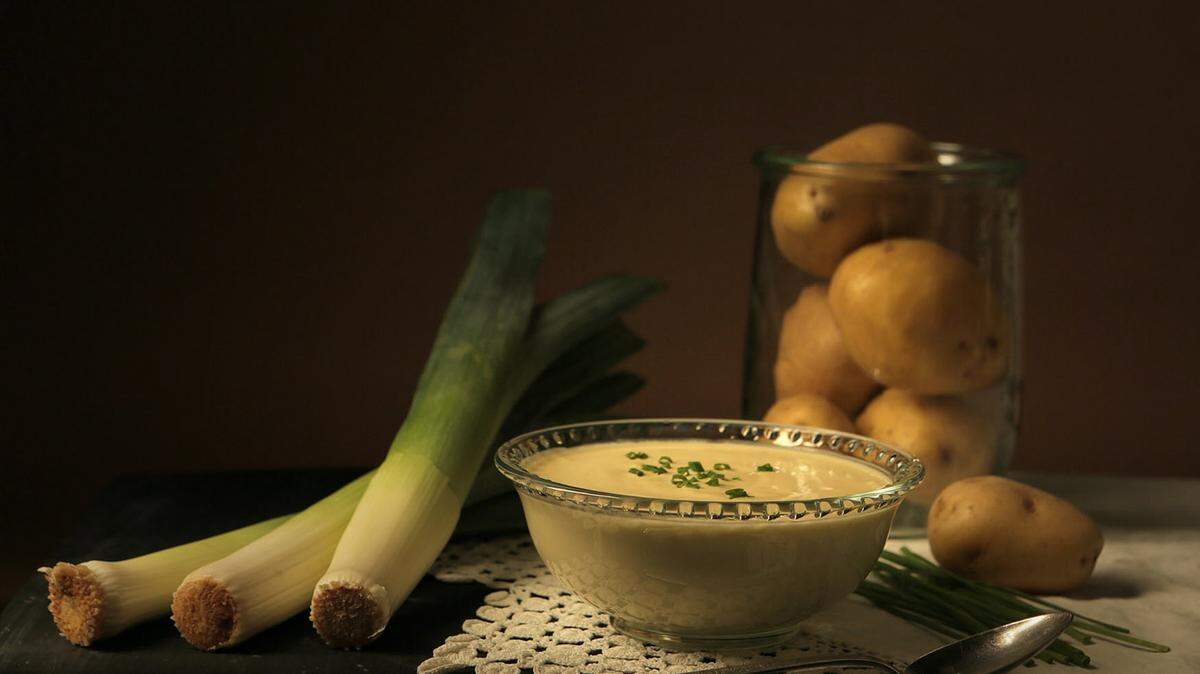
Next, I made vichyssoise, the cold leek-and-potato soup that was invented in 1917 at the Ritz-Carlton Hotel in New York. Ever since its creation, it has been the epitome of elegance in a bowl; filling, yet silky smooth.
I was also intrigued by a recipe for curried egg sandwiches I found in a 1912 cookbook called "Mrs. Rorer's Sandwiches." Curry and eggs go well together, but I had no idea Americans realized this in the 1910s.
For dessert, I chose a dish I had heard of, but never before tried: Orange Fool. Today's cooks seem to be divided on what exactly a fool is -- at least the kind of fool you eat -- but this 1915 version is a soft custard.
1910 RECIPES
Curried Egg Sandwiches
4 hard-cooked eggs
4 tablespoons ( 1/2 stick) butter or1/4 cup olive oil, plus more butter for bread
1/2 teaspoon curry powder
1/4 teaspoon salt
1 teaspoon onion juice (see note)
8 thin slices bread
Serves four.
Remove the egg yolks from the whites, mince the whites and push the yolks through a sieve.
In a small pot over medium-low heat, melt the butter or heat the oil. Add the curry powder and cook for 2 minutes. Add the curried butter or oil to the yolks, and stir in the salt and onion juice. Stir or rub until thoroughly smooth.
Spread a thin layer of butter on the bread. Cover half of the slices with a very thin layer of the yolk mixture, then a layer of the minced whites. Top with another slice of bread. Press together and trim the crusts.
Note: To make onion juice, grate an onion.
Vichyssoise
4 tablespoons butter
8 leeks, white part only, cleaned and thinly sliced
2 medium potatoes, peeled and cut into small cubes
4 cups chicken stock or broth
2 cups heavy cream
Pinch of nutmeg
Salt and pepper
4 fresh chives, finely chopped
Serves six.
Fill a large mixing bowl halfway with ice and water. Set aside.
Melt butter over a medium-low flame in large pan. Once the butter is melted, add leeks and allow them to sweat for 5 minutes, making sure the leeks don't take on any color.
Add potatoes and cook for a few minutes, stirring occasionally. Add chicken stock, raise heat and bring to a boil. Reduce to a simmer and cook over a low flame for 35 minutes, or until the potatoes and leeks are very soft.
Puree the soup, either with an immersion blender or by carefully mixing it in small batches in a blender. Return the soup to the pot if necessary, whisk in cream and nutmeg, and season with salt and pepper.
Transfer to a medium mixing bowl and set this bowl in the ice bath. Allow to come to room temperature, stirring occasionally. When it is at room temperature, and only then, cover with plastic lid or plastic wrap (do not use foil) and refrigerate until cool. The soup will taste better after a day or two.
To serve, sprinkle with chives and serve in chilled bowls.
Shrimp in Ramekins
2 cans shrimp or 8 ounces fresh or defrosted shrimp, chopped
1 (8.5-ounce) can peas or 1 cup frozen or fresh peas
5 tablespoons butter, divided
1/4 cup bread crumbs
1/4 cup all-purpose flour
1 1/2 cups milk
Salt and pepper
Serves four.
Preheat oven to 350 degrees. Grease ramekins or casserole with butter or nonstick spray. If using canned shrimp and peas, drain and rinse thoroughly.
Melt 1 tablespoon of the butter in a small pan over medium heat. Stir in bread crumbs and set aside.
In a medium pot over medium heat, melt the remaining 4 tablespoons of butter. Add flour and cook until bubbling, stirring occasionally. Stir in milk and season to taste with salt and pepper. Add shrimp and peas.
Spoon mixture into ramekins, casserole or scallop shells. Bake 20 minutes.
Orange Fool
4 oranges
3 eggs
1/2 cup granulated sugar
2 cups cream
Serves eight.
Zest the oranges and juice them. Set zest and juice aside.
Whisk eggs until creamy, then beat in the sugar until it dissolves. Add the zest and juice.
Add cream and cook in a double-boiler over medium heat, stirring constantly, until the mixture thickens. Do not allow to boil. Refrigerate and serve cold.
This story was originally published March 29, 2016 at 2:47 PM.