
It's Mardi Gras: Let the good times roux
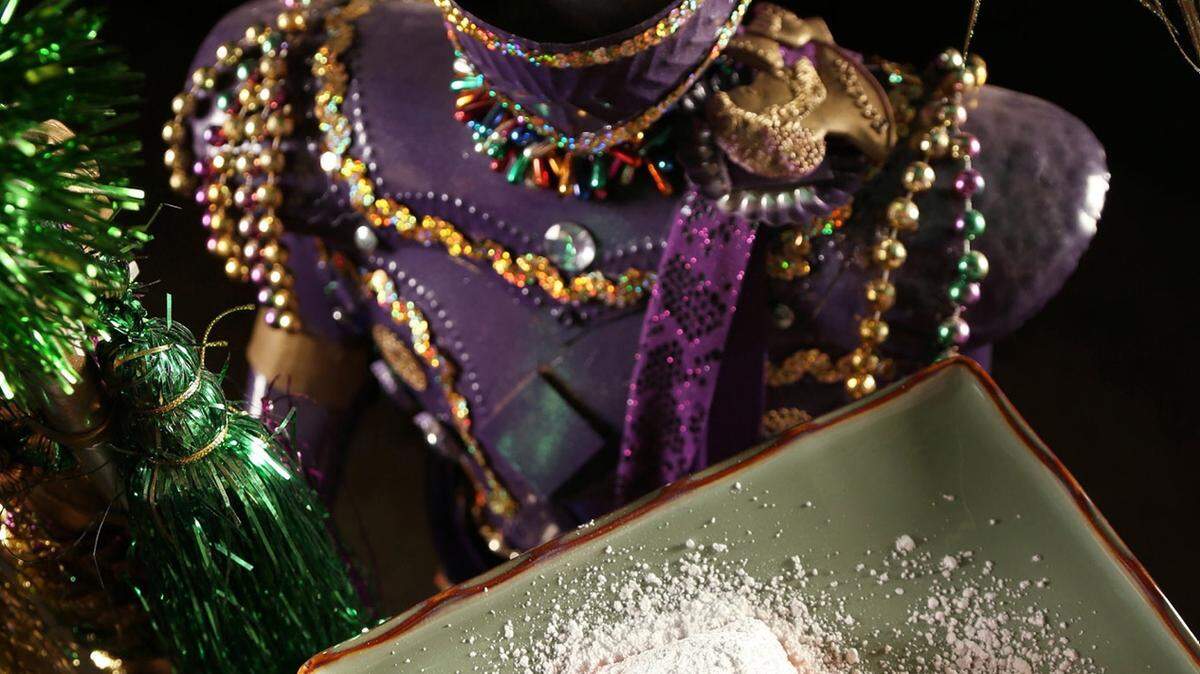
If there are six weeks of self-denial in one's immediate future, a lot of people usher it in with a party to end all parties.
Mardi Gras is one last chance for a big blowout before everything gets serious.
The largest Mardi Gras in the United States is in New Orleans, where it was celebrated last year by 1.2 million revelers. So it is New Orleans food we Americans turn to at Mardi Gras time. And why not? Food from Louisiana is a cuisine unto itself, arguably the greatest regional cuisine in the country.
Jude Tauzin, the corporate chef for Louisiana-based seasoning-blend maker Tony Chachere's, said most of the foods we think of as typical for celebrating Mardi Gras are also closely associated year-round with New Orleans: Gumbo and etouffee, with beignets for dessert. Only king cake -- a doughnut-shaped cake covered in purple, green and gold sugar -- is popular in that city particularly during the period before Lent.
New Orleans is known for both its Cajun and its Creole cooking, though Tauzin said the differences between the two are narrowing. Cajun food was originally influenced by French traditions, and Creole was more a mixture of French, Spanish, African and American Indian. But the two styles have fed off each other for so long that the only practical difference these days is that, according to Tauzin, "creole uses tomato and okra, and Cajun does not.
Which brings us to gumbo. Gumbo can either be thickened with okra, which is native to Africa, or file, which is sassafras leaves that have been dried and ground into a powder.
"If you go through history and you look up the history of gumbo, what the original gumbo was, it came from West Africa. It was originally made with okra. File ... is more on the Indian side," he said.
Tauzin himself prefers to use okra , but some members of his family don't like it. So he leaves it out and adds it to the bowls of those who do. And besides, to Tauzin, the key ingredient of gumbo is something else.
"To me, what makes a gumbo is the roux that you use," he said.
A roux is a mixture of equal amounts by weight of flour and oil or clarified butter. These are blended together and cooked until they darken and turn a shade anywhere between pale tan and brown. The longer you cook it, the darker the color and the stronger and the smokier the flavor.
For gumbo, "I like it the color of dark chocolate," Tauzin said. "You're looking at half an hour, stirring it pretty much the whole time."
Along with the roux, some stock, chicken and sausage, the other vital ingredient in a gumbo is a combination known as the trinity: onion, celery and green pepper, plus garlic. If anything defines the underlying, unifying taste of Louisiana cooking, it is the trinity.
You can't make etouffee without it. Almost as famous as gumbo, etouffee is essentially a seafood stew -- "a smothered seafood sauce" is what Tauzin called it -- served with rice. And again, there are as many ways to make it as there are people who eat it.
"In my family, my grandmother on my mother's side had one way of making it and my grandmother on my father's side had a different way of making it. My grandmother on my mother's side didn't use a lot of roux, just a lot of vegetables -- and by vegetables I mean the trinity -- and a lot of butter. Just enough roux to hold it together," he said.
Etouffee is most frequently made with crawfish, but it can also be made with shrimp or crab. Mardi Gras is a party, and you can't have a party without sweets. I decided to make two festive New Orleans desserts, just right for the season.
One was a king cake. Of course. You can't have Mardi Gras without king cake. I decided to follow a recipe by Emeril Lagasse, who may know as much about New Orleans cooking as anyone.
For my last New Orleans dessert, I made beignets. If you have never had a beignet, think about how good a doughnut is. Then multiply that at least 10 times. Then coat it in powdered sugar.
MARDI GRAS RECIPES
Beignets
1 1/8 teaspoons active dry yeast
3/4 cup warm water (105 to 115 degrees)
1/4 cup granulated sugar
1/4 teaspoon salt
1 egg, beaten
1/2 cup evaporated milk
3 1/2 cups all-purpose flour, divided
2 tablespoons shortening or butter, softened
Oil for deep frying
Powdered sugar
Makes about 30.
In a large bowl, sprinkle yeast over the warm water; stir to dissolve and let stand 5 minutes. Add granulated sugar, salt, beaten egg and evaporated milk. Whisk or use electric mixer to blend thoroughly. Add 2 cups of the flour; beat until smooth. Add shortening and gradually blend in the remaining 1 1/2 cups flour. Cover with plastic wrap and refrigerate at least 4 hours or overnight. The dough will rise, so make sure there is room in the bowl.
Roll out on floured surface to 1/8-inch thickness. Cut into 2 1/2-inch squares. Deep fry, a few at a time, at 360 degrees for 1 minute (they will puff up). Flip and fry 1 1/2 minutes until lightly browned on both sides. Drain on paper towels and sprinkle generously with powdered sugar. Serve very hot and fresh.
Shrimp Etouffee
1 pound (4 sticks) butter, divided (see note)
1 1/3 cups all-purpose flour
1 1/2 cups chopped onion
1/4 cup chopped celery
2/3 cup green bell pepper, chopped
1 tablespoon garlic, minced
6 ounces tomato paste
5 cups shrimp or seafood stock
1 1/2 tablespoons Creole Seasoning, recipe follows
1 teaspoon hot sauce
2 pounds shrimp, peeled and deveined
Serves eight.
In a Dutch oven, melt 1 cup (2 sticks) butter over low to medium heat and add the flour. Cook, stirring constantly, for a few minutes until the mixture just begins to boil. It should be a tan color. Add onions, celery, green pepper and garlic, and saute 5 minutes.
Meanwhile, in another skillet melt remaining 2 sticks or less of the butter and add tomato paste. Saute until smooth and thick, stirring often. This will take about 5 minutes. Mix with the butter/flour mixture. Pour in the stock, Creole Seasoning and hot sauce, reduce heat to low and simmer for 30 minutes.
Add shrimp and cook 10 minutes. Serve over white rice.
Note: If you want to cut back on the butter, you can use less to mix with the tomato paste.
Creole Seasoning
3 tablespoons paprika
1 tablespoon dried oregano
1 tablespoon ground black pepper
2 teaspoons dried basil
2 teaspoons kosher salt
1 teaspoon cayenne pepper
1 teaspoon granulated onion
1 1/2 teaspoons dried thyme
1 1/2 teaspoons granulated garlic
Mix all ingredients together. Store in an airtight container for up to three months.
Chicken and Andouille Gumbo
1 3/4 cups vegetable oil
2 cups all-purpose flour
2 cups chopped onion
1 cup chopped green pepper
1 cup chopped celery
3 large garlic cloves, minced
3 quarts chicken stock, heated
3 bay leaves
3 links andouille sausage, chopped
1 tablespoon Creole Seasoning, recipe above
1 teaspoon hot sauce
3 tablespoons chopped parsley
2 cups okra, optional
1 chicken, cut up, or 3 pounds chicken parts
1/4 cup chopped green onion
Serves eight.
Place oil and flour in a heavy pot, at least 6 quarts in size, and heat over medium to medium-high heat. Cook, stirring constantly, until mixture is the color of milk chocolate, about 30 minutes or more (do not allow the roux to burn). Add onions, green pepper, celery and garlic. Saute 6 to 8 minutes until vegetables are soft, stirring constantly.
Add heated stock 1 cup at a time, stirring well between additions. Bring to a slow boil. Turn down the heat to a low simmer, add bay leaves, and allow to simmer for 1 1/2 hours. Add andouille, Creole Seasoning, hot sauce, parsley and optional okra. Simmer uncovered for 30 minutes. Add chicken and simmer for 1 hour more, stirring every 15 minutes. If the gumbo is too thick, add more stock and adjust the seasoning accordingly.
Taste and adjust for salt and seasoning. Shred the chicken, if desired. Garnish with chopped green onion. Serve over white rice, with warm French bread and potato salad to keep it authentic.
King Cake
1/2 cup warm water (105 to 115 degrees)
2 packages (1 1/2 tablespoons) active dry yeast
1/2 cup plus 2 teaspoons granulated sugar, divided
4 to 5 cups all-purpose flour
2 teaspoons salt
1 teaspoon ground nutmeg
1 teaspoon grated lemon rind
1/2 cup warm milk (105 to 115 degrees)
1/2 cup melted unsalted butter, cooled
5 egg yolks
1 King Cake baby, pecan half or uncooked dried bean
2 cups sifted powdered sugar
2 tablespoons lemon juice
2 tablespoons water
Purple, green and gold sugar crystals
Serves 10 to 12.
Combine the warm water, yeast and 2 teaspoons granulated sugar in a small bowl. Mix well and set aside in a warm place for 10 minutes. Meanwhile, combine 4 cups of the flour, the remaining 1/2 cup granulated sugar, salt, nutmeg and lemon rind. Add the warm milk, melted butter, egg yolks and yeast mixture. Beat until smooth. Turn dough out on a lightly floured surface. Knead in enough of the remaining flour until the dough is no longer sticky. Continue kneading until the dough is smooth and elastic, about 10 minutes.
Place the dough in a well-greased bowl, turning once so the greased surface is on top. Cover the bowl and let rise in a warm place until doubled in bulk, about 1 1/2 hours. Punch the dough down and place on a lightly floured surface. Knead a few times, then shape the dough into a rope about 30 inches long. Place the rope on a buttered baking sheet and shape into a ring, pinching the ends together to seal. Place a well-greased 2-pound coffee can, shortening can or heat-proof bowl with straight sides in the center of the ring to maintain shape during baking. Press the king cake baby, pecan or bean into the ring from the bottom so that it is completely hidden by the dough. Cover the ring with a towel and let rise in a warm place until doubled in bulk, about 45 minutes.
While the dough is rising, preheat oven to 350 degrees. Bake for 30 minutes or until golden brown. Remove the coffee can immediately. Allow the cake to cool. When it is cool, mix together the powdered sugar, lemon juice and water, and drizzle this glaze over the cake. While glaze is still wet, sprinkle with sugar crystals, alternating colors.
This story was originally published February 2, 2016 at 2:59 PM.