
End the year in good taste, with plenty of nibbles
Beginning your New Year's Eve celebration at home has its advantages.
You're not fighting crowds or the weather or the ticking time clock on your early-seating restaurant table.
Paired with the right beverages, an array of appetizers can perform small-plate duties that preclude a big three-course meal.
Best of all, a cozy gathering of well-sated friends might provide enough merriment to end the evening right where it started.
Here's a lineup of recipes that can be made in advance; all are easy to prepare.
NEW YEARS EVE FOOD
Pistachio and Feta Dip
3 1/2 ounces (scant 1 cup) roasted unsalted pistachios
Generous1/4 cup olive oil
10 1/2 ounces good-quality feta cheese, broken into small chunks
1 handful fresh dill, coarsely chopped
2 handfuls cilantro leaves, coarsely chopped
1 large clove garlic, crushed
1 fresh red Thai chili pepper (seeded if desired), coarsely chopped
Heaping 3 tablespoons plain Greek yogurt (regular or low-fat)
Finely grated zest and juice of 1/2 lemon
Sea salt
Serves 11-12.
Combine the pistachios and oil in a food processor; puree for 30 seconds, then add the feta, dill, cilantro, garlic, chili pepper, yogurt, and lemon zest and juice. Puree for about 1 minute or until the mixture has a nice, rustic texture. Any chunks of feta that are left should be no larger than a pea.
Taste, and season with a small pinch of salt. Serve at a cool room temperature with hunks of focaccia or rye crisps.
Sweet Potato Samosas
2 tablespoons peanut oil
2 teaspoons mustard seed
3 teaspoons cumin seed
1 medium onion, finely chopped
1 tablespoon peeled, grated fresh ginger root
2 cloves garlic, crushed
1 large or 2 medium sweet potatoes, peeled and cut into1/4-inch pieces (about 2 1/2 cups)
2 small green chili peppers, seeded or unseeded (may substitute 1 medium jalapeno pepper)
3 tablespoons water
2 cups frozen/defrosted green peas
2 teaspoons garam masala
3 tablespoons chopped cilantro
Juice of 1/2 lemon
Kosher salt
16 sheets phyllo dough, preferably Athens brand (9-by-14-inch sheets)
About 8 tablespoons ghee (clarified butter), melted
Makes 24 pieces.
Heat the oil in a large saute pan over medium heat. Once the oil shimmers, add the mustard seed and 1 teaspoon of the cumin seed, stirring to coat. As soon as they start to pop and sizzle, stir in the onion, ginger and garlic; cook for about 5 minutes, stirring to avoid scorching.
Add the sweet potato, chili peppers and the water, stirring to incorporate. Cook for about 4 minutes or until the sweet potato starts to soften a bit. Remove from the heat; stir in the peas, garam masala, cilantro and lemon juice. Season lightly with salt.
Preheat the oven to 375 degrees. Line two baking sheets with parchment paper or silicone liners, then grease the paper/liners with cooking oil spray.
Lay 2 phyllo sheets atop each other on a cutting board, with one of the short sides facing you. Use a very sharp knife (not serrated) to cut the stack into three equal strips. Place a heaping tablespoon of the sweet potato mixture about 1 1/2 inches from the end nearest you. Fold that end over the filling (it won't cover fully), then begin to fold a samosa by lifting/creating a right-angle triangle. Fold the triangle up and away from you; alternating further folds to the left, then up, then to the right, and up, until you're left with a bit of phyllo at the top. Brush it with a little melted ghee and seal/press it to the samosa.
Repeat with the other two-layer phyllo strips; continue in this fashion -- cutting strips, adding filling and folding -- to create a total of 24 triangular samosas. Brush the tops with melted ghee, then sprinkle with the remaining cumin seed. Bake for 15 to 20 minutes or until lightly browned. Serve warm or at room temperature; or cool completely before storing.
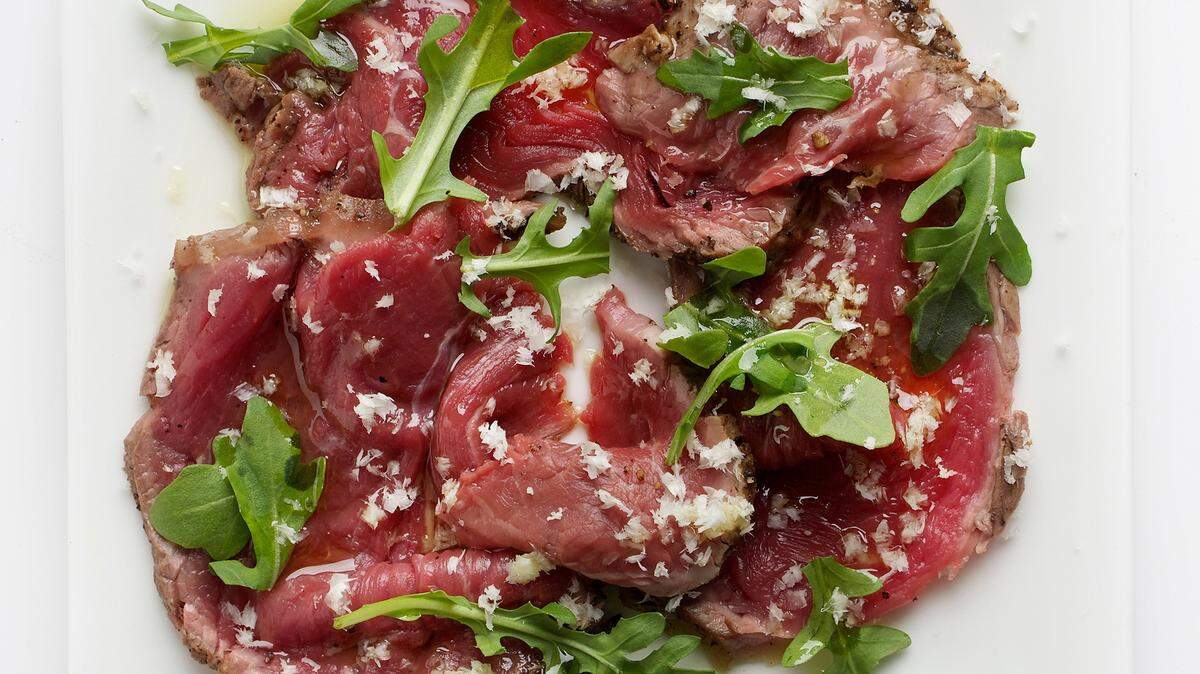
Pepper and Horseradish Carpaccio of Beef
One 1 1/2-pound piece beef tenderloin
3 teaspoons cracked black pepper
Extra-virgin olive oil
A couple of handfuls of arugula, coarsely chopped
1 1/2-inch piece fresh horseradish root, peeled
Sea salt
Serves four to six.
Place the meat on a cutting board. Season it all over with the pepper so it's evenly coated, gently pressing the spice into the meat.
Heat a large cast-iron skillet over high heat. Add a few drops of the oil; before the oil starts to smoke, place the meat in the pan. Sear for 1 minute, then turn it and repeat on all sides (about a minute per side). Return the meat to the cutting board. Let it cool, then refrigerate for at least 20 minutes so the meat will be easier to slice.
Use a very sharp chef's knife to thinly slice the beef, flattening each slice as much as possible with the flat side of the knife. Arrange the slices on a platter. Scatter the arugula over the carpaccio, then use a Microplane zester to grate the horseradish evenly over the top. Drizzle the oil over the platter. Season lightly with the salt. Serve right away. Serve with a soft bread, toast points or wide shavings of Parmigiano-Reggiano cheese.
Baby Onions Monegasque
1/3 cup dried currants
1/2 cup boiling water
1 tablespoon olive oil
1 pound pearl onions or baby onions, preferably a mix of colors, peeled (see note)
3/4 cup dry white wine, such as pinot grigio
2 tablespoons white wine vinegar
1 tablespoon tomato paste
2 teaspoons sugar (may substitute agave nectar or honey)
1/2 teaspoon dried herbes de Provence (may substitute1/4 teaspoon each dried rosemary and dried thyme)
Pinch crumbled saffron
1 bay leaf
Kosher salt
Freshly ground black pepper
Serves six to eight.
Place the currants in a small bowl; cover with the boiling water and soak for 30 minutes or until plumped and softened. Drain, discarding the liquid.
Meanwhile, heat the oil in a skillet large enough to hold the onions in a single layer, over medium-high heat. Once the oil shimmers, add the onions and cook for 3 to 5 minutes, until the onions begin to brown, shaking the pan as needed.
Whisk together the wine, vinegar and tomato paste in a liquid measuring cup until the paste dissolves, then pour the mixture into the skillet, along with the sugar, herbes de Provence, saffron and bay leaf. Stir well; increase the heat to high so the mixture boils vigorously for 1 minute, then reduce the heat to medium-low. Cover and cook for 15 to 20 minutes, shaking the pan a few times, until the onions are barely tender.
Uncover and increase the heat to medium-high; cook for about 5 minutes or until the liquid in the pan has reduced to a glaze consistency. Stir in the drained currants; discard the bay leaf. Taste, and season the onions with salt and pepper, as needed.
Cool to room temperature before serving or storing.
Note: To peel the onions, boil a pot of water. Use a small, sharp knife to score an X in the bottom of each onion. Drop them into the boiling water; cook for about 1 minute, then drain into a colander set in the sink. Peel when cool enough to handle. Trim the tops as needed.
Tuna Zuke
1 cup soy sauce
1/3 cup mirin
1/3 cup sake
One 8-ounce piece tuna fillet (about 1 inch thick)
Serves four.
Combine the soy sauce, mirin and sake in a container that's slightly larger than the piece of tuna. Refrigerate until well chilled.
Meanwhile, boil 4 cups of water. Fill a mixing bowl with ice cubes and cold water.
Place the tuna in a colander seated in the sink; lay a double layer of paper towels on top of the fish. Pour about half of the boiling water over the paper towel-covered tuna. Wait for about 15 seconds, then fold back the paper towel, turn the fish over and re-cover it with the now-wet paper towel. Pour the rest of boiling water over the tuna (so you're scalding the second side of the fish).
Quickly remove the paper towels and place the scalded tuna in the ice-water bath to stop it from cooking further. Wait 1 minute, then remove the tuna and pat it dry with (new) paper towels. Transfer the tuna to the chilled soy sauce mixture; if the liquid doesn't cover the fish completely, choose a smaller container or switch to a zip-top bag. Cover (or seal, pressing out as much air as possible) and refrigerate for 45 minutes.
Drain; if you're making this in advance, wrap tightly in plastic wrap and refrigerate. If serving right away, cut the tuna crosswise into1/4-inch slices. Arrange on a platter or divide among individual plates. Serve with cooked edamame or seaweed salad.
This story was originally published December 29, 2015 at 7:18 PM.