
Girl in need of bone marrow highlights shortage of mixed-race donors
CHICAGO --
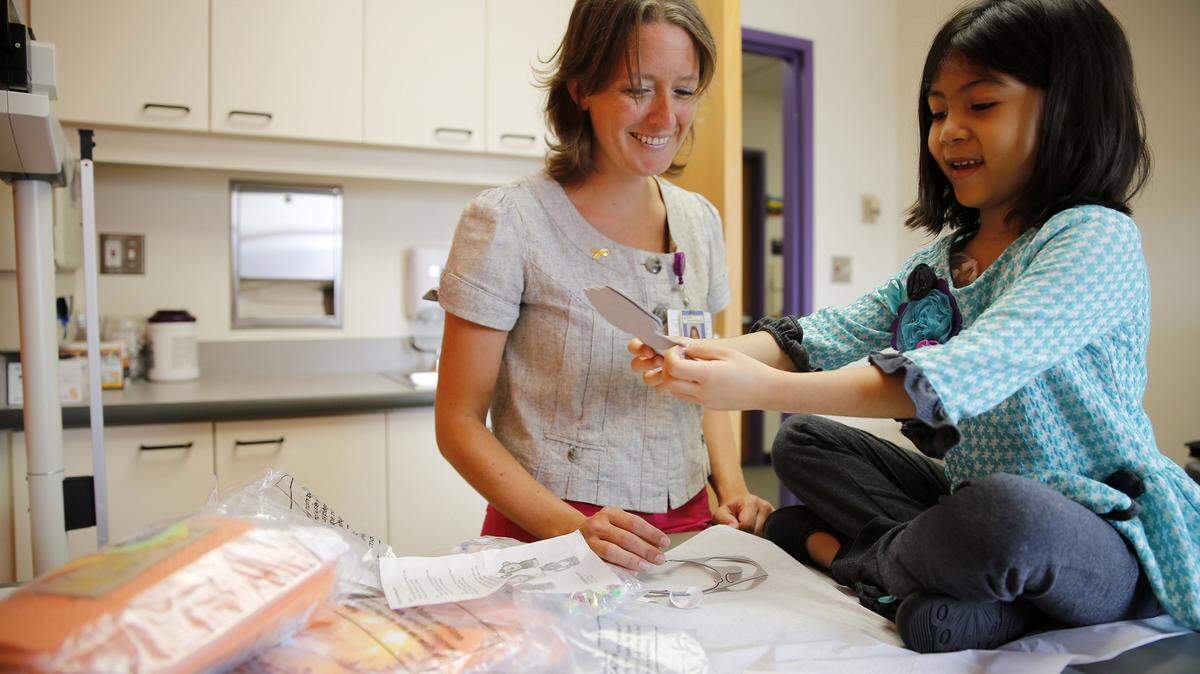
When doctors told Michelle Trujillo in July that her 6-year-old daughter would need a bone marrow transplant to save her life, the suburban Crystal Lake mother didn’t want to wait another minute before getting her only child back to health.
But months later, Sophia -- who has aplastic anemia, a rare disorder that impairs her immunity -- is still waiting for a donor match. Meanwhile, Trujillo says she lies in bed at night making mental lists of places to try to find a donor with similar multiracial heritage to her daughter’s -- a group with a strikingly low match rate.
“I don’t sleep at night. I think of, ‘What can I do now? Who can I contact now?’” said Trujillo, whose daughter is half Filipino, as well as Irish, Spanish and Italian. “One match is all we need, but it’s like a needle in a haystack.”
The Trujillos’ predicament highlights a nationwide paradox that has troubled medical experts and families awaiting transplants for years: Despite the ever-growing diversity in the United States, there are not enough minority and multiracial donors registered and available for patients in need.
In the national bone marrow registry, Be the Match, 61 percent of the donors are white, 10 percent are Hispanic or Latino, 6 percent are black, 6 percent are Asian and just 4 percent are multiple races.
Given these numbers, the likelihood of matching a white patient with a donor is 97 percent. But the chances drop from there: Asians have a 72 percent to 88 percent chance of being matched; black patients have 66 percent to 76 percent chance. And while numbers are not available for mixed-race matches, the odds of multiracial patients finding a match are considerably lower, according to Lauren Johnson, community engagement specialist for Be the Match.
Marrow and cord blood contain certain genetic markers that are inherited, and combinations of those markers are more common in some racial groups than others. So, while not a guarantee, a donation from someone with similar racial heritage presents the best possible chance for transplant success, Johnson said.
This is different from the donor matching process for tissue transplants such as hearts, livers and kidneys, when race is not a key factor.
To address the shortage, officials from the national registry -- along with hospitals, charity groups and families waiting for transplants -- have worked hard to grow the number of minority and mixed-race donors over the last five years. Be the Match representatives have reached out to ethnic community leaders, church pastors, college fraternities and other groups in hopes of diversifying the donor pool, Johnson said.
Despite the efforts, however, growth in those groups remains slow, and medical professionals say the shortage will become more pronounced as the American population gets even more diverse.
“There are people from all over the country, all over the world that are searching for any possible way to help their case -- and they’re desperate,” said Athena Asklipiadis, founder of Mixed Marrow, a not-for-profit website dedicated to spreading the word about mixed-race patients in need of donors.
The group recently promoted the story of Sophia, whose heritage makes her difficult to match. While people of European ancestry tend to be matched quickly, the young girl’s half-Filipino side diminishes her chances, said Caitlin Agrawal, one of Sophia’s doctors in the department of pediatric hematology/oncology at Advocate Children’s Hospital in Park Ridge.
“Her bone marrow is very sick, but you would never know in seeing her,” Agrawal said. “It’s as urgent as can be because we don’t know when she’ll run into an infection she can’t fight off.”
Because of Sophia’s unusual racial heritage, no matches have surfaced in the national registry since she was diagnosed. The potential donor would not need to be precisely the same percentages of each race to be a good candidate, but the more similar the backgrounds line up, the better the chances of a match, Agrawal said.
This story was originally published October 5, 2015 at 9:12 PM with the headline "Girl in need of bone marrow highlights shortage of mixed-race donors ."