Former Fort Benning family private housing ‘nightmare’ revealed in Ossoff investigation
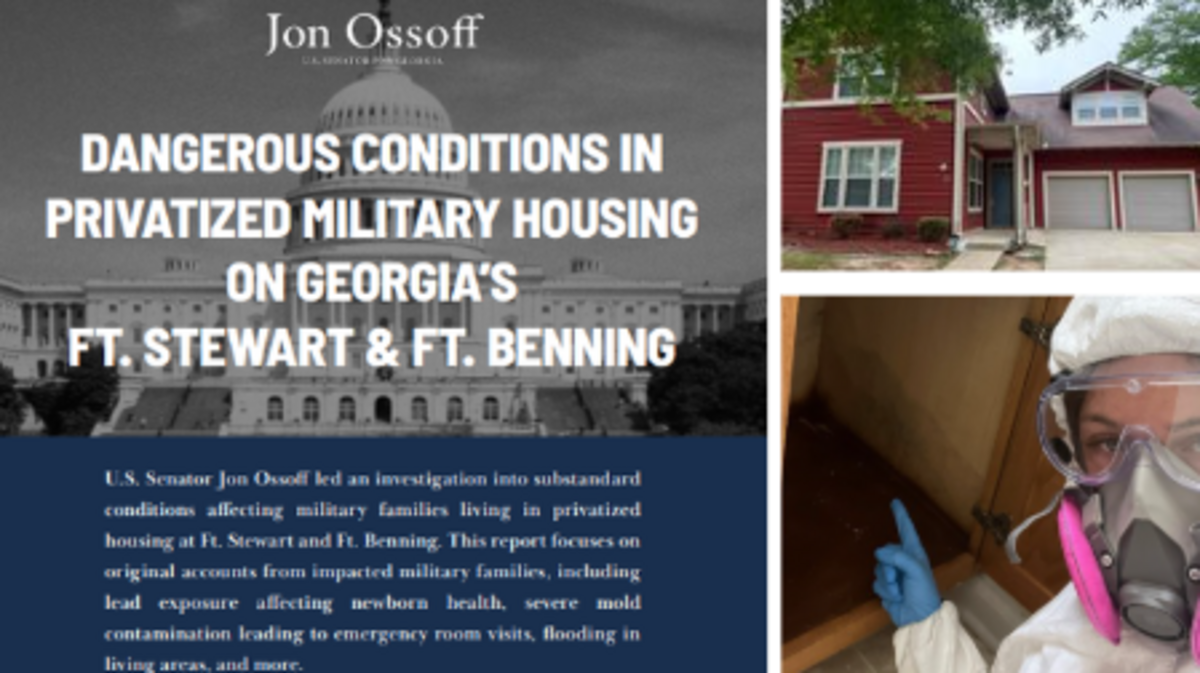
At 38, First Class Sgt. Jeffrey Morris is likely no longer deployable by the U.S. Army because he’s being evaluated for a systemic mastocytosis and cholinergi curticaria, brought on by exposure to toxic mold.
He has to carry an EpiPen in case his daily hive flare-ups turn anaphylactic, his wife, Leighann Morris, told the Ledger-Enquirer. The rare disorder and conditions also cause anxiety, muscle aches, itching, elevated blood pressure and a burning sensation throughout his body.
The toxic mold that led to Jeffrey Morris’ conditions were inside the family’s privatized military housing at Fort Benning, managed by The Michaels Organization, Leighann Morris said.
Jeffrey Morris’s life-long conditions were preceded by other traumatic living conditions while at Fort Benning: Bats in the walls of their daughter’s bedroom and broken air conditioning and water heaters were part of the Morrises’ experience during their 18-month fight for safe housing, she said.
Ultimately, Leighann Morris got Georgia Sen. Jon Ossoff involved because of the severity of her health concerns. She felt The Michaels Organization didn’t care about her family’s health.
She wasn’t alone. Leighann Morris was one of dozens who Ossoff’s team spoke with as part of a years-long investigation at three different military installations in Georgia — Fort Stewart, Fort Gordon and Fort Benning.
The investigative report, released Wednesday by the senator’s office, revealed military families at Fort Stewart and Fort Benning were living in homes with lead, which affected newborns, areas that were flooded with water, HVAC fires and gas leaks, severe pest infestation, mold and HVAC failures in extreme temperatures.
“The stories should shock our conscience,” Ossoff said in an email to the Ledger-Enquirer. “Our military service members and their families make huge sacrifices for the country, and it’s a travesty how they’re being treated by privatized housing contractors in Georgia and nationwide.”

Nightmare treatment and an NDA
When Jeffrey Morris, a chief instructor for army tanks, Leighann and their three daughters moved to Fort Benning from Fort Hood in April 2024, they hoped for a positive new start.
Leighann worked as a substitute teacher on post. The couple looked forward to the on-post housing because of the “amazing” schools for their children, being close to the commissary and knowing their neighbors were part of a military community, Leighann Morris said.
Normal colds and viruses went from infrequent to frequent. One year after moving in, Leighann Morris said she discovered mold in places like a coat closets and below the HVAC system.
Operational issues like the air conditioning breaking in the summer and faulty water heaters were the least of the Morrises’ worries. Bats were infesting in their daughters’ bedroom walls, she said.
The 4 bedroom, 2-and-a-half bathroom house was “nothing short of a nightmare,” she said.
By August 2025, the couple requested mold inspections through their private landlord, The Michaels Organization, and the Government Housing Office.
The Michaels Organization, which manages more than 600 properties across the U.S. and 200,000 residents, has been a private housing partner with the Department of Defense since 2004 and at Fort Benning since 2021, according to a blog post on the company’s website in May.
Leighann Morris said the director of military housing at Fort Benning, John Strange, did his best to assist, helping with arrangements and advocating on behalf of the family. But he was temporarily moved to a different position between October and February during the government shutdown, according to text message exchanges between Strange and Leighann Morris.
Later, after the family moved away, she said she found out that Strange was reassigned back to his housing position and continued to communicate with Strange until June 2026.
The Government Housing Office advocacy group at Fort Benning believed the Morris family needed to be put in temporary housing, Leighann said.
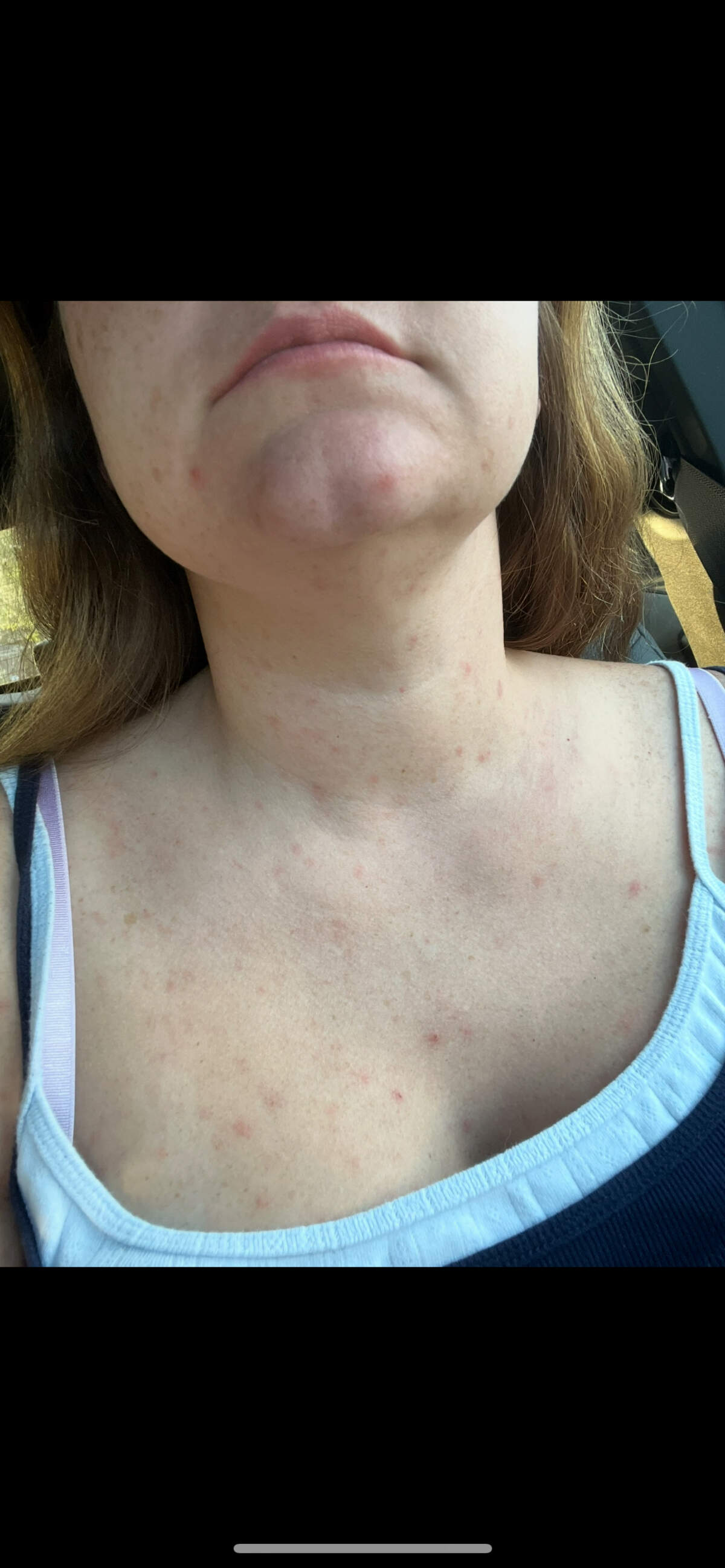
Before moving, Leighann said she opened the HVAC panel, and dust blew into her face. She broke out in hives within six hours, which transformed into a severe rash that lasted five weeks. The only thing that helped rid the rash was an emergency room visit for IV fluids and steroids, Leighann Morris said.
Her lung function decreased to 60% capacity, and she was prescribed Chronic Obstructive Pulmonary Disease medicine to help her breath better, she said.
Her doctor recommended getting rid of their belongings because of how sick she became. The family had to throw away 75% of their household goods. In addition, time off work, cost out of pocket to stay in hotels, and out of pocket for prescriptions all totaled to at least $87,000 in financial damages.
The Michaels Organization “eventually” offered a new house, she said. But the new house also had issues, like an overheating dishwasher that melted and created fire hazard.
“My sense of trust in The Michaels Organization was completely lost,” Leighann Morris said. “I just didn’t feel safe.”
When she went to visit her old home to retrieve items, she said, she found parts of the home had been painted over, but mold was still there.
“Michaels Organization did do a cleaning but not remediating,” she said. “They just went in and used some cleaning stuff in the HVAC. Their mold assessor didn’t do any testing.”
Leighann Morris was given reports by The Michaels Organization which showed only visual checks, not a scientific test. During a meeting with Strange and The Michaels Organization, she said the private homeowner management team said they are not required by law to do tests.
The Michaels Organization has not responded to the Ledger-Enquirer’s request for comment regarding this issue. Currently, their website shows testimony from residents with positive experiences.
Throughout the four moves in the 18 months on post and in hotels, Leighann Morris said the family never felt heard by The Michaels Organization.
“We are not science experiments,” she said. “We are a family.”
They were put up in a single hotel room, which Leighann Morris said wasn’t sufficient for a family of five, a cat and dog. Her 11-year-old daughter slept on a cot for more than a month. That daughter now has significant anxiety, which manifested into excessive nail picking that required minor surgery.
“She went from the honor roll to failing,” Leighann Morris said. “All of my children were emotionally overwhelmed by the instability.”
While navigating these challenges, she said she had to go through the Tenant Bill of Rights Resolution Process.
Leighann Morris followed the informational Dispute Resolution process back in August, which, she said, is meant to conclude in 10 business days. After not hearing back from the process, Leighann informed the Pentagon in January that the dispute resolution process is not being followed, and would exchange emails with them for two more months without getting a resolution.
By March., The Michaels Organization offered only $4,508. Originally, the group offered $2,004 but later said that was a clerical error, Leighann Morris said.
That offer came with a non-disclosure agreement, which she refused to sign.
“They tried to silence us. If they were doing the right thing, they wouldn’t offer an NDA,” she said.
Throughout this entire privatized housing disaster, Leighann had Ossoff’s office involved.
Leighann opened a congressional inquiry in September 2025, she told the Ledger-Enquirer.. Ossoff reached out to the military to get a response, and that was the only time she got an answer. A second inquiry and response from the army still hasn’t been answered to Ossoff’s office, she said.
New commitments and policy in 2026
Ossoff began receiving more testimonies from Fort Stewart residents after a 2022 investigation at Fort Gordon.
Unsafe housing for military families has been in the political lexicon for at least the past eight years. Lead paint issues have been an issue at installations across the U.S. In 2018, Fort Benning was pressed about this issue and told the Ledger-Enquirer some 438 houses pre-dated 1978 and needed remediation.
In 2019, Congress approved $300 million to combat landlord fraud and protect families from substandard living condition, Reuters reported. But by 2022, credible reports of these problems persisted at Fort Gordon, according to Ossoff’s report. That led to an eight-month bipartisan investigation in 2022.
The Morrises and dozens of other families at Fort Stewart and Fort Benning confirmed a pattern beyond Fort Gordon, according to Ossoff’s report released this week.
In May, Ossoff pressed Deputy Chief of Staff for Army Logistics Lt. Michelle Donahue in Washington, D.C.
“I appreciate that the Army did a housing-by-housing unit inspection at Fort Gordon. That mattered,” Ossoff told Donahue at a May 22 hearing. “We continue to hear about poor conditions about privatized housing. What is the Army doing to make sure we aren’t facing mistreatment?”
At the hearing, Donahue said she would follow up with Maj. Gen. Colin Tuley at the Maneuver Center of Excellence that day.
Army spokesperson Lt. Col. Orlandon Howard told the Ledger-Enquirer via email that Donahue and Tuley focused on Camp Merrill, a ranger training camp at Fort Benning, which he said will be updated and redesigned for safety concerns. He also said the Army and The Michaels Organization have demolished 112 outdated legacy homes in North Court that will be replaced with 112 newly constructed town homes at Fort Benning.
At the private housing level, Howard wrote, “...the Army actively identifies and swiftly corrects any deficiencies to guarantee the safety and well-being of our residents.”
In 2025, the Army completed its entire privatized housing inventory inspection, Howard said.
“We will be conducting the National Defense Authorization Act mandated 5% inspections at all the Army privatized housing in Georgia in July and August of 2026,” he said. “While we have made great strides in improving the Military Housing Privatization Initiative, we remain committed to building on this progress. Our focus is on providing soldiers and their families with safe, quality, and habitable housing. We will continue our vigilant oversight of the initiative by enforcing standards, holding providers accountable, and ensuring long-term project sustainability.”
Joe Cole, a public affairs specialist at Fort Benning, said he has “nothing for (the Ledger-Enquirer) at this time” when asked if dangerous living conditions reported to The Michaels Organization were brought to the Army’s attention and if they were aware the management group asked tenants to sign NDAs.
‘Military families should not have to fight this hard’
After six months of fighting and realizing she wasn’t going to get a resolution from The Michaels Organization, Leighann Morris hired an attorney and moved back to her family’s hometown in Kansas, about 30 minutes from Fort Leavenworth.
”I was depleted, running in circles,” she said.
Jeffrey Morris is going through a medical board process with the Army, where he will have a semi-irregular retirement, she said.
“Military families should not have to fight this hard for safe housing,” she said. “We shouldn’t have to hire lawyers, beg for testing or wonder whether homes are making us sick or not. There needs to be real accountability.”
In June, Ossoff and Massachusetts Sen. Elizabeth Warren introduced the Restore Military Families’ Voices Act to ban housing contractors from requesting military families sign NDAs.
Leighann Morris blamed the military housing and the contractor for her traumatic situation. She said she is happy there is potentially something to hold the government and private housing companies accountable.
Many people won’t come forward because they are afraid of retaliation, she said.
“My husband and I continue to experience health complications following exposure to mold at Fort Benning,” Leighann Morris said. “We are all slowly starting to heal and get better from a lot of trauma.”
This story was originally published July 13, 2026 at 5:30 AM with the headline "Former Fort Benning family private housing ‘nightmare’ revealed in Ossoff investigation."