
Coaches better watch their step to avoid a 15-yard penalty
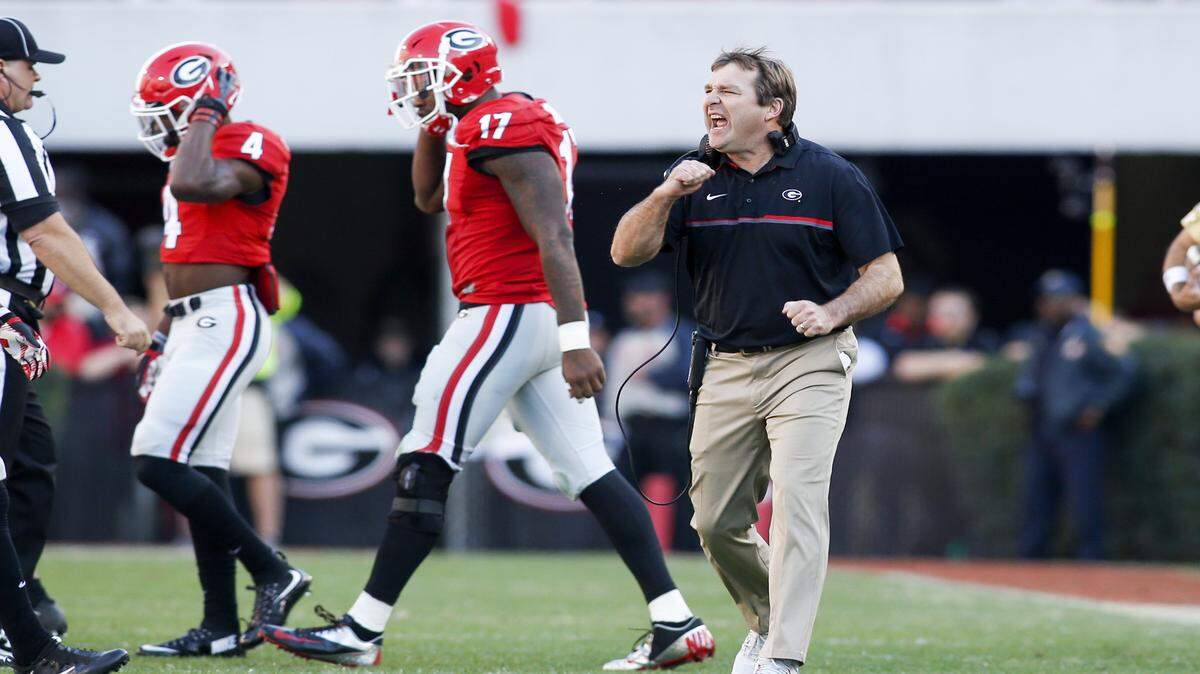
Angry at an officiating call? As a college football coach, you better not step onto the field of play.
Beginning this season on a national level, game referees will flag coaches 15 yards for an unsportsmanlike penalty if they step past the white out-of-bounds line to argue a particular on-field ruling.
SEC director of officials Steve Shaw explained the rule change during a presentation Thursday at the conference’s spring meetings.
Officials want to keep coaches from running onto the field and creating a scene during games. Shaw said that as long as coaches stay in the white out-of-bounds area, they will be given the same leeway to argue a call the way they have in the past.
“It doesn’t mean you won’t get flagged, but if you stay in the white you will get all the latitude you have been given over the years,” Shaw said.
When it comes to coaches coming onto the field, drawing a penalty will mostly be limited to when a call is argued.
Coaches will still be allowed on the field in other instances, such as to call a timeout when a referee isn’t near or when a player is injured. Coaches will also still be allowed to enter the field of play during timeouts.
Shaw went over other rule changes and topics during his SEC spring meetings presentation.
Leaping and hurdling
No defensive player will be allowed to run forward from beyond the neutral zone and leap or hurdle to block a field goal or extra point. Last season, former Vanderbilt linebacker Zach Cunningham jumped over Auburn's offensive line on a field goal attempt and went untouched on his blocked kick. That play is now considered illegal.
If a player is stationary within 1 yard of the line of scrimmage, it would be legal to hurdle over the line. Of course, that would be an unlikely play for any player to make without a running start.
Horse collar tackle
There will be an added area that will constitute a horse collar tackle in 2017.
In addition to grabbing the inside back collar of the shoulder pads or jersey and the inside collar of the side of the shoulder pads or jersey, the nameplate area on the back of the jersey will be added to the list of places a player can’t grab to make a tackle.
The lone exception is when a ball carrier, including a passer, is inside the tackle box.
Knee pads and pants
This season, if a player’s pants are too high above the knee and constitute as shorts, he will be sent out of a game. If it’s near the top of the knee, officials will let it slide.
But beginning in 2018, all players will be forced to wear knee pads with pants that complete cover them. The Player Rules Oversight Panel elected to delay full implementation of this rule since a lot of programs ordered the shorter pants that players prefer to wear. If a player is in violation, he will be sent out of the game until it is corrected but with a mandatory ban of one play. Coaches will be allowed to use a timeout to get a player back in the game.
The reasoning for this move is apparently twofold. First, it is considered a player safety issue for routine contusions players could experience on the field. Knee pads obviously won’t do much to further prevent structural damage on certain hits.
The other reason is because the Competition Committee doesn’t think wearing shorts is a good look for the game, according to Shaw.
Targeting
Shaw said there will be no changes to the targeting rule, although it was something discussed quite a bit this offseason.
The Competition Committee, however, has seen positive effects from the targeting rule, with players not leading with the head as they were five years ago.
In 2016, the SEC saw 26 targeting calls with five being overturned. That means 21 either stood or were confirmed.
“It’s making a difference in our game,” Shaw said. “If you watch the game compared to five or six years ago, it’s a safer game.”
Length of game
While no rule changes will be made, there will be an effort to increase the pace of play from a mechanical standpoint.
Officials will begin halftime right after it is realized that there are no penalties or challenges at the end of the second quarter. In the past, officials have waited until coaches wrapped up halftime interviews with television or radio to start the 20-minute halftime period.
In addition, outside of two minutes, referees will be instructed to re-start the game clock once the ball is set after a player runs out of bounds. In the past, referees have oftentimes waited to re-start the clock until substitutions were made. An emphasis will be placed on officials re-starting the clock when it is time to, while still allowing for substitutions.
This story was originally published June 1, 2017 at 7:36 PM with the headline "Coaches better watch their step to avoid a 15-yard penalty ."