
How an amendment influenced by Georgia football ends up in a state bill at midnight
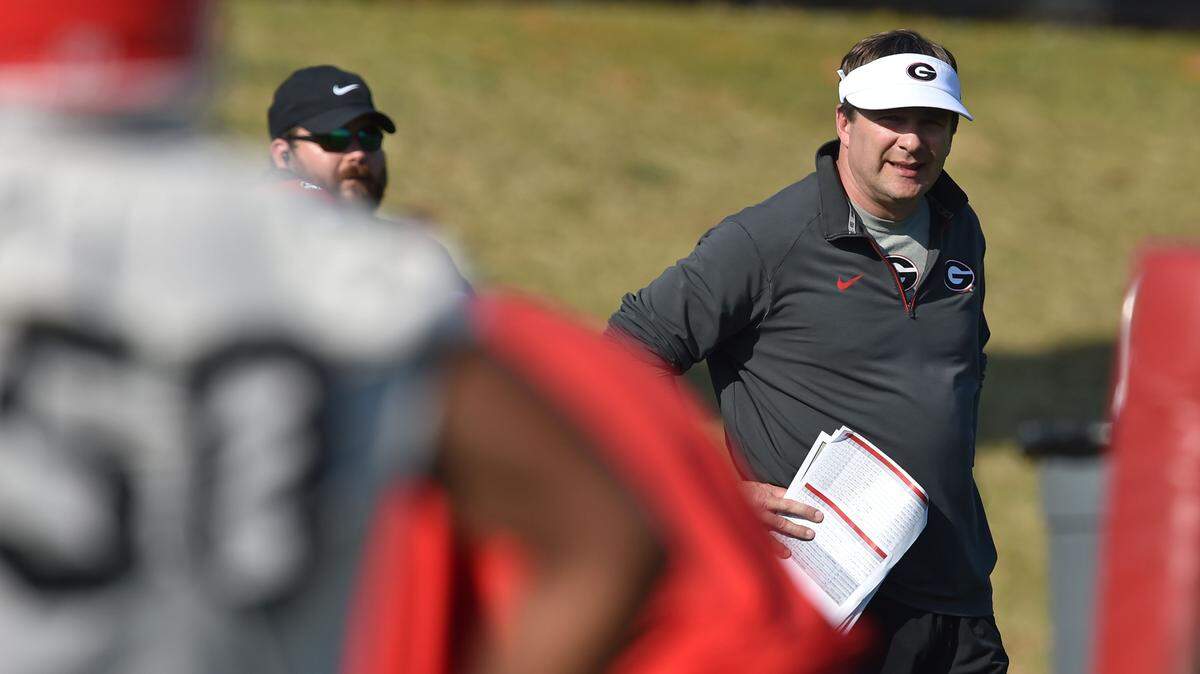
ATHENS -- Georgia football head coach Kirby Smart is the highest paid state employee in Georgia at a salary of $3.75 million per year. Along with the money the position brings is the influence -- by his own recourse or not -- of having a beneficial amendment added to a Georgia Senate bill that will allow for state athletics associations to delay the release of open records.
Late Tuesday evening, a House of Representatives amendment was proposed to Senate Bill 323, a bill dealing with open records requests but in the field of economic development. The amendment proposed, and approved by the House, states that athletics departments can wait up until 90 days to release documents under the Georgia Open Records Act.
Early Wednesday morning, and just past midnight, the state Senate agreed to the amendment by a 31-22 vote.
So how does such an amendment involving the delayed release of open records from college athletics departments show up in a bill dealing with economic development that late? Tom Krause, the chief of staff of state Sen. Bill Cowsert, R-Athens, who presented SB 323 to the Senate, gave an answer to the question.
"It's a similar subject that, from what I understand, came to light through Kirby Smart at UGA," Krause said in a phone interview with The Telegraph. "It had to do with football teams or athletic departments that are recruiting people in state of Georgia. They had a (shorter) window where the documents were not yet public, but other states had 90 days."
Whether Smart or the Georgia athletics department had anything to do with this bill has yet to be confirmed. Georgia athletics director Greg McGarity and the university through a spokesperson both deferred comment. Faced with the same question, a representative from the Georgia Board of Regents stated, "We abide by the state's open records law. If this legislation is signed into law, we will follow the law."
Smart isn't scheduled to speak with reporters until Tuesday. It's yet another hot-topic issue his name has been tied to -- the first being a change in stance regarding Georgia players wishing to transfer from the football program.
Krause said the amendment's intention is to protect information on how the state's universities recruit players, whether it be in-state or out-of-state. Under the law as it's presently written, open records requests must be responded to "within a reasonable amount of time not to exceed three business days of receipt of a request."
The lone exception in the amendment is that salary information for non-clerical employees must still be released within the three-day period if available.
State Rep. Earl Ehrhart, R-Powder Springs, is a co-sponsor of the SB 323 amendment and said this new law will put the state's football programs on a "level playing field."
"This will help the startup programs, this applies to every single intercollegiate program in this state, every university from the University of Georgia ... (to) any intercollegiate sport at a D2, D3 school," Ehrhart said. "It just allows us to play on the same field as Alabama and everybody else."
Supporters of the amendment claim other athletics programs have an advantage in recruiting due to Georgia's open records law. But a bigger question comes to mind if this is the case: Why does the amendment delay all intercollegiate documents for 90 days and not only those pertaining to recruiting information?
That question was posed to Cowsert on the Senate floor, as to whether this amendment dealt with recruiting documents only.
"Any documents within intercollegiate athletics," Cowsert said.
Reporters for recruiting sites typically contact players themselves to discern this kind of information, as well as high school coaches, family members and other sources within the athletics departments they cover. These sites, as well as traditional newspaper reporters, have used open records act documents for stories involving recruiting -- such as an Atlanta Journal-Constitution story published Feb. 21 detailing the expenses the Georgia athletics program has incurred since Smart took over.
But as for which schools recruits are visiting, that information is regularly reported without the use of an open records request.
Dean Legge, the owner of the website Dawg Post, which is an affiliate of the recruiting network Scout.com, said tracking recruits and where they're visiting is as easy as logging on to Twitter. Legge doesn't buy the notion that Georgia, which has an amended athletics department budget of more than $117 million in 2016, needs 90 days to release public documents.
"I never would have thought in a million years that the Georgia state legislature would actually want to have something in common with the state of Alabama," Legge said.
Before the vote, state Sen. Joshua McKoon, R-Columbus, urged his peers not to support the bill, which also lets state agencies keep certain economic development records secret longer.
"Now we're adding this language in here about the university system," McKoon said. "I think this is the sort of thing that we should have the opportunity to have a full and complete debate on, particularly when we're talking about restricting access to records to the public."
It was apparent college football fandom, to some degree, was present as the Senate began voting on the bill. Republican Lt. Gov. Casey Cagle bantered with senators as they voted, with some urging their colleagues to vote no, while others urged a yes vote. From his podium at the front of the room, Cagle ventured a comment as the voting finished.
"I hope it brings us a national championship," Cagle said. "That's what I hope."
Telegraph writer Maggie Lee contributed to this report.
This story was originally published March 23, 2016 at 9:44 PM with the headline "How an amendment influenced by Georgia football ends up in a state bill at midnight ."