
YOUR SAY: An open letter to Telegraph columnist Bill Cummings:
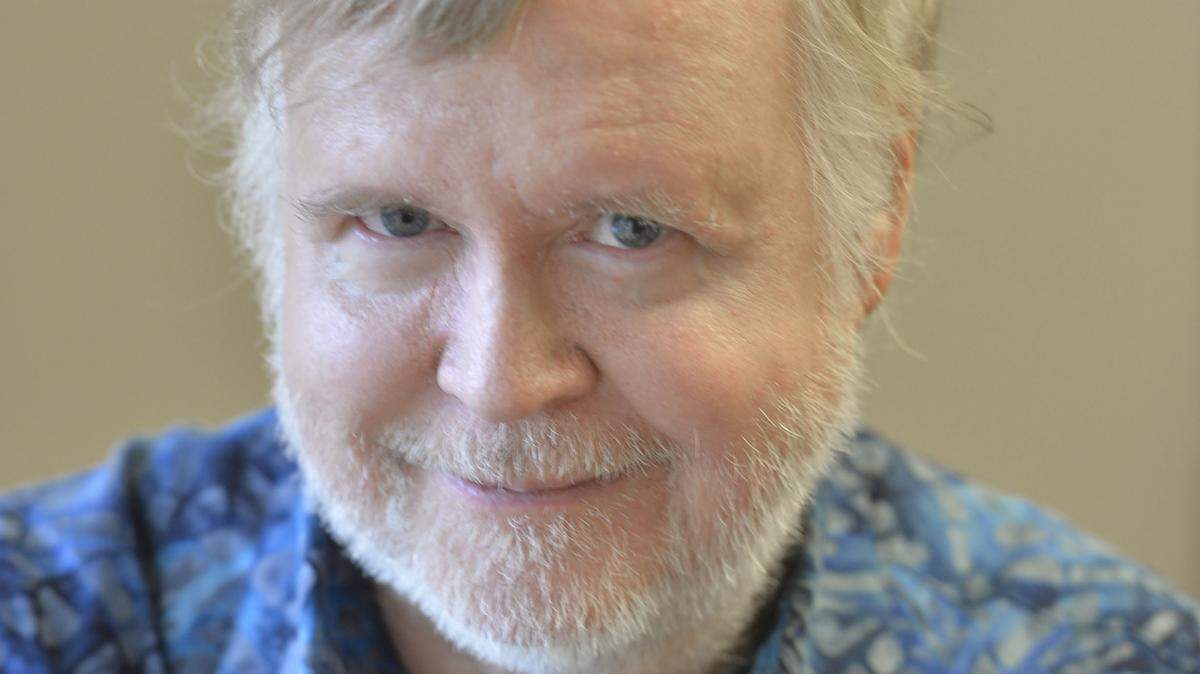
Dear Dr. Cummings:
Your columns are almost always one of the most interesting things in the Sunday Telegraph, and judging by the reactions to them, they have stirred up quite a bit of thinking among Middle Georgians, which is all to the good where the alternative is complacency. It seems that a recurring theme of those columns, when they are about religion as they usually are, is to deride Christians who have any firm beliefs at all or who believe any Christian doctrine to be true. In both your Sept. 6 and Sept. 20 columns, you ridicule Christians who believe they have “the ‘truth.’” Your placement of quotation marks around the word “truth” is very significant and suggests that you might not believe in truth without quotation marks — that is to say, real or actual or objective truth — but rather that there are only opinions.
What is clear is that you love questions and questioning. Your entire Sept. 6 column is devoted to lauding Christians who ask questions and the questions they ask. And obviously there are many valid questions about Christianity. What is not clear is whether you believe there are ever any valid answers.
If I have misinterpreted you, I hope you’ll correct me. In the meantime, I’d like to pose a few questions of my own.
Few of us would deny that the words “two plus two equals four” express an objective truth. If I were to say to you “two plus two equals five,” I believe you would reply with something like “that’s not true; the truth is that two plus two equals four,” and if I said “how can you be so sure that’s the truth?” you would respond that I was talking nonsense. You would believe, I think, that I was denying objective truth. And of course it is not merely simple arithmetic that expresses objective truth, but all of mathematics, or so it would seem.
Nor is it merely within mathematics that one encounters what appear to be objective truths. That an object in motion tends to stay in motion, as physics tells us, or that acids neutralize alkalis, as chemistry tells us, or that the DNA molecule is a coiled ladder whose rungs are our genes, as biology tells us, are facts that have been demonstrated countless times and that appear to be hard, objective truths. And of course there are countless other facts of the same kind. One observes this idea of objective truth — that is, real truth, regardless of anyone’s opinions about it — radiating outward to encompass much of the world.
Admittedly, as one moves from the “hard” sciences into the “soft” ones such as psychology and sociology, facts become less demonstrable and truth less clear. And as one moves from the sciences into life itself, truth becomes more elusive still. But, assuming that you acknowledge the existence of objective truth as described so far, the question that must be asked is, “How can you admit the existence of objective truth about some parts of the world yet deny the existence of objective truth about the most important matters there are?”
Actually the question must be qualified slightly if clarity regarding your position is to be achieved. It isn’t quite clear that you actually deny the existence of objective or real truth about theology and religion. There are in fact two positions that you might be taking, which might be called the “soft” and “hard” positions on this subject.
The “soft” position is that real truth about theology and religion may exist but that no one has yet reached it; the “hard” position, which for clarity is the one I expressed in the question above, is that real truth about those subjects does not or cannot exist. The two positions correspond directly to “soft” agnosticism, which says that we don’t know whether God exists, and “hard” agnosticism, which says that we cannot know.
Whichever position you take, however, it will be observed that the common element is certainty. Whether you believe that those who claim to have discerned any real truth about theology merely have not done so or that they cannot ever do so, you appear certain that they have not done so — and yet what you deride is precisely their certainty.
But why is your certainty admirable and theirs unacceptable? Why is your certainty necessarily superior to theirs? Wouldn’t a little uncertainty toward their certainty constitute a healthy philosophical humility and a step toward wisdom? I believe you believe that you have an open mind, and perhaps this is mostly true, but your mind appears completely closed to any possibility that anybody, anywhere, has arrived at any actual truth about theology or religion.
I hope you will consider moving away from what might be called your dogmatic fundamentalism about what you see as their mistakenness and toward a more generous, more broad-minded, less rigid, more agnostic position in this regard.
But I hope you’ll go further than that. I hope you will also consider telling us whether there are any parts of Christianity that you yourself believe might be true, and if so which ones, and that, instead of simply celebrating questions and questioning, you will tell us what questions about Christianity, if any, you believe have answers. (You may have done some of this before, but if so I missed it.) The doctrines of the Incarnation and the Resurrection would be good places to start.
A letter writer, in an enthusiastic reaction to your columns, says “Dr. Bill Cummings is right in asking every question he can regarding all faiths. .. Keep on asking.” All this celebration of questions and questioning reminds me of a bumper sticker I once saw which said, “To question is the answer.” And this of course is nonsense. Questions pertain to the search for truth, answers pertain to truth, and questions for their own sake, as anything other than a search for an answer, make as much sense as an Easter egg hunt without the eggs. As the great G.K. Chesterton said, “The point of having an open mind, like having an open mouth, is to close it on something solid.”
I hope you will respond in your column, in order that further light might be thrown on these matters than which there are none others so important.
David Mann is a freelance writer based in Macon.
This story was originally published October 3, 2015 at 4:50 PM with the headline "YOUR SAY: An open letter to Telegraph columnist Bill Cummings: ."