
Grisamore: Ike Morgan changed my view of Macon's homeless
There was a time in my life when I kept the city's homeless at arm's length.
I watched from the safety of my car as they stood in line for hot meals at church outreach programs along Walnut and Mulberry. I passed them as they huddled on the sidewalk down on Broadway and gathered in a parking lot on Hazel.
I learned to wield an invisible shield, my eyes pretending not to notice as they crossed the bridge at Spring Street or sifted through the trash in a downtown alley.
I listened with deaf ears when they panhandled me, asking for money for a bus ticket to somewhere, anywhere.
Heard that one before, buddy. Maybe even from you. Get some new material.
It has been a struggle not to judge those who survive without roofs and mailboxes, push shopping carts down busy streets, sleep on park benches and wear mismatched polka dots and plaids from the closets at the mission. They live in the margins, sometimes by choice, as nameless and faceless as those blank profile silhouettes on Facebook.
Isaiah Morgan changed that for me. Not all of it, but some of it.
He was the first homeless person I ever met, broke bread with and reached into my pockets to help. He knew me by name and where to find me.
His name was Isaiah, like the prophet, but real prophets are supposed to know what future will bring.
Folks called him "Ike." He was hard around the edges, but he had a soft side too.
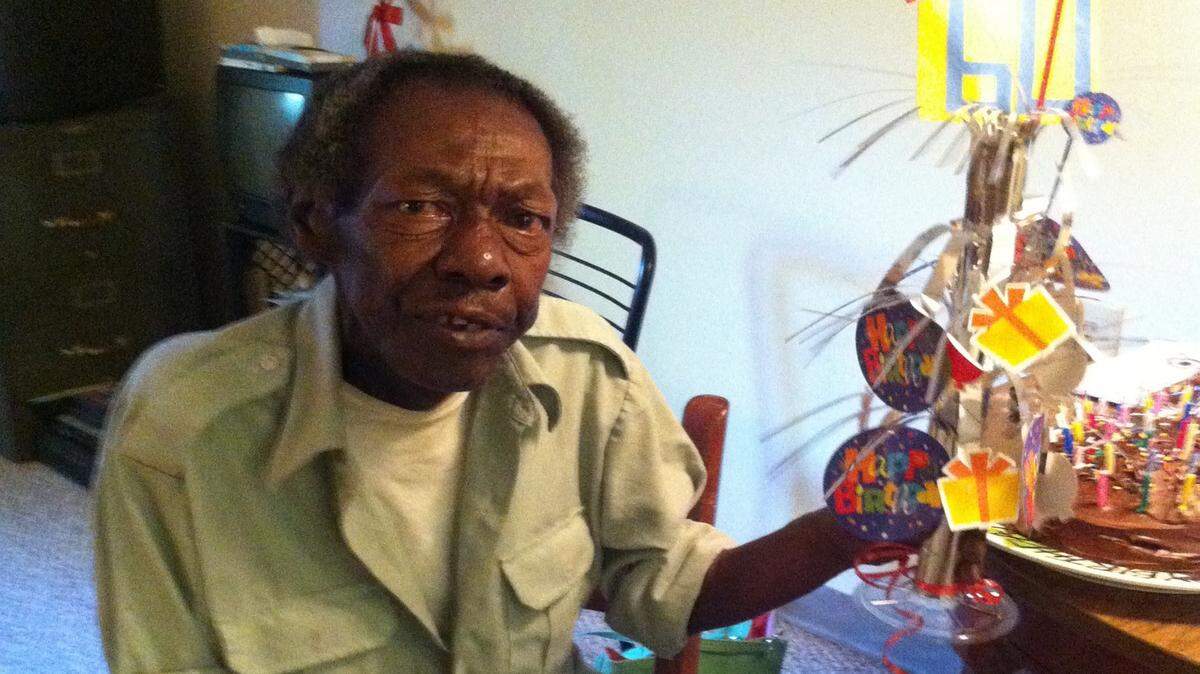
He was 61 years old when he died a month ago this weekend. There still has been no funeral or memorial service.
Although I was sad to learn of his passing, it was nice to know the last years of Ike's life were among his happiest, even though he battled cancer at the end.
Mary Alice Webb, Jane Lucas and others at St. Paul's Episcopal Church took him under their wings. They drove him to the doctor, the grocery store, the bank and the dollar store. They found him a place to live at Clisby Towers. Two years ago, they gave him the first birthday cake he'd ever had.
"We called him brother," Jane said. "He taught us to see through different eyes. He taught us humility. He was so appreciative of simple things and was a greater gift to us than we were to him."
It was a different kind of love, she explained.
"You don't expect it," she said. "And it comes out of nowhere from the most unlovable person."
I first met Ike in December 2000. June O'Neal and I went with him to a sandwich shop. June knew him through Loaves & Fishes Ministry on Broadway.
He told me his grandmother had raised him in Jones County. She died on his 14th birthday, and he went back to live with his mother. He dropped out of school, spent time in and out of jail and was placed in treatment clinics for depression and alcohol.
It was never clear whether Ike found the streets or the streets found Ike. He spent the night in cardboard boxes, empty shotgun houses and abandoned buildings, where he learned to sleep with one eye open. He often carried a knife for protection and a small watch in his pocket, even though he usually had no schedule to keep.
O'Neal was able to help him into public housing in 2008. He got his own place in Anthony Homes, sometimes known as Bird City because the streets carry names like Swan Drive and Wren Avenue. I went over one day to help Ike set up a small TV someone had given him. Another time, he called and told me he was hungry. He asked for a box of Church's fried chicken and cranberry juice. I thought that was an odd request, but I took it to him anyway.
The congregation at St. Paul's began noticing him in the winter of 2012. On Sunday mornings, he would walk over from a run-down house on Jefferson Terrace. He began sitting on a brick wall outside the church. Several members offered him food and invited him inside to the worship service. At first, he stayed on the back pew. After a few Sundays, he moved forward a few rows. He always took communion.
The folks at St. Paul reached out and embraced him. They helped him secure a copy of his birth certificate from the health department. They stood by his side when he got sick and came to his assistance when he fell behind on his bills.
They presented him with a walking cane with a hammer for a handle. They put up a Christmas tree and wreath and a stocking with his name on it. The decorations were still in his apartment when he died.
Mary Alice's husband, Michael, gave him a job every Sunday at church, putting out signs for the handicap parking places. Ike took his duties seriously.
They cared for him and gave him someone to care about.
"He had this fear something would happen to me and Mary Alice," Jane said. "Some of it was from his own life of self-preservation. He would tell us: 'Y'all don't know the streets. I know the streets, and you shouldn't be out there after dark.' "
"He asked us to call and let him know when we got somewhere and that we were OK," Mary Alice said. "He would tell us to be careful, and he loved us."
And he did love them. On his medical paperwork, this black man listed these two white women as his next of kin.
They put up with his chain smoking and cantankerous ways. Now that he is gone, they are grieving. He left a hole in their hearts.
A few months before he died, he had a premonition. He told them he needed a suit. He wanted to be buried in a suit.
"He was afraid he would be thrown in a dumpster," said Jane. "He said sometimes that happens to homeless people nobody knows or claims."
People in the church presented him with three suits.
He left this world with more than just the clothes on his back.
Ed Grisamore teaches journalism and creative writing at Stratford Academy in Macon. He can be reached at edgrisamore@gmail.com.
This story was originally published March 5, 2016 at 5:07 PM with the headline "Grisamore: Ike Morgan changed my view of Macon's homeless ."