
WINDHAM: Women in the Vietnam War
If you grew up during the Vietnam War era like I did, you have many images and thoughts about the conflict. Vietnam brought war, for the first time, into our living rooms by way of our television sets. I wore a POW bracelet for most of my college days for a Navy lieutenant who eventually came home. I remember the fall of Saigon and protests against the war and a friend who flew Huey helicopters there to pick up the wounded. It was a turbulent time and a controversial war.
In the Museum of Aviation’s Southeast Asia Hangar a scene is depicted of an ambulance waiting on a wounded soldier so that he can be carried to a nearby hospital or MASH unit. That scene got me to thinking about the men who were casualties of all the fighting. That led me to wondering about nurses who were there and the types of roles women played. I really had never thought about the women who are associated with the Vietnam War.
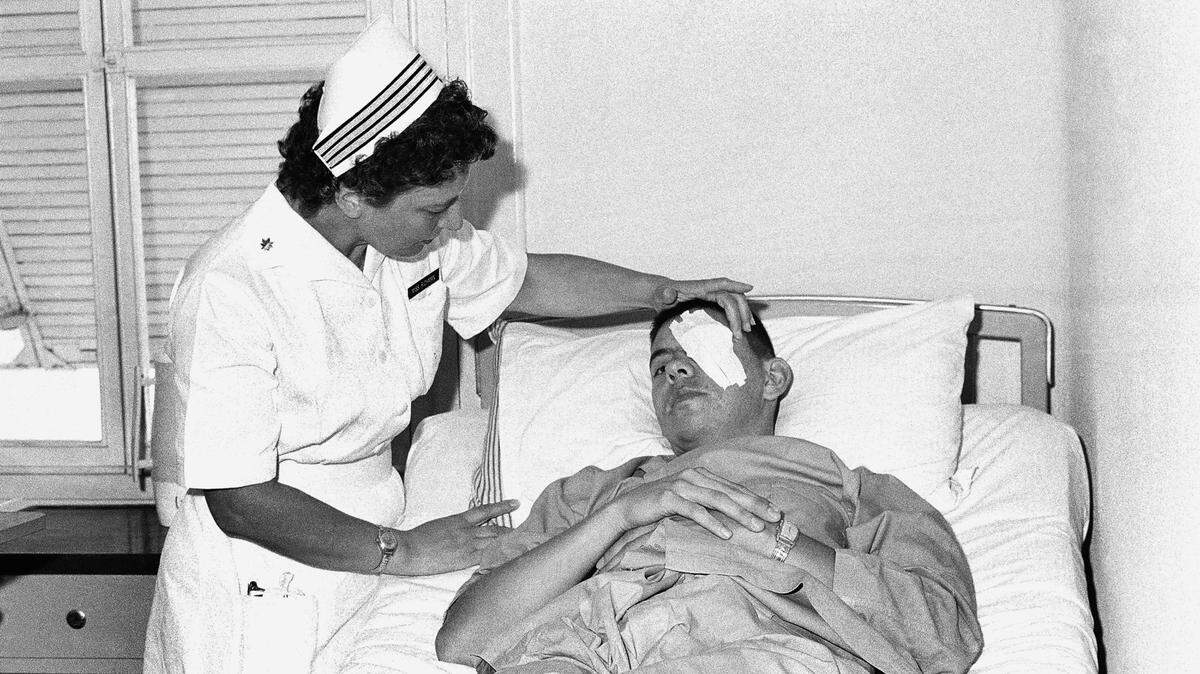
It is hard to say how many U.S. military women served in Vietnam. Some people have written 7,000. Some say as many as 11,000. Regardless of the number, the women who did go did so as volunteers. Yes, volunteers. Women in the service had no military obligation to go. None would serve in combat roles. Yet, women went just the same. Their service included everything from air traffic controllers, intelligence officers, meteorologists, supply clerks, physicians, communications specialists and a host of other jobs. However, 90 percent of women who served were nurses.
According to the Vietnam Women’s Memorial Foundation, there were thousands of women who were serving in Japan, Guam, the Philippines, Hawaii and hospitals stateside who cared for the wounded.
Navy personnel served on ships like the USS Repose and the USS Sanctuary. Air Force nurses were on planes that flew inside of Vietnam and on many airlift missions to get the wounded to care as quickly as possible.
Women who served in Vietnam were from different branches of the military. Many were from the Nurse Corps of the Navy and Air Force. There also were civilian women who served from organizations like the Red Cross, United Service Organization and Catholic Relief Services, among others.
Women serving in the war made efforts beyond whatever their duties were. Women in the Air Force raised money to help refugee war orphans at a camp near Da Nang. They helped Vietnamese women set up programs to help with medical care and other health issues during the war.
Eight military women were killed during the Vietnam War. All eight are listed on the Vietnam Veterans Memorial in Washington D.C. Countless numbers of civilian women were killed; they often found themselves in the middle of the hostilities without any defense.
Capt. Mary T. Klinker was the only Air force nurse to lose her life. She was a part of “Operation Babylift.” In 1975, President Gerald Ford ordered the evacuation of Cambodian and South Vietnamese children. Most of them had lost their families. More than 2,000 children were to be rescued.
On April 4 of that year, a C-5A took off from Tan Son Nhut Air Base with 314 aboard, mostly infants. It crashed shortly after takeoff. Klinker was one of the 138 people killed.
According to the Air Force, she was “the last U.S. servicewoman to die in Vietnam. She was posthumously awarded the Air Medal and the Meritorious Service Medal.”
In 1993 the Vietnam Women’s Memorial was dedicated not far from the Vietnam Veterans Memorial.
The bronze statue shows three women around a wounded soldier. It is fitting that the monument is there representing an almost forgotten group of people who saved lives, cared for the dying, and risked or gave their own lives, not because the military called on them to do so, but because they knew they could be of service. We honor these women today for all they gave.
Marilyn N. Windham is a volunteer at the Museum of Aviation. Contact her at mnwindham@aol.com.
This story was originally published September 8, 2015 at 10:24 PM with the headline "WINDHAM: Women in the Vietnam War ."