
As downtown Macon attracts more residents, new challenges arise
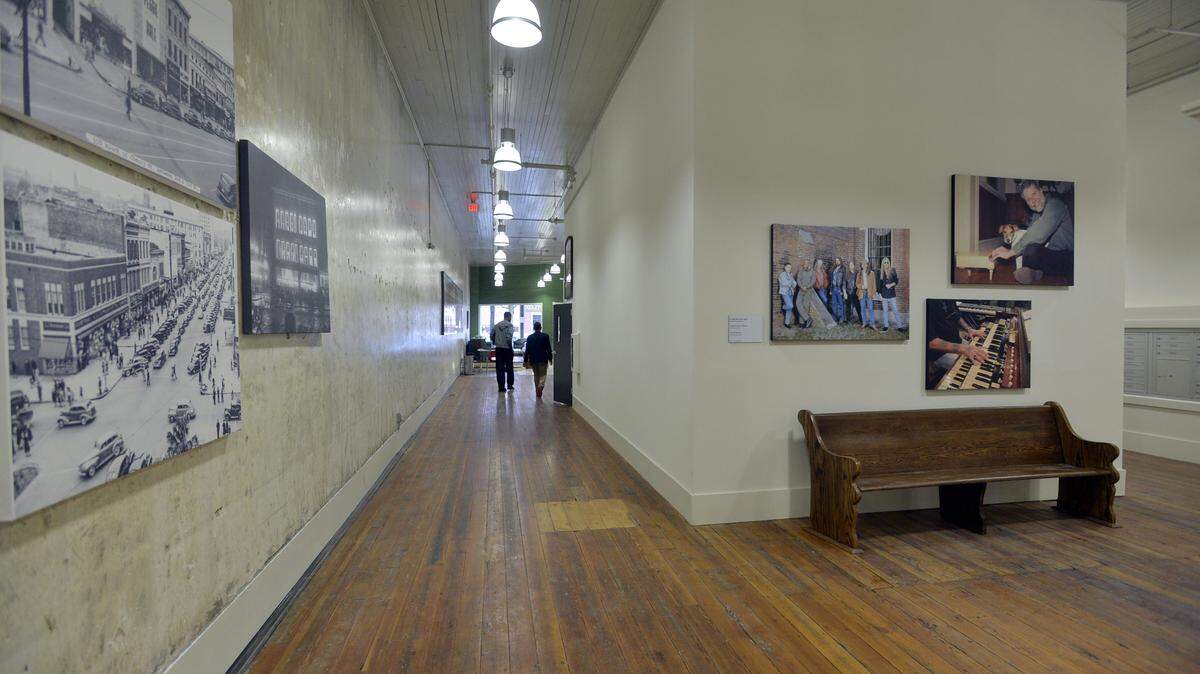
Logan Portivent fits the typical downtown Macon resident to a T -- a young professional who's attracted to an urban area rich with restaurants, bars and entertainment.
The 24-year-old, who works as a leasing agent for Broadway Lofts, is among the millennial crowd that's moved to the city's center in recent years. Just over 70 percent of those living in downtown Macon are young singles and couples without children, according to NewTown Macon, a group charged with improving downtown.
Portivent moved from Hawkinsville to downtown Macon this past August.
"Everything from restaurants to bars is within walking distance," she said. "Downtown is safe, affordable, near friends and family. I couldn't ask for much more."
Downtown Macon is now home to 40 restaurants, 15 bars and 13 music and entertainment venues, not to mention an increasing number of housing options, according to NewTown.
"I would say the last few years have been tremendously successful," said Alex Morrison, executive director of the Macon-Bibb County Urban Development Authority. "The conversation about Macon has changed considerably. I think a big part of that is the growth of the urban core."
To continue drawing residents, Macon-Bibb County must continue to improve the quality of life in the downtown area by adding more urban greenspace and entertainment options, Morrison said.
"We're very eager to make sure we have the right set of policies in place and that we're addressing the needs of businesses and residents alike, so there is a delicate balance," he said.
In the past several years, strides have been made to increase the number of people moving to downtown Macon, so much so that one of the largest dilemmas is meeting the demand for housing.
Since 2012, the number of downtown lofts -- an open-concept style of apartment that usually features high ceilings and large windows -- has nearly doubled, but downtown cheerleaders and developers are now facing new challenges such as a shrinking number of available properties. That's caused some to push for new construction, but work on finding developers willing to invest in vacant buildings continues.
Providing tax incentives for historic buildings as well as new construction has become instrumental in attracting developers.
"The margins are such that a lot of time it's hard to get full financing to build new construction in the downtown area because of the architectural logistic challenges," Morrison said.
New construction in downtown received a boost when plans were announced in late 2015 for the $25 million Capricorn project that will create a mixed-use development with apartments, offices and retail stores along Martin Luther King Jr. Boulevard.
Filling those apartments won't be because of a lack of demand, said Josh Rogers, NewTown's president and CEO.
A market study in 2012 revealed there was enough demand for 200 new lofts to open every year for seven years, Rogers said. The year prior, in 2011, there were only 11 new apartments added to downtown's apartment inventory, which was about 200 at the time, Rogers said.
"Almost all of the problems in downtown are related to the empty buildings and us having tons of people clamoring to move (in), and we weren't filling them," he said.
One way to meet that goal is through a revolving loan fund, which NewTown has used to help finance about 70 percent of the lofts built since 2012, Rogers said.
Currently, throughout downtown there are 346 lofts (not including traditional apartments) and 8,990 residents living in houses, apartments and townhomes, according to NewTown. There's typically at least a 93 percent occupancy rate for apartments and lofts, Rogers said.
In recent years as developers gobbled up some of those buildings they converted to new lofts, the portfolio of options for new development dwindled. And those developers are facing yet another challenge: The recovering real estate market has led to the cost of acquiring a downtown building jumping from an average of $8 to $10 per square foot to $20 to $30, Rogers said.
"People show up and want to make money, and now it takes time to find a building that can be acquired for a reasonable price," he said.
Many developers desire projects that have a value of at least $5 million, but in Macon many of the projects range from $500,000 to $1 million, Rogers said. Despite the challenges, the positives outweigh them, Morrison and Rogers said, because the market is desirable to residents.
The improved market has also led to NewTown expanding its focus. The agency had targeted housing along a section of downtown between the 400 and 500 blocks of Cherry Street as well as the adjoining blocks of Poplar Street. Of 100 storefronts in those blocks, 69 of them are now occupied by businesses or residential units, with a goal of increasing that number to 75 in the next year, Rogers said.
"When we started in 2012, with half the storefronts vacant on Cherry, it was ambitious to think we could get those to 75 percent," he said.
NEWTOWN: CITY ON PATH TO 'GET WHERE WE WANT TO BE'
One of downtown's recent signature developments was the transformation of the Dannenberg Building into lofts and retail space. In 2012, the 476 Third St. property was described as Macon's first major renovation project since the Great Recession.
"Dannenberg was worth $600,000 sitting empty, and now it's worth $6 million," Rogers said. "Downtown revitalization is this huge boom to property tax revenue that doesn't cost anything."
One of Macon's latest loft projects is The Lamar, featuring 38 upscale units complete with hardwood floors, granite countertops and stainless steel appliances. It opened in August inside a former drugstore building on Cherry Street.
Those lofts are part of a 63,000-square-foot, mixed-use project created by development company Millworks Holdings which partnered with NewTown for a loan to complete the $6.5 million project. Now 28 of its 38 units are rented, said Gordon Bennett, manager of The Lamar.
The historic nature of the building was enticing for Millworks Holdings to remodel into one- and two-bedroom lofts, said Carter Broun, a partner with Athens-based Millworks Holdings.
"We saw Macon as an opportunity because it was a little further behind places like Atlanta and Athens, but we saw the signs of that investment from the city and organizations like NewTown," he said.
Meanwhile, another nearby development on Martin Luther King Jr. Boulevard grew in recent months as the adjoining Broadway and Cherokee lofts added six new units that were quickly rented.
The Broadway and Cherokee lofts are being rented for more than $1 per square foot, which is good for the Macon market, said Derek Aynsley, president of Aderhold Properties that owns the lofts.
The company has three downtown properties -- the Broadway and Cherokee loft complex, Terrace Apartments and Katherine Court Apartments. In all, the company has a total of 152 units in downtown with a 92-percent occupancy rate, he said.
At the Broadway and Cherokee property, one of the amenities is the recent addition of private garages.
"I was worried if we were pushing the boat out too far with the (new amenities) we were putting in there and the costs, but we ended up being able to lease those units," Aynsley said.
For Rogers, the success of properties such as Broadway, Dannenberg and The Lamar ties into the attractiveness of downtown Macon's future development.
"We will have to keep doing this the next 20 years to get where we want to be," he said.
Information from the Telegraph archives was used in this story. To contact writer Stanley Dunlap, call 744-4623 or find him on Twitter@stan_telegraph.