EPA may change decade-old rules on cleaning coal ash. Could it affect Georgia?
The Environmental Protection Agency is planning to revise a coal ash cleanup rule from the era of former President Joe Biden, after the agency announced last month that it’s delaying key compliance deadlines.
The EPA confirmed in an email to The Telegraph that it’s “evaluating opportunities to improve the federal CCR regulations,” which dictate how coal combustion residuals must be disposed of.
The EPA said its review could include changes not only of a 2024 rule, but also changes to the standards on coal combustion clean-up that date back to 2015.
Changing these rules could weaken protections that help prevent coal ash, which contains arsenic, lead and mercury, from polluting groundwater and drinking water sources. Coal ash is what’s left when power companies burn coal to make electricity.
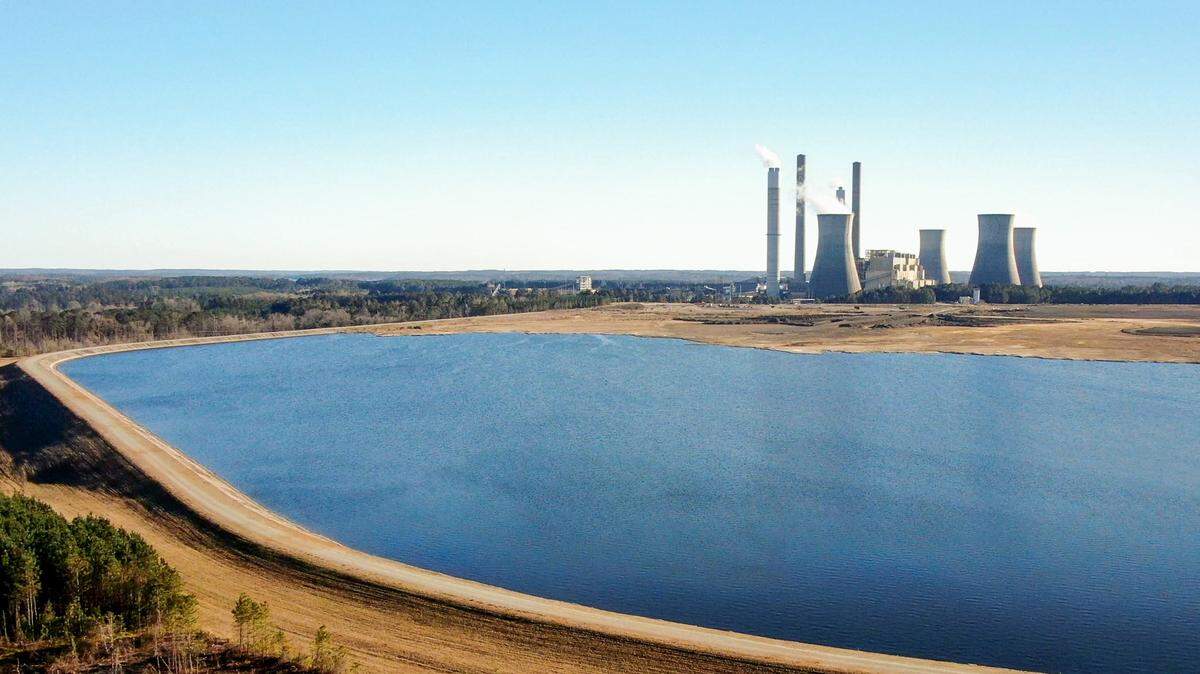
Alterations to rules around the nation on this topic can acutely affect Georgia residents in the areas of Plant Bowen and Plant Scherer, two coal-fired plants under the operation of Georgia Power.
In Monroe County, home to Plant Scherer, potential contamination of well water from coal ash has caused public frustration and prompted lawsuits against Georgia Power due to health problems such as cancer and respiratory diseases. Those lawsuits were ultimately settled out of court, and as part of the settlement, a court ruled that there was not evidence to support the claims that the plant caused these injuries, according to Georgia Public Broadcasting.
A new water line was installed in that area recently after the Altamaha Riverkeeper, a grassroots organization that focuses on protecting the Altamaha River, found contamination in well water in the region, according to the Georgia Recorder. But residents face hundreds of dollars in connection fees for that clean water, according to the Georgia Recorder.
The EPA plans to finish any further rule changes within a year, according to the email.
Last month, the EPA extended key compliance deadlines for power companies to monitor groundwater and clean up coal ash at coal-fired power plants, such as Plant Scherer in Juliette and Plant Bowen near Cartersville.
But there’s concern that the intent of the delay is not simply to give the utilities more time to comply, but to write a new, much weaker rule, gutting the protections laid out in the 2024 Legacy-Coal Combustion Residuals Management Units Rule. Lisa Evans, an attorney with Earthjustice, said that presents multiple environmental problems.
“There are two issues here — the prospect of EPA gutting the Biden-era rule and the reality that EPA wants to extend deadlines that will delay the cleanup, delay the closure, delay the investigation of leaking waste, toxic waste sites, and whether that deadline is 12 months or 27 months, that is simply going to make the contamination worse at those sites and harder to clean up and more expensive to clean up,” Evans said.
The EPA is seeking public input, and the public is invited to a virtual hearing about the proposed rulemaking on Sept. 12 from 9 a.m. to 1 p.m. The public comment period will be open until Sept. 15, and the EPA is “taking input from a wide variety of entities in considering what changes to the CCR regulations are appropriate,” the agency said.
The EPA has been lobbied by utilities to make changes to the 2024 Biden-era rule. In a document written to the EPA by Cross-Cutting Issues Group, which consists of many of the largest utilities throughout the country, including Southern Company, the parent company of Georgia Power, the group recommend the EPA reconsider or revise the Biden era 2024 coal ash rule while also making three explicit requests.
In a document written to the EPA by Cross-Cutting Issues Group — a coalition of some of the largest utilities in the country, including Southern Company, Georgia Power’s parent organization — urged the agency to reconsider or revise the 2024 coal ash rule and outlined three specific requests.
Two of those three requests have been checked off: rescinding the EPA’s free liquids memorandum and extending these coal clean-up compliance deadlines and timeframes while EPA undertakes its review of the regulations.
The free liquids memorandum required nearly all water to be removed from coal ash ponds before closure and extending CCRMU compliance deadlines gives utilities more time to clean up and monitor old coal ash sites, in an effort to reduce contamination.
The third request was to issue interim guidance addressing on-site beneficial use of coal combustion cleanup regulations.
The group of utility providers wants the EPA to re-examine both the 2015 and 2024 rules for several reasons, including President Donald Trump’s “recent executive orders directing the revision or repeal of regulations that are unduly burdensome to the energy industry,” their document says.
History of Coal Ash Regulations
Federal coal ash regulations date back to 2015, when the EPA issued the first national rule requiring utilities to monitor groundwater, close unlined coal ash ponds and publish data online. The EPA also allowed states to run their own coal ash disposal programs.
Georgia, Texas and Oklahoma were given permission to run their own programs.
In 2024, the Biden administration strengthened coal ash cleanup with the Legacy CCRMU Rule, which for the first time addressed older, closed ash dumps and informal disposal areas on plant sites, requiring utilities to identify those sites, investigate contamination and install monitoring wells.
After the Biden administration’s EPA finalized the legacy rule in May 2024, several lawsuits were filed by power and utility companies challenging the EPA’s 2024 rule. The companies argue the rule is too strict, retroactive and exceeds EPA’s authority.
Courts have thus far refused requests to block the rule, meaning it remains in effect while the cases move forward.
Environmental organizations strongly support the 2024 regulation, saying it closes loopholes left by the 2015 rule and brings long-overdue oversight to inactive coal ash ponds and similar sites.
In Georgia, these groups have also urged the EPA to reject the state’s coal ash program, arguing it allows practices that leave toxic ash in contact with groundwater and fail to meet federal protections.
How effective is testimony?
Sept.. 12 won’t be the first time people from the public have been invited to speak in front of EPA officials about coal ash regulations.
Last month, an assistant EPA administrator held a virtual meeting where individuals from communities across the country affected by coal ash “asked EPA to stay strong on these regulations, to pay attention to the damage that’s occurring and to require the utilities to clean up the toxic waste that is currently in the groundwater at their properties,” according to Evans.
Juliette resident Andrea Goolsby was in attendance.
“People in these small communities are sick of them not doing their job, (sick of) of allowing these companies to do whatever they want to do when (EPA) is supposed to be the ones regulating them,” Goolsby said,
Immediately upon leaving the meeting, they learned about the compliance deadline extension.
“I found out afterward that they decided to give them more time for coal ash cleanup,” said Goolsby. “I was infuriated and disgusted. (It was) pointless, like everything else we’ve done.”