Georgia Power wants ‘mind boggling’ amounts of energy. Where will it come from?
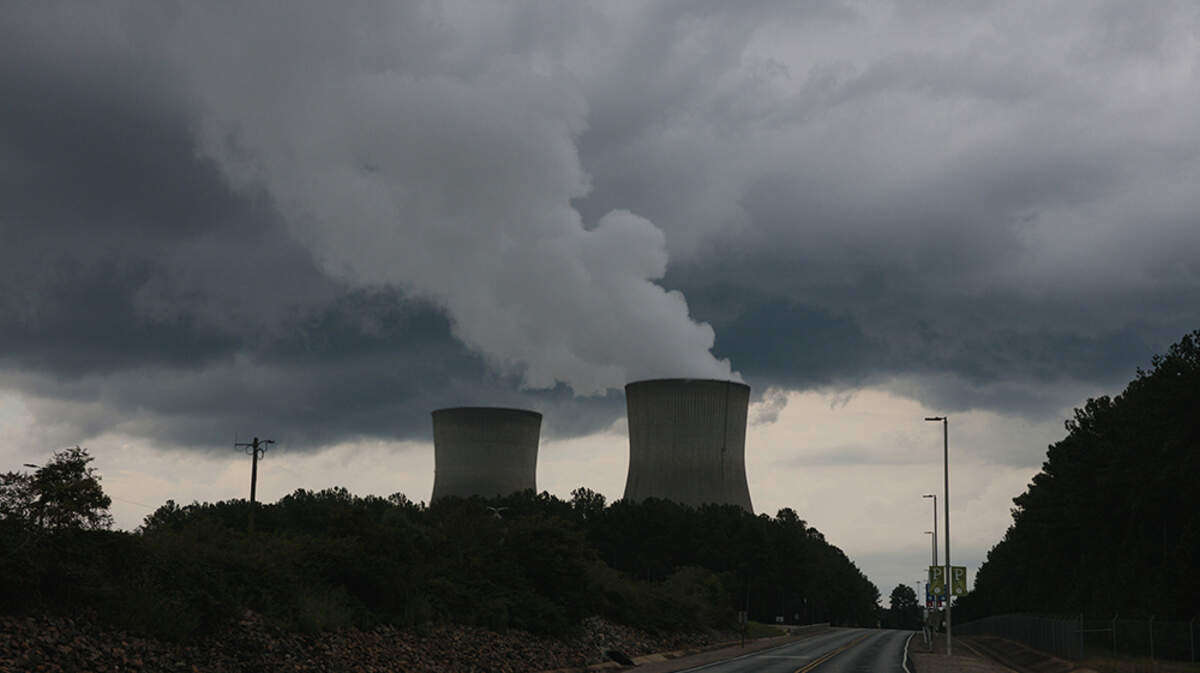
Weeks before public interveners are due to testify over Georgia Power’s energy plan, experts and critics have raised concern with Georgia Public Service commissioners over how the state’s largest utility company has proposed to meet a historic demand for energy.
Every three years, Georgia Power is supposed to lay out 20 years of projected energy growth and how they plan to meet that growth over a months-long deliberation process between the company and advocates who question their plan in front of energy regulators. The plan that results is called an Integrated Resource Plan.
Months into this year’s process, advocates and energy experts discovered the 167-page plan doesn’t fully outline how the company will meet the massive amount of power they believe the Peach State will need by 2031. It omits how the company will generate 9 gigawatts of its needed power. That’s about half of the power Georgia Power currently supplies to its customers. Georgia Power’s entire portfolio currently hovers around 16 GW (or 16,000 megawatts).
Advocates and energy regulatory experts argue that by excluding the resources it plans to use to generate 9 GW of new capacity by 2031, Georgia Power is defeating the purpose of the Integrated Resource Plan.
“To increase your generation capacity by 50% in eight years, and you keep that hidden or try to downplay it, that just undermines the entire purpose of having an IRP,” former Public Service Service commissioner and energy regulatory lawyer Bobby Baker said.
Baker said that much energy is “just incredible, the magnitude is incredible.”
“It has taken over 100 years to get to 16,000 megawatts of generation (in Georgia), and now they want to increase it by 50% in eight years,” he said. “That’s just mind boggling! It makes Plant Vogtle look like a kiddie project.”
The lack of transparency about how the company plans to provide that energy, whether it be through natural gas, coal, nuclear, solar, batteries, offshore wind, or other means, has clean energy advocates concerned and regulatory veterans and experts astounded.
In the 2025 IRP filing in January, the company said it would likely need 8,200 MW by 2031. However, the company only outlined how it would generate 517 MW, which is just over 5% of that added power.
Georgia Power’s ‘opaque process’
Jennifer Whitfield, an advocate for Georgia Interfaith Power and Light, Southface Institute and a lawyer at the Southern Environmental Law Center, cross-examined Georgia Power over its IRP filing in March, and asked why the company isn’t outlining where 95% of the new resources will come from.
“How can I fairly advocate for our partners and the Georgians we work on behalf of if Georgia Power makes this process as opaque as possible?” Whitfield asked in an email.
Georgia Power’s director of resource planning, Jeff Grubb, responded by saying that information isn’t publicly available because those 8.5 GW are tied up in what’s called an “all-source RFP,” or Request For Proposal process.
The all-source RFP was created to fill 517 MW and use battery storage in the 2022 and 2023 IRPs. But that projected need has grown substantially to 9 GW.
“The original All-Source RFP was ordered by the Commission at the end of the 2022 IRP,” Commission Chairman Jason Shaw said in an email. “When Georgia Power filed the 2023 IRP update, this delayed the completion of the All-Source RFP and added some load.”
Whitfield asked the Public Service Commission to obtain more information from the power company. Shaw fulfilled her request, but the response was marked as a trade secret, citing the competitive advantage during the open bid process. The information was not made public.
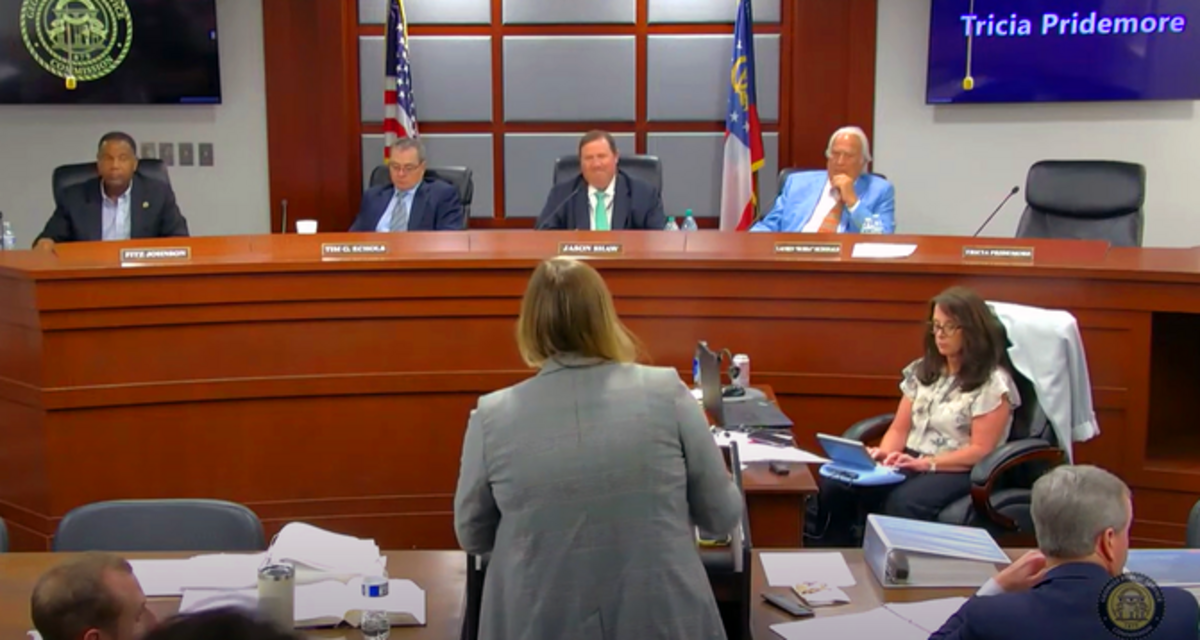
Georgia Power does address the ways it plans to increase need by 2031, but only vaguely, according to Whitfield.
“They allude to how they will meet it in their IRP filing in only the vaguest of terms,” Whitfield said in an email.
Baker also called the terms vague, and went so far as to say the way Georgia Power is going about this process undermines the IRP.
“(The language) was very vague and buried in the 2025 Integrated Resource Plan,” Baker said in an email.
The company’s explanation in the IRP is lengthy:
”Georgia Power’s risk-adjusted load forecast from the winter of 2024/2025 through the winter of 2030/2031 reflects approximately 8,200 MW of load growth, representing an increase of more than 2,200 MW compared to the load growth projections in the 2023 IRP Update for the same period,” Georgia Power wrote. “In the near-term, the Company projects nearly 6,000 MW of load growth as early as the winter of 2028/2029....[t]hrough 2031 Georgia Power projects a capacity need of 9,000 MW, . . .
“. . .the Company’s active RFPs for up to 9,500 MW of capacity and more than 3,500 MW of renewable energy resources by the end of 2030.”
“...[t]he Company is utilizing a combination of previously approved RFPs and incremental requests of up to 1,500 MW in this IRP to meet load growth of approximately 8,200 MW through the winter of 2030/2031, and is proposing new procurements to address capacity and energy needs into the 2030s.”
In this language, Georgia Power says it will meet a third of its capacity, or about 3,500 MW, with renewables. It plans to meet the remaining demand in increments of 1,500 MW without specifying the source.
“Georgia Power is doing an end run around the IRP process by getting the Commission to indirectly approve their load forecast which is the basis for their RFP without discussing the (8.5GW) in the IRP,” Baker said in an email.
Georgia Power has maintained that it’s not violating any laws or breaching process. In a statement to Canary Media last month, Georgia Power spokesperson Jacob Hawkins said sharing the information more publicly “could hurt our ability to negotiate and procure the best value and resources for our customers.” Hawkins also said interveners who sign confidentiality agreements get much more access to the information.
“We would disagree in the strongest possible terms that we are not following all statutory requirements and state law across the board in these proceedings, period,” Hawkins told Canary Media.
When asked, Shaw, responding on behalf of all five commissioners, did not directly answer how unusual it is for Georgia Power to conceal this type of information. He only said commissioners can’t pass judgment during the hearings.
“PSC rules prevent us from offering opinions on these issues prior to our ruling,” Shaw said in an email.
Are data centers driving this much need?
Baker questioned whether the 8.5 GW was even necessary, calling it “risky.” A large increase in demand is needed for data centers, Georgia Power says.
“If the data centers don’t materialize, they have all this stranded generation,” Baker said.
In 2024, Microsoft, which has three data centers in the Atlanta area and is a Georgia Power customer, shared concerns of over-forecasting and reliance on using carbon fuels.
“Microsoft has concerns with (Georgia Power’s) approach potentially leading to over-forecasting near-term load (through 2030) and procuring excessive, carbon-intensive generation,” the company said in a brief after Georgia Power made its 2023 IRP update.
In Southern Company’s pipeline of project requests, called the interconnection queue, there are currently 118 potential project requests listed in Georgia, totaling 26.7 GW. There is a mix of solar, which leads the way at 9.51 GW, followed by natural gas and then a combination of solar and battery storage.
Natural gas produces methane, which has a higher global warming impact, it’s approximately 82.5 times more potent than carbon dioxide, and is measured in kilograms. A 2019 study found methane emissions range from 8 to 135 kg of methane per hour at natural gas-fired power plants.
The interconnection queue gives insight to what energy project developers are proposing to power the state in the next six years. Right now, this queue is the sole public indicator of what types of power might supply the concealed 8.5 GW.
But the list is inflated, according to energy expert and Public Service Commission candidate Peter Hubbard.
“Only around 20% of the projects in the queue will actually get built,” said Hubbard, which is consistent with the amount that gets approved across the U.S.
What’s next for Georgia Power plan
Starting this month, energy experts and commission staff will be able to publicly weigh in on the 2025 plan and the hidden 8.5 GW, before the commission makes a final decision on whether to approve the plan in mid-July.
Shaw said “this issue” will be directly addressed by PSC staff, Georgia Power and interveners’ testimony.
Baker argues this is the time when PSC staff should speak up about the RFP issue.
“The Commission Staff should address the proposed RFP in their pre-filed testimony due on May 5. If they don’t give this issue a thorough and intense review they have completely failed all Georgia Power ratepayers,” Baker said in an email.
Commissioners will have the opportunity to listen to staff, Georgia Power, intervenors and the public, but the effectiveness of public comment is unclear.
“My fellow Commissioners and I will consider all of this evidence when we make our decision,” Shaw said in an email. “One of the main purposes for public hearings is for interested parties (and the public for that matter) to have the opportunity to persuade my fellow Commissioners and I as to what specific factors should be weighed when making their choices.”
Ultimately, the commission will decide if Georgia Power can go forward with this process without disclosing where that energy will come from, but Hubbard said they can still direct Georgia Power to target a certain number of megawatts of solar and storage from the All Source RFP.
“When the rubber meets the road and they vote on the IRP the commissioners have 100% latitude as far as what they want, what they will permit, and what they will do, and what they require from the company,” Baker said.
This story was originally published May 5, 2025 at 12:49 PM with the headline "Georgia Power wants ‘mind boggling’ amounts of energy. Where will it come from?."